

Something is happening online right now, and you can’t really ignore it anymore.
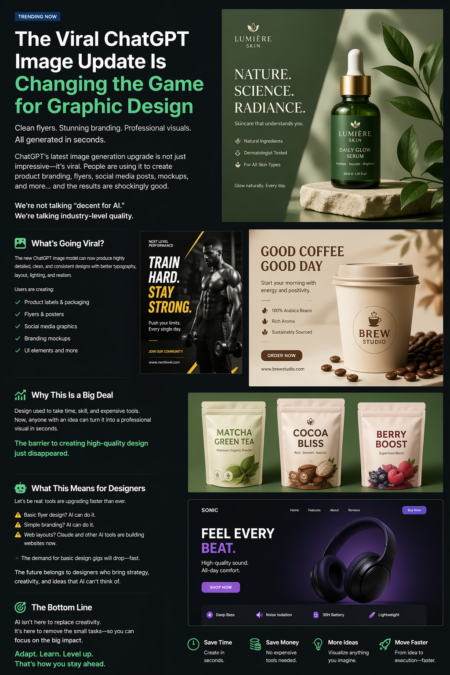
You’ve probably seen it already: those clean flyers, polished product ads, and “agency-level” designs that look too good for someone to have made in 10 minutes.
Except… they were made in minutes. Using AI tools like the new ChatGPT image generation features and it’s changing how we think about design, creativity, and even careers.
The Internet Just Got a New Design Assistant
Let’s be honest.
Design used to feel like a skill you had to “earn.”
You needed:
- years of practice
- expensive tools
- a strong creative eye
- and patience for revisions
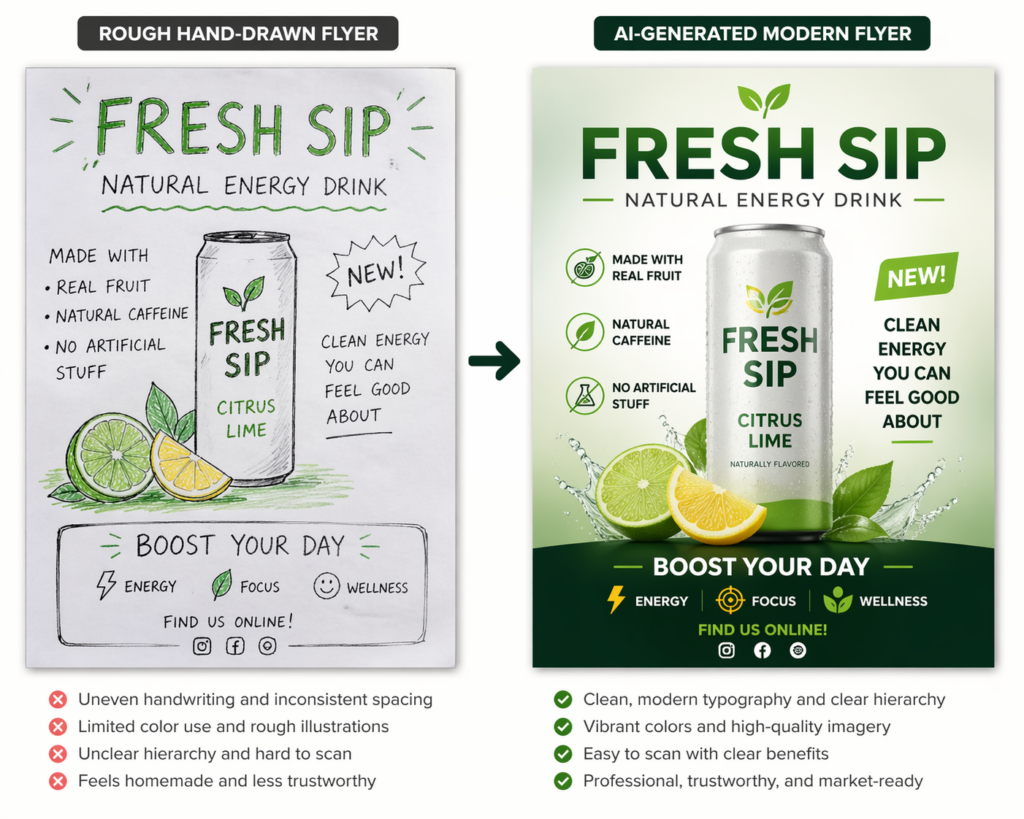
Now, someone can type a prompt and get a clean, modern flyer that looks like it came from a professional agency.
Not “almost good” but actually good. Check these out;


ChatGPT Image Tools Are Changing the Game
The new wave of AI image tools inside ChatGPT has pushed things further than most people expected.
It’s not just generating random pictures anymore.
People are now using it for:
- product branding concepts
- social media campaigns
- ad creatives
- business flyers
- mock product packaging
And the results? Honestly… they’re impressive.
It feels less like “AI art” and more like “ready-to-use design.”
The Real Shock Isn’t the Tool, It’s the Speed
What’s really making people pause is not just quality.
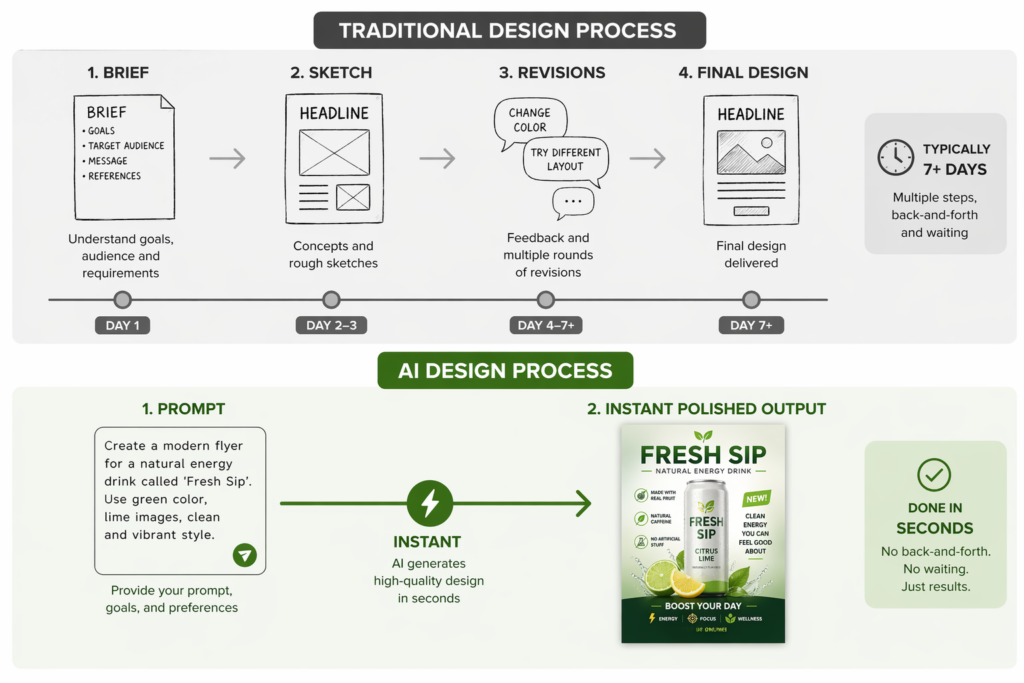
It’s speed. What used to take a designer hours or days can now be generated in seconds, refined in minutes, and exported almost instantly.
That changes expectations completely.
Because now, clients don’t just want good design.
They want it fast.
It’s Not Just Design Anymore
And this is where things get even more interesting.
We’re not only talking about image generation.
Tools like Claude AI are now able to build functional websites from prompts.
Yes, actual working layouts, sections, and structured pages.
Then you have tools like ChatGPT generating visuals, copy, and strategy together.
So suddenly, you’re not just designing anymore.
You’re building full digital experiences.
So What Happens to Traditional Skills?
This is the uncomfortable question people are avoiding.
If AI can:
- design flyers
- generate branding concepts
- build simple websites
- write content
- structure layouts
Then what happens to roles like:
- Graphic designers
- Entry-level web designers
- Basic content creators
The truth is not “they disappear.”
But the entry point is shifting.
Because of the baseline work, the “simple execution layer” is becoming automated.
The New Reality: Skills Are Moving Up the Chain
The real value is no longer just in execution.
It’s in:
- Creative direction
- Strategic thinking
- Problem framing
- Taste and judgment
- Brand storytelling
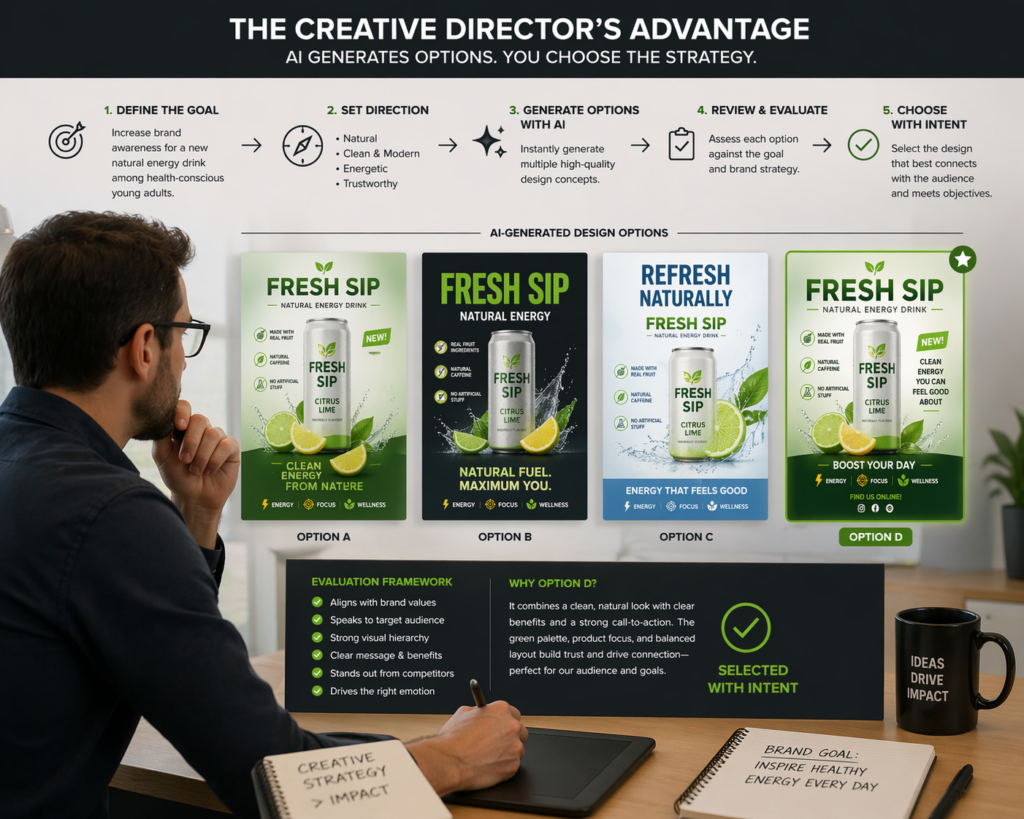
AI can generate options.
But it cannot fully decide:
- What feels right for a brand
- What connects with an audience
- What direction a product should take
That part still belongs to humans.
The Real Shift Nobody Talks About
This is not just a design story.
It’s a workflow story.
We are moving from:
“Can you design this?”
To:
“Can you guide the system to design the right thing?”
That shift is subtle… but massive.
Because now, your value is less about doing everything manually
and more about knowing what to create and why.
What This Means for People Starting Out
If you are:
- A designer
- A beginner in tech
- A freelancer
- Or someone trying to enter creative tech fields
This is not bad news.
But it is a signal.
You don’t compete with AI by doing what it does faster.
You grow by doing what it cannot do:
- Thinking
- Refining
- Directing
- Storytelling
- Decision-making
Final Thoughts: We’re Not Losing Creativity, We’re Redefining It
AI didn’t kill design.
It changed the entry point.
It made basic output easier, faster, and more accessible.
But it also raised the bar for what “good” actually means.
Because now, everyone can create.
The question is no longer “Can you design?”
It’s “Can you design with intention?”
Here’s the Shift to Pay Attention To
Tools will keep getting better.
Faster. Smarter. More capable.
But the people who stand out won’t be the ones who resist them.
They’ll be the ones who learn how to work with them

