


You can spend three years working for a company without ever having a conversation with your manager that isn’t about a task.
You attend meetings. You complete assignments. You respond to messages. Your performance reviews are satisfactory, and nobody has complained about your work.
Then a promotion becomes available, and someone else gets it.
They may not be more talented than you. They may simply have a clearer relationship with the people making the decision. Perhaps they worked closely with a senior colleague on an important project. Perhaps they were trusted to handle a difficult situation. Or perhaps their contributions were easier to remember.
You, meanwhile, have been quietly doing your job from your laptop.
This is one of the less obvious challenges of building a career in a remote-first company. The work may be visible on a screen, but the person doing it can still become invisible.
Remote work has made it possible to join companies without moving to another city or country. It has given people more control over where they work and, in some cases, how they organise their lives.
But a job and a career are not the same thing.
A job gives you responsibilities to fulfil today. A career requires you to keep learning, build relationships, develop judgement, earn trust, and become capable of handling opportunities that may not exist yet.
Those things can be surprisingly difficult to navigate when the office no longer exists as a shared physical space.
Doing Good Work Is Not Always Enough
In a traditional office, your work is only one part of what people observe about you.
They may notice that you help a colleague understand a difficult problem. They may hear you explain an idea during an informal conversation. Your manager might see you take responsibility when something goes wrong or watch you guide a new employee through a complicated process.
These small interactions create a picture of who you are professionally.
Remote-first work changes how that picture is formed.
Your colleagues may see the final document without seeing the reasoning behind it. Your manager may receive the completed project without knowing that you resolved three unexpected problems along the way. Your contribution to a team may be reduced to a task marked “completed” in a project-management tool.
The work gets done, but some of the context disappears.
This matters because career decisions involve more than whether you completed your assigned tasks. Managers may also consider judgement, leadership potential, reliability, communication, and readiness for a larger role.
A 2025 study published in Work, Employment and Society examined how managers assessed remote and office-based workers using an experiment involving 937 UK managers. The researchers found that perceptions of performance and commitment could influence remote workers’ career opportunities. These findings do not mean every remote worker is disadvantaged, but they illustrate how assumptions about visibility can affect professional decisions.
The lesson is uncomfortable but useful: your work needs to be good, and the people responsible for evaluating it need a fair understanding of what you contribute.
That does not mean spending your days advertising yourself. It means finding ways to make your work, judgement, and impact understandable to others.
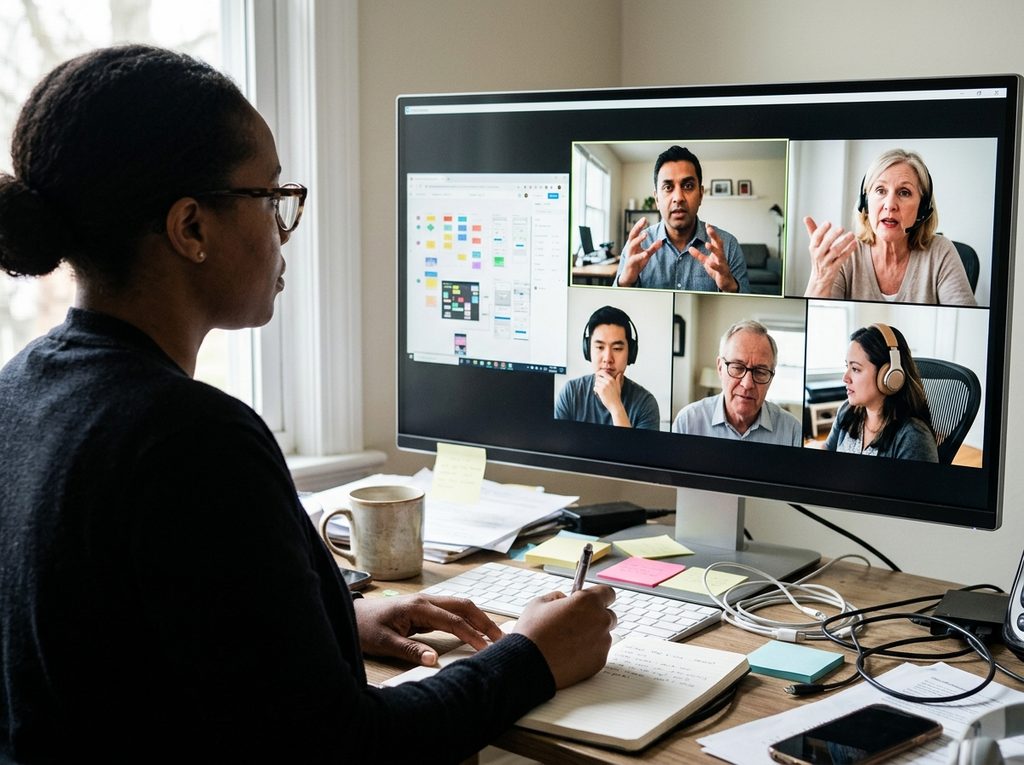
Nobody Is Going to Accidentally Mentor You
Think about how people learn in an office.
A junior employee overhears an experienced colleague explaining a difficult decision. Someone notices that a new hire is struggling with a task and offers a suggestion. A conversation after a meeting reveals why a project failed, even though the official report only describes the final outcome.
Nobody scheduled a lesson. Learning happened because people were around one another.
Remote-first workplaces cannot rely on those interactions happening naturally.
A new employee may know how to complete a task but not understand why the team approaches it that way. They may be uncertain about how much initiative they are expected to take. They may not know which decisions they can make independently and which require approval.
If nobody explains these things, the employee has to work them out alone.
This is especially challenging for people early in their careers. Experienced professionals may already have developed judgement through previous jobs. Beginners often need more context, feedback, and opportunities to observe how experienced people think.
A remote workplace can provide all of that, but it usually requires deliberate effort.
Managers need to create opportunities for feedback, discussion, and guided learning. Employees need to ask questions, seek clarification, and identify areas where they need support.
A useful question might be:
“Could you walk me through how you approached this decision? I want to understand the reasoning so I can handle a similar situation independently next time.”
That question does more than help you complete one task. It helps you develop the judgement needed for future responsibilities.
The danger is not that remote workers cannot learn. It is that a company may assume learning will happen without creating the conditions for it.
The People Who Get Promoted May Not Be the People Who Work the Hardest
Imagine two employees on the same team.
The first completes every assignment on time. They rarely ask for help because they prefer to figure things out independently. Their work is consistently good, but they do not often share what they have learned or explain the wider value of their contributions.
The second is equally capable but communicates more deliberately. They explain the reasoning behind their decisions, share progress before being asked, and volunteer for projects that expose them to broader business problems.
Over time, the manager may have a much clearer understanding of the second employee’s capabilities.
This is not necessarily because the second person is better at the job. It may be because their work has given the manager more evidence of what they can handle.
In a remote-first environment, that difference can become significant.
Promotion decisions are rarely based on effort alone. They may depend on whether someone can demonstrate the skills and judgement required for the next level.
A developer who writes excellent code may still need to demonstrate that they can explain technical trade-offs, review other people’s work, or help a team make decisions.
A project coordinator may need to show that they can anticipate risks and manage competing priorities, not just update a project board.
A data analyst may need to connect findings to business decisions rather than simply produce accurate reports.
The next level often requires a different kind of contribution.
The practical response is not to become the loudest person in every meeting. It is to understand what growth looks like in your role and create opportunities to demonstrate it.
Ask your manager what distinguishes someone performing well at your current level from someone ready for the next one. Then agree on specific projects or responsibilities that will help you develop and demonstrate those abilities.
If your company has no clear promotion criteria, that conversation becomes even more important.
Your Career Can Become a Collection of Tasks
Remote work often runs on digital tools: task boards, chat applications, shared documents, ticketing systems, and performance dashboards.
These tools are useful. They help distributed teams coordinate work without needing everyone in the same room.
But they can also encourage a narrow understanding of productivity.
A task is assigned. You complete it. The status changes. Another task arrives.
After a while, you may become very efficient at completing assignments without becoming significantly more capable.
You know how to use the tools. You understand the workflow. You can handle your responsibilities quickly.
Yet you may not be learning how to solve more complex problems, make independent decisions, or understand the business beyond your immediate role.
This is the difference between becoming better at your current workload and developing a career.
Imagine a junior analyst who spends two years preparing weekly reports. They become fast and accurate, but they never learn how the business uses the information or what decisions the reports are supposed to support.
Another analyst gradually learns to interpret patterns, question assumptions, explain findings, and recommend next steps.
Both may have completed the same assignments. But the second person is building a broader set of capabilities.
Remote workers need to look beyond their task lists and ask what each responsibility is teaching them.
Are you learning a new skill? Are you gaining a better understanding of the business? Are you becoming more independent? Are you taking on problems that require greater judgement?
If the answer is consistently no, you may be busy without progressing.
The Office Watercooler Has Been Replaced by a Calendar Invitation
Professional relationships are built through repeated interactions.
People learn how their colleagues think, discover shared interests, and develop trust through conversations that are not always tied to a specific deliverable.
In a physical office, these interactions can happen naturally. In a remote-first company, a conversation often needs a reason to exist.
You message someone because you need information. You schedule a call because a project requires discussion. You attend a meeting because it appears on your calendar.
When every interaction has an immediate purpose, it becomes easy to know your colleagues only through their responsibilities.
You may work with someone for months without understanding what they are good at beyond their assigned tasks, what projects interest them, or what they have learned from previous roles.
That can make collaboration more transactional and reduce opportunities for professional support.
This is not an argument for filling your calendar with unnecessary meetings. It is a reminder that relationships are part of how careers develop.
A brief conversation with a colleague from another team might help you understand how the business operates. A discussion with a senior professional could reveal a skill you need to develop. A thoughtful follow-up after a collaborative project might lead to future opportunities to work together.
These relationships are particularly valuable when your career goals extend beyond your current team.
You do not need to become friends with everyone at work. You do need to develop enough professional connection that people understand your strengths, trust your contributions, and feel comfortable working with you.
In a remote-first environment, those connections rarely build themselves.
Working From Home Can Make You More Available and Less Free
One of the biggest attractions of remote work is the possibility of greater flexibility.
You may avoid a long commute. You may have more control over your schedule. You may be able to organise your day around periods when you concentrate best.
But flexibility can become a problem when nobody has clearly defined what availability means.
A message arrives at 7:30 p.m. You respond because it will only take a minute. The next day, another message arrives after hours. Soon, colleagues begin to expect quick responses regardless of the time.
You have not officially agreed to work longer hours. Yet your working day keeps expanding.
Without the physical act of leaving an office, the boundary between work and personal life can become harder to maintain.
This is not an inevitable consequence of remote work. It depends on the organisation, the manager, the workload, and the boundaries available to each employee.
Still, the career implications are easy to overlook.
If you are always available, you may appear dependable in the short term. Over time, however, constant availability can leave less room for learning, rest, relationships, and the activities that help you sustain your career.
You need to distinguish between being reliable and being permanently accessible.
Agree on response-time expectations with your team. Use asynchronous communication when a matter does not require an immediate answer. Protect time for focused work. Make sure urgent requests are genuinely urgent.
A sustainable career depends on your ability to keep contributing, not simply on how many hours you can make yourself available.

Remote-First Companies Can Make It Harder to Know Where You Stand
In some workplaces, feedback is inconsistent.
You receive a short message when something goes wrong, but little explanation when things go well. Performance reviews happen once or twice a year. Your manager is busy, and conversations about your future keep getting postponed.
In an office, you might have more opportunities to observe how your manager views your work or ask a question after a meeting.
Remote work can make the gaps in communication more noticeable.
You may not know whether your performance meets expectations. You may be unsure whether a project is preparing you for greater responsibility or simply filling a gap in the team’s workload. You may assume that doing well will lead to a promotion, while your manager assumes you are satisfied with your current position.
Nobody has explicitly disagreed. They have simply failed to have the same conversation.
This is why remote workers should not wait until an annual review to understand how they are doing.
Regular one-to-one meetings can be used to discuss progress, obstacles, feedback, and development goals. Employees can ask what is working, what needs improvement, and what they should focus on next.
A useful question is:
“What is one thing I could improve over the next three months that would make the biggest difference to my performance or readiness for more responsibility?”
It invites specific feedback rather than a general statement that you are doing well.
Managers have a responsibility here, too. Employees should not have to guess what success means or repeatedly request basic guidance about their growth.
A remote-first company that expects people to develop professionally needs to make feedback and career conversations part of the way it works.
You Can Be Good at Your Job and Still Feel Stuck
Career stagnation is not always obvious.
You may have a stable job, a reasonable salary, and the flexibility to work from wherever you choose. From the outside, things look fine.
But you have been doing nearly the same work for two years. Your responsibilities have not changed. You are not learning much that would help you qualify for another role. You have no clear idea what your next step could be.
The problem is not necessarily remote work itself. A person can become stuck in a traditional office, too.
The difference is that remote-first arrangements can make stagnation less visible, both to the employee and to the organisation. If tasks are completed and performance remains acceptable, nobody may have a reason to question the arrangement.
You may even become so comfortable with your workflow that you stop noticing how little it challenges you.
This is where career ownership becomes important.
Every few months, take a look at the work you have been doing. Identify what you have learned, which responsibilities have grown, and what new problems you can now solve.
Then consider the direction you want to move in.
Perhaps you want to become a senior individual contributor. Perhaps you want to lead a team, move into a different specialisation, or build the skills needed to work with clients and stakeholders.
Your next step does not have to be a promotion at your current company. It could be a project, a new area of responsibility, structured learning, or a conversation about moving to another team.
The important thing is to avoid confusing a comfortable routine with career progress.
How to Build a Career That Can Grow Remotely
A remote-first career requires some of the same foundations as any other career: useful skills, good judgement, reliability, and a willingness to learn.
But it also rewards a more deliberate approach to professional development.
Make your contributions understandable. Keep a record of important projects, the problems you solved, the decisions you influenced, and the results of your work. Focus on evidence, not self-promotion. When appropriate, share concise updates that explain progress, outcomes, and lessons learned.
Ask for feedback before you need it. Do not wait until a promotion decision or performance review to find out how your work is perceived. Build regular conversations with your manager into your working routine.
Learn beyond your assigned tasks. Understand the purpose behind your work and how it connects to the wider business. Look for opportunities to solve problems rather than only execute instructions.
Build relationships across the organisation. Work collaboratively, ask colleagues about their areas of expertise, and participate in projects that expose you to different teams. Relationships can help you learn, but they also help other people understand what you can contribute.
Find mentors deliberately. A mentor does not need to be assigned through a formal programme. It may be a senior colleague who offers useful feedback, a professional you meet through your industry network, or someone whose experience can help you navigate a career decision.
Clarify what growth means. Ask what skills, outcomes, and responsibilities are expected at the next level. If your company cannot provide a clear answer, use external job descriptions, professional communities, and conversations with experienced people to understand what the market values.
Protect your ability to keep working well. Establish reasonable boundaries, take breaks, and pay attention to workloads that are consistently unsustainable. Career development should not depend on sacrificing every hour outside work.
Most importantly, remember that career growth is not entirely your responsibility. Organisations must provide fair evaluation, useful feedback, opportunities to develop, and transparent routes for progression. Employees can take initiative, but they cannot independently fix a workplace that does not support growth.

The Real Question Is Whether Your Work Is Taking You Somewhere
Remote-first work has changed the relationship between people and their workplaces.
You can join a team across the world without moving. You can collaborate with people you may never meet in person. You can build expertise while living in a place that matters to you.
Those are meaningful advantages.
But a career is more than access to a job. It is the accumulation of skills, judgement, relationships, experience, and opportunities over time.
A company can give you a laptop, access to its systems, and a list of responsibilities. It cannot guarantee that you will learn something valuable every year, that your manager will notice your potential, or that the next opportunity will appear when you need it.
Some of that progress requires deliberate choices from you. Some requires a workplace that is willing to invest in its people.
The challenge is to make sure that your remote job is doing more than occupying your working hours.
Is it helping you become more capable? Are you learning to solve harder problems? Are you building relationships that make collaboration easier? Are you gaining experience that will remain useful if your current role changes or disappears?
If you can answer those questions clearly, you are doing more than maintaining a job.
You are building a career.
And in a remote-first world, that distinction may matter more than ever.
