

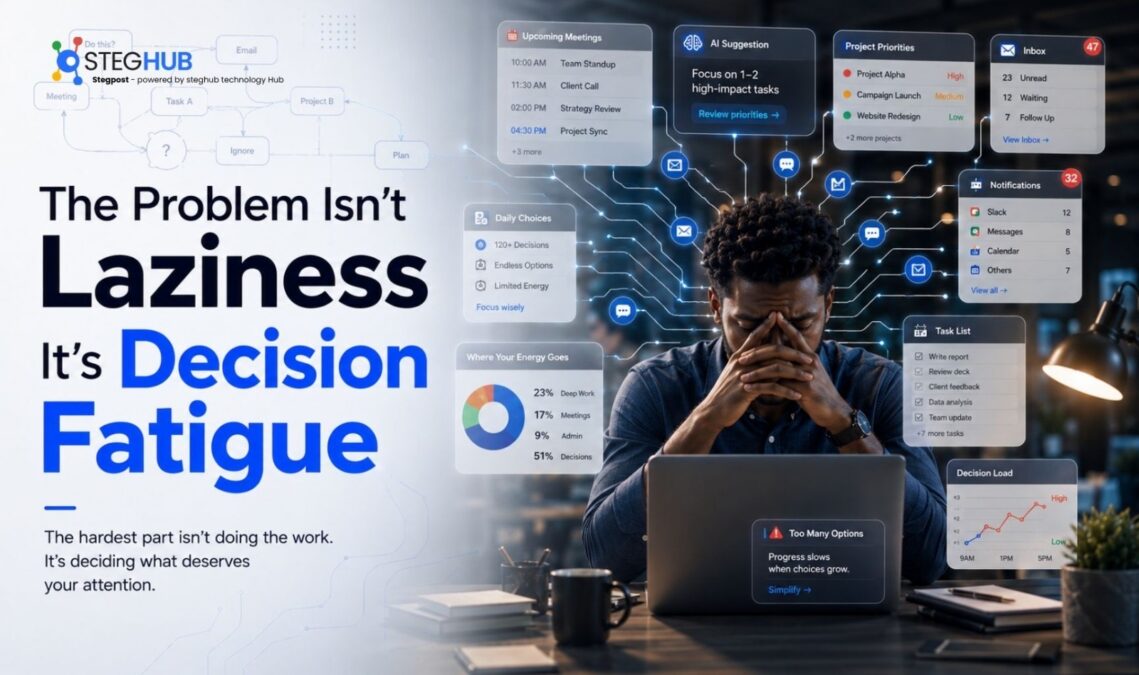
Have you ever had one of those days where you sit down to work, full of energy and good intentions…
Then, somehow spend 20 minutes deciding which task to start?
You finally pick one.
Then an email comes in.
A message pops up.
You remember another thing you need to do.
Suddenly, it’s lunchtime, and you’ve been “busy” all morning without actually making much progress.
At that point, it’s easy to tell yourself:
“Maybe I’m just being lazy.”
But what if that’s not the problem?
What if you’re simply tired of making decisions?
Because, believe it or not, your brain gets exhausted too.
And sometimes, the thing slowing you down isn’t a lack of motivation.
It’s decision fatigue.
Your Brain Has a Daily Battery Too
Think about your phone for a second.
You start the day with a full battery.
As you use apps, answer messages, watch videos, and browse the internet, that battery slowly drains.
Your brain works similarly.
Every decision you make uses a little bit of mental energy.
What should I work on first?
Should I reply now or later?
Should I attend this meeting?
Should I take this course?
Do I finish this task or start another one?
Individually, these decisions seem small.
Together, they’re exhausting.
And most people don’t even realize it’s happening.
Why Choosing Can Feel Harder Than Doing
Here’s something funny.
Sometimes the hardest part of a task isn’t the task itself.
It’s deciding to start.
Think about a student sitting down to study.
The actual studying might take an hour.
But they spend 30 minutes deciding which topic to begin with.
Or a professional who needs to write a report.
The report takes two hours.
But they spend 45 minutes bouncing between emails, messages, and tabs before finally starting.
The work wasn’t the problem.
The endless decision-making before the work was.
The Modern Workplace Is Full of Decisions
This wasn’t always such a big problem.
Years ago, many jobs had more structure.
Today?
Your attention gets pulled in ten different directions before breakfast.
Slack notifications.
Teams messages.
Emails.
Calendar invites.
Project updates.
WhatsApp messages.
LinkedIn notifications.
That “quick question” from a colleague.
Each one asks your brain to make another decision.
Respond now?
Ignore it?
Prioritize it?
Schedule it?
Delegate it?
It’s like having fifty people knock on your office door every day.
Eventually, your mental energy starts running low.
Why You Can Decide What To Watch But Not What To Work On
Ever noticed how you can spend 40 minutes scrolling through Netflix without choosing a movie?
Or 20 minutes deciding what to eat?
The more options we have, the harder choosing becomes.
Work isn’t any different.
Many professionals don’t struggle because they have too little to do.
They struggle because they have too many options competing for attention.
Everything feels important.
Everything feels urgent.
And when everything matters, deciding what matters most becomes surprisingly difficult.
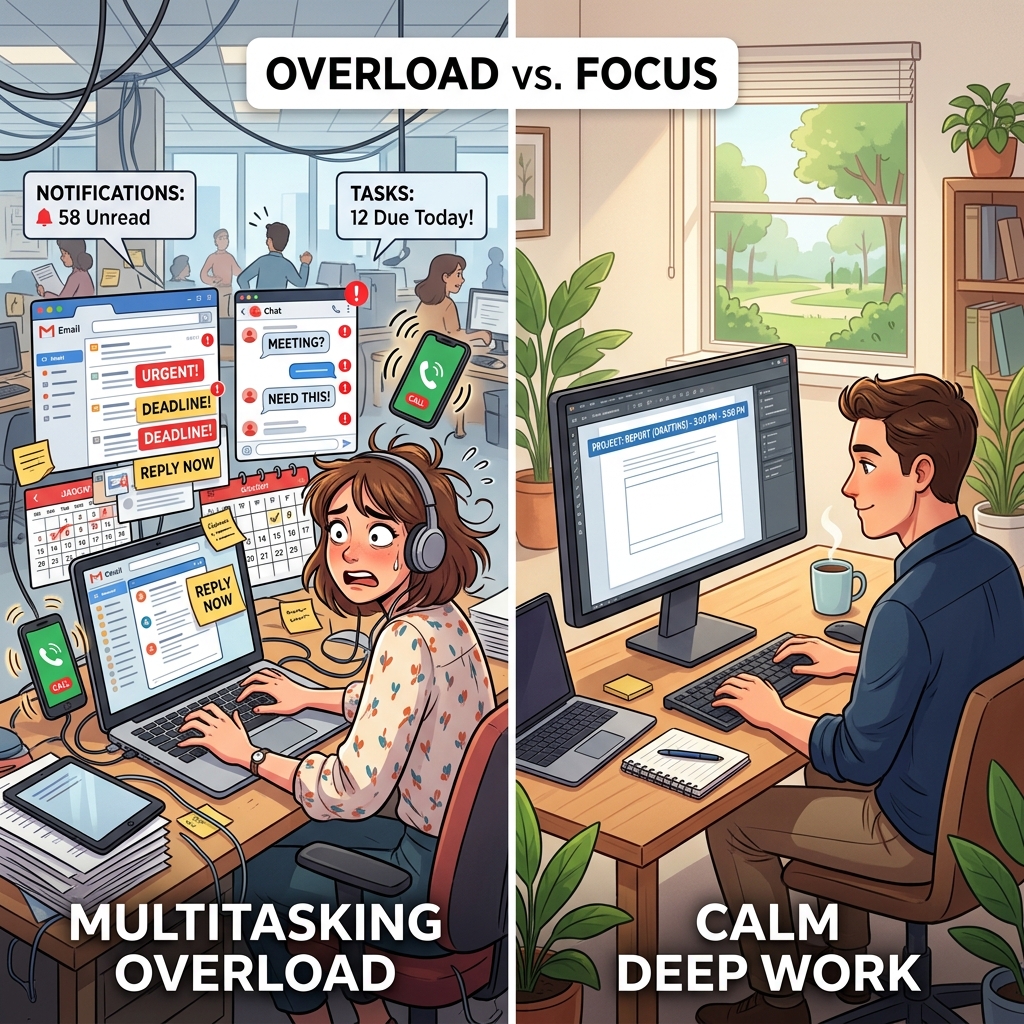
The Hidden Cost of Multitasking
Let’s talk about something many people secretly pride themselves on.
Multitasking.
Answering emails while attending a meeting.
Working on a report while replying to messages.
Switching between five tasks at once.
It feels productive.
But your brain pays a price every time it switches gears.
Imagine driving somewhere and changing directions every two minutes.
You’ll eventually get there.
But it’ll take much longer.
The same thing happens with your focus.
How Successful People Reduce Decisions
One thing I’ve noticed about highly productive people is that they don’t necessarily make better decisions.
They simply make fewer unnecessary ones.
Think about it.
Many successful people create systems.
They schedule their priorities.
They have routines.
They plan tomorrow’s work today.
They reduce the number of decisions they need to make in the moment.
Because every decision you automate saves energy for something more important.
A Simple Example Most People Miss
Imagine two professionals starting their day.
Person A opens their laptop and thinks:
“What should I do today?”
Person B already planned their top three priorities the day before.
Who do you think gets started faster?
Who wastes less energy?
Who feels less overwhelmed?
The difference isn’t intelligence.
It’s preparation.
How To Protect Your Mental Energy
You don’t need to overhaul your entire life.
Small changes help.
Try things like:
- Planning tomorrow before ending today.
- Limiting unnecessary notifications.
- Working on important tasks before checking emails.
- Creating routines for repetitive work.
- Taking breaks before your brain forces you to.
These aren’t productivity hacks.
They’re energy-management habits.
And there’s a difference.
Final Thoughts: Stop Calling Yourself Lazy
This might be the most important part of this entire article.
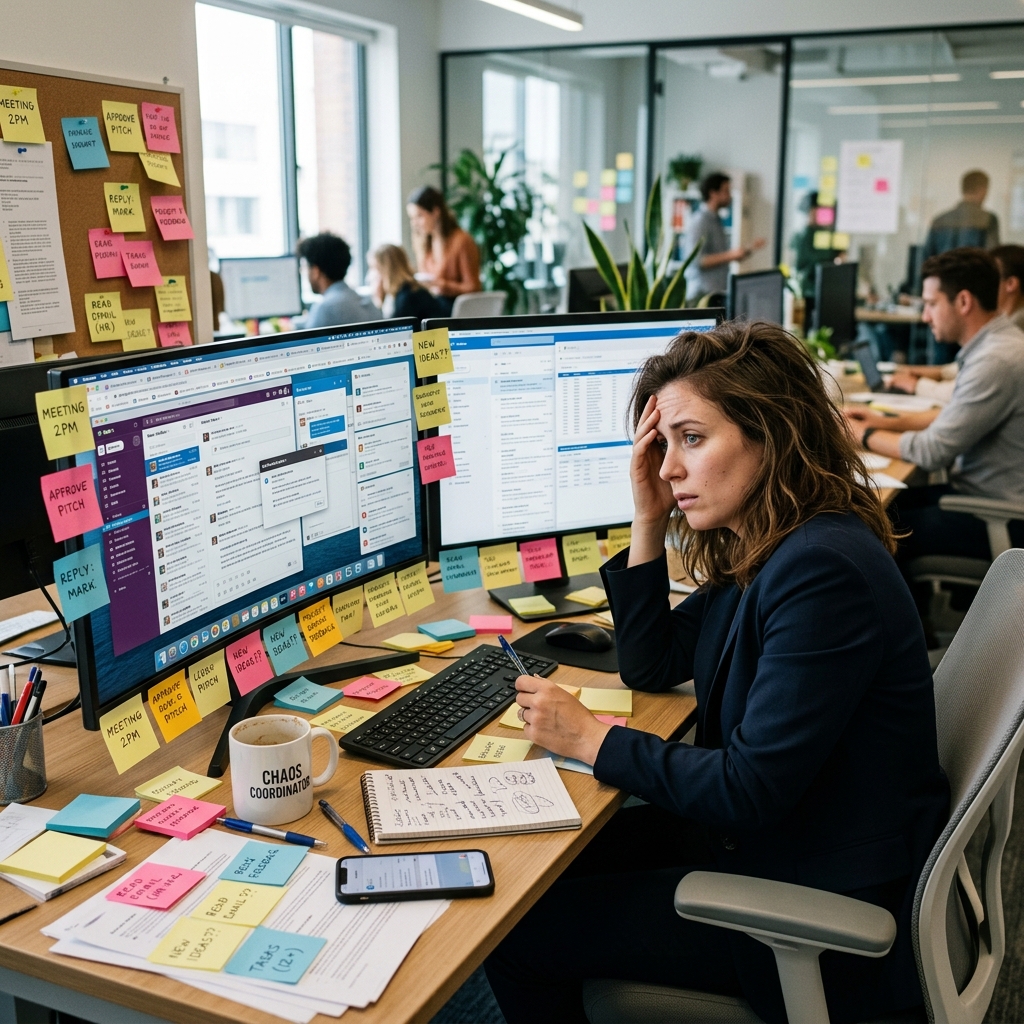
Not every unproductive day means you’re lazy.
Not every struggle to focus means you’re unmotivated.
Sometimes you’re simply mentally exhausted.
Sometimes you’ve spent so much energy making decisions that there’s very little left for the work itself.
The next time you catch yourself saying:
“I need to be more disciplined.”
Pause for a moment.
Ask yourself:
“Am I actually lazy, or am I just tired of deciding?”
Because those are two very different problems.
And once you understand the difference, you can finally stop fighting yourself and start protecting the mental energy that matters most.


