

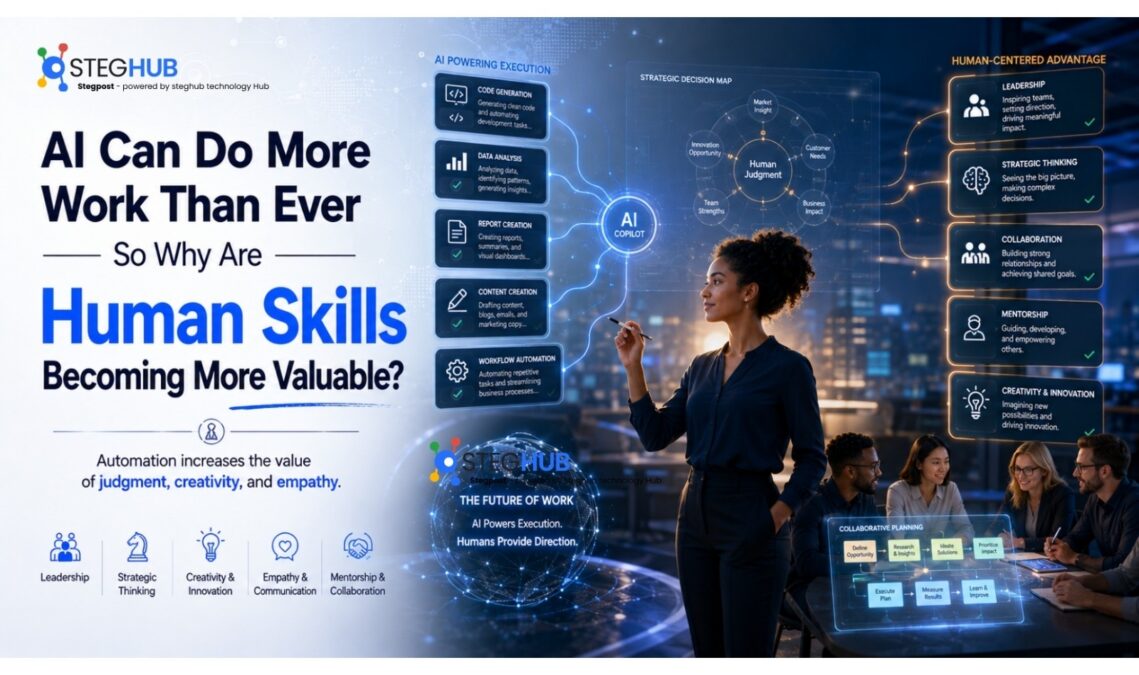
A few months ago, I saw a debate online that caught my attention.
One person confidently said,
“AI is going to replace almost every job.”
A few comments later, someone replied,
“If AI can do your entire job, maybe your job was never just about being human.”
That response stayed with me.
Not because it was dramatic.
Because there was some truth hidden inside it.
There’s no denying that AI has become incredibly capable.
It can write emails.
Summarize meetings.
Generate code.
Create presentations.
Design logos.
Analyze spreadsheets.
Even helps build websites.
Tasks that used to take hours can now take minutes.
It’s impressive.
It’s exciting.
And for some people, it’s a little scary.
But here’s something interesting that’s happening at the same time.
As AI becomes better at doing technical tasks, human skills are becoming even more valuable.
At first, that sounds backwards.
Shouldn’t they become less important?
Not quite.
Let’s talk about why.
AI Is Fast. But It Doesn’t Know Your Business
Imagine you’ve just opened a new restaurant.
You ask AI to create a marketing strategy.
Within seconds, it gives you a detailed plan.
Looks great.
Professional.
Well written.
But there’s one problem.
It doesn’t know that your biggest customers are university students.
It doesn’t know your budget is much smaller than average.
It doesn’t know you’re trying to compete with three restaurants on the same street.
It doesn’t know your long-term goals.
Someone still has to provide that context.
Someone still has to make the final decision.
That’s where humans come in.
AI can generate ideas.
People decide which ideas actually make sense.

Communication Is Becoming a Competitive Advantage
Have you ever worked with someone who was technically brilliant…
…but incredibly difficult to communicate with?
Maybe they knew the answers.
But explaining them felt like solving another problem.
Now think about someone else.
They might not be the smartest person in the room.
But they listen carefully.
Explain ideas clearly.
Ask thoughtful questions.
Keep everyone aligned.
Who would you rather work with every day?
Most people choose the second person.
Because projects don’t succeed through technical knowledge alone.
They succeed because people understand one another.
And that’s something AI still struggles to replace.
AI Can Generate Information. It Can’t Build Trust
Let’s say a client comes to you with a problem.
Technically, AI could draft a proposal.
It could even recommend solutions.
But trust isn’t built by sending documents.
It’s built through conversations.
Listening.
Understanding concerns.
Responding with empathy.
Reading the room.
Knowing when to challenge an idea respectfully.
Those moments are difficult to automate.
Because trust isn’t created by information.
It’s created by relationships.
The Best Professionals Don’t Compete With AI
One mistake many people are making is treating AI like a competitor.
Instead of asking,
“How do I beat AI?”
A better question might be,
“How do I work better because AI exists?”
Think about calculators.
They didn’t eliminate mathematicians.
They removed repetitive calculations.
Think about GPS.
It didn’t eliminate drivers.
It made navigation easier.
AI is following a similar path.
It’s taking care of repetitive tasks so people can spend more time solving bigger problems.
The professionals who understand this are becoming much more productive.
Not because AI replaced them.
Because AI supports them.
The Skills AI Can’t Easily Copy
Let’s play a quick game.
Imagine your team faces a major challenge.
A customer is unhappy.
A deadline has changed.
Two departments disagree.
A project is falling behind.
Now ask yourself.
What’s needed most?
Someone who can generate text?
Or someone who can calm the situation, make decisions, communicate clearly, and bring people together?
Exactly.
Technical skills remain important.
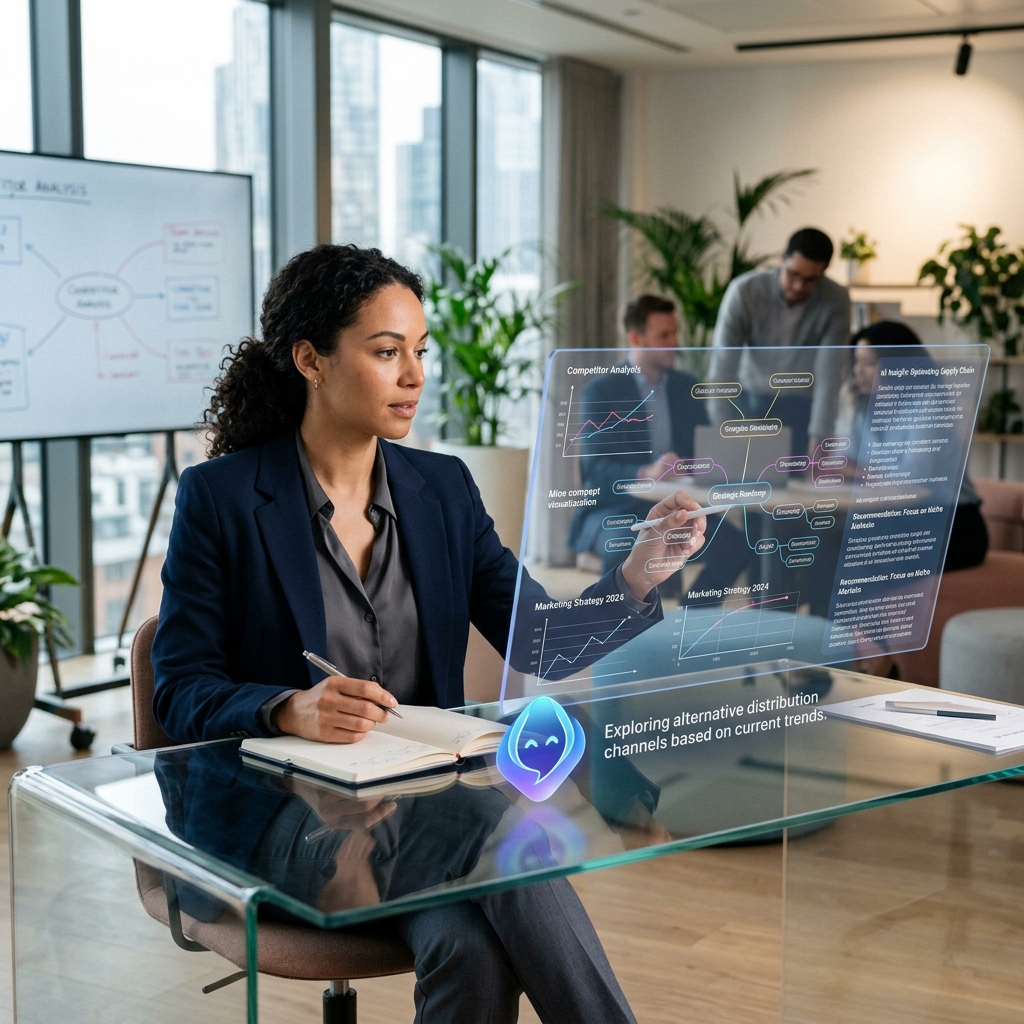
But they’re increasingly being paired with human skills like:
- Critical thinking
- Emotional intelligence
- Leadership
- Creativity
- Adaptability
- Collaboration
- Decision-making
These aren’t “soft skills.”
They’re business skills.
Because businesses run on people.
Here’s a Situation You Might Recognize
Imagine you’re in a meeting.
AI has already summarized the reports.
Generated possible solutions.
Even created presentation slides.
Everything is ready.
Then someone asks,
“Which option do you think is best for our customers?”
The room goes quiet.
Because AI can provide possibilities.
But someone still needs to weigh risks.
Understand people.
Consider timing.
Think about long-term consequences.
That’s human work.
And it probably always will be.
The Future Belongs to People Who Combine Both
This isn’t a story about humans versus AI.
It’s about humans with AI.
Think of a photographer.
A better camera doesn’t automatically create better photographs.
The photographer still chooses the angle.
The lighting.
The moment.
The story.
AI is becoming another powerful tool.
But tools become valuable because of the people using them.
The professionals who continue learning, adapting, and strengthening their human skills won’t become less relevant.
They’ll become even more valuable.
Final Thoughts: Being Human Is Still Your Greatest Advantage
It’s easy to feel overwhelmed by how quickly technology is changing.
Every week, there’s a new AI tool.
A new announcement.
A breakthrough.
And yes, many tasks are changing.
Some jobs will evolve.
Some workflows will look completely different.
But one thing hasn’t changed.
Businesses still need people who can lead.
Collaborate.
Think critically.
Build trust.
Solve problems.
And make good decisions when the answers aren’t obvious.
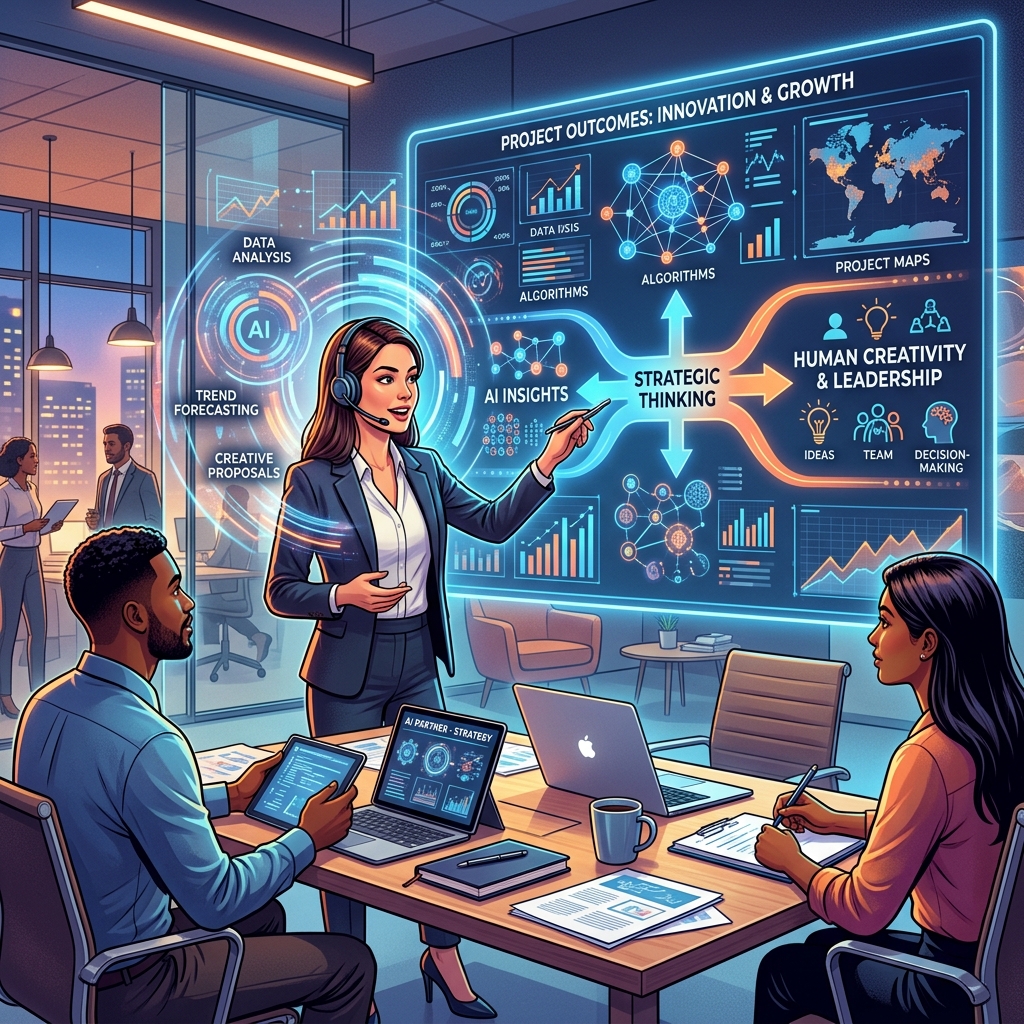
AI can help you work faster.
It can help you work smarter.
But it still needs something only you can bring.
Judgment.
Empathy.
Creativity.
Perspective.
So instead of worrying about whether AI will replace you, ask yourself something different:
“What human skill can I become exceptionally good at?”
Because in a future powered by technology, being deeply human may become your biggest competitive advantage.

