

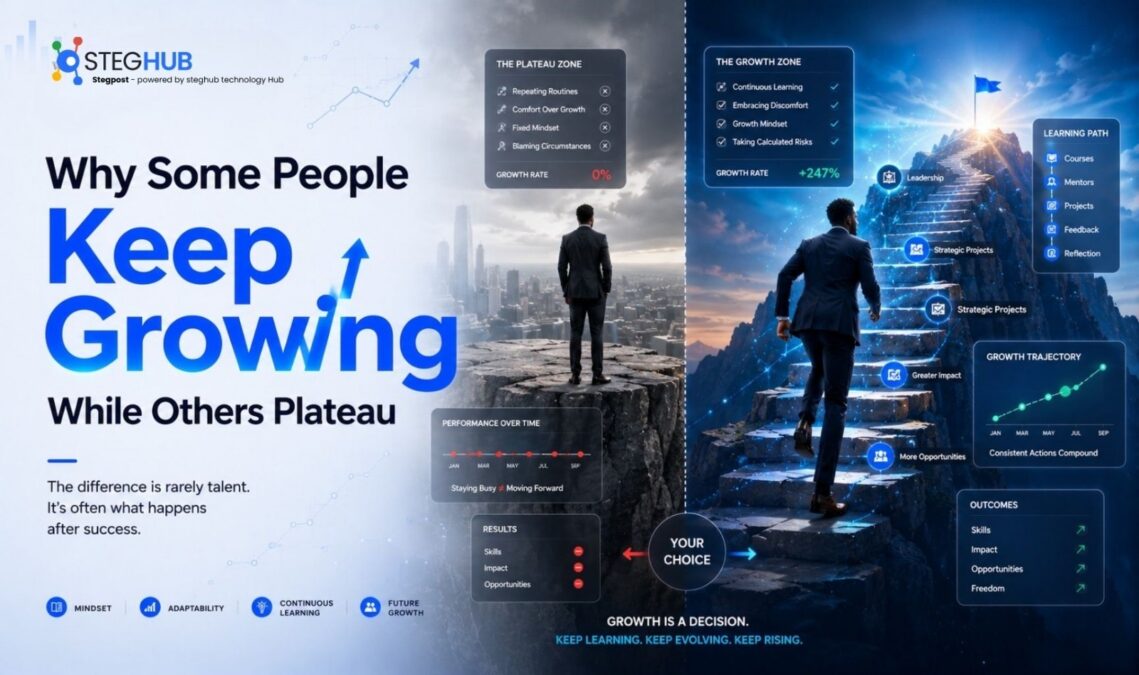
Have you ever looked at someone you started your career with and wondered:
“How did they get so far ahead?”
You joined around the same time.
You have similar qualifications.
You both work hard.
You both face challenges.
Yet somehow, five years later, their career looks completely different.
They’re leading projects.
Getting opportunities.
Building connections.
Learning new skills.
And moving forward.
Meanwhile, you feel like you’ve been standing in the same spot.
It’s a frustrating feeling.
And it’s easy to assume the difference is talent, intelligence, or luck.
But most of the time, it’s not.
The difference is usually much smaller than people think.
Growth Rarely Happens In One Big Moment
One of the biggest misconceptions about success is that it happens overnight.
It doesn’t.
Most career growth happens so gradually that you barely notice it.
Think about going to the gym.
You don’t wake up one morning with a completely different physique after a single workout.
It’s the small workouts repeated consistently over time that create results.
Careers work the same way.
One course won’t change your life.
One networking event won’t transform your future.
One book won’t suddenly make you an expert.
But dozens of small actions over several years?
That’s where things start getting interesting.
Curious People Tend To Go Further
Have you ever met someone who asks a lot of questions?
Not because they’re confused.
Because they’re curious.
Those people often grow faster than everyone else.
They want to understand how things work.

They ask why processes exist.
They explore new tools.
They experiment with different approaches.
While others are focused on completing tasks, curious people are learning from the tasks.
And over time, that creates a huge advantage.
Feedback Isn’t Always Comfortable, But It’s Powerful
Let’s be honest.
Nobody enjoys hearing they’ve made a mistake.
Nobody enjoys criticism.
Nobody enjoys finding out that something could have been done better.
But the people who grow the fastest usually have a different relationship with feedback.
Instead of seeing feedback as an attack, they see it as information.
Imagine trying to improve your driving without ever looking in your mirrors.
Sounds ridiculous, right?
That’s what personal growth looks like without feedback.
You can’t improve what you refuse to examine.
And while feedback can sting a little, it often points directly toward growth.
Some People Learn. Others Repeat.
This one is worth thinking about.
Experience alone doesn’t automatically create growth.
Someone can spend ten years doing the same thing.
Or they can spend one year learning and improving ten times.
There’s a difference.
For example, imagine two customer service representatives.
Both have worked for three years.
One handles the same situations the same way every day.
The other reflects on difficult interactions, learns better communication techniques, and constantly improves.
Both have experience.
Only one is growing.
The lesson?
Time helps.
But intentional learning helps even more.
They Don’t Wait Until They Feel Ready
Here’s something many successful professionals have in common.
They take action before they feel completely prepared.
Not recklessly.
Not carelessly.
But courageously.
They apply for roles they’re not 100% qualified for.
They volunteer for projects they’ve never handled before.
They learn skills they don’t fully understand yet.
Meanwhile, many talented people stay stuck waiting for confidence.

The irony?
Confidence usually comes after action, not before it.
Relationships Matter More Than Most People Realize
Let’s talk about something many workers overlook.
Growth isn’t only about skills.
It’s also about people.
The colleague who recommends you for a role.
The mentor who shares valuable advice.
The connection who introduces you to an opportunity.
The manager who believes in your potential.
Careers are often built through relationships just as much as qualifications.
This doesn’t mean networking in a fake or transactional way.
It means building genuine connections.
Helping people.
Learning from people.
Being someone others enjoy working with.
They Stay Students Longer Than Everyone Else
One thing I’ve noticed about people who continue growing is that they never stop learning.
Even after promotions.
Even after recognition.
Even after success.
They’re still curious.
Still exploring.
Still asking questions.
Still developing new skills.
Because they understand something important:
The moment you think you’ve learned enough is often the moment your growth begins to slow down.
Small Habits Create Big Differences
When people look at successful professionals, they often focus on the visible outcomes.
The promotion.
The leadership role.
The salary increase.
The recognition.
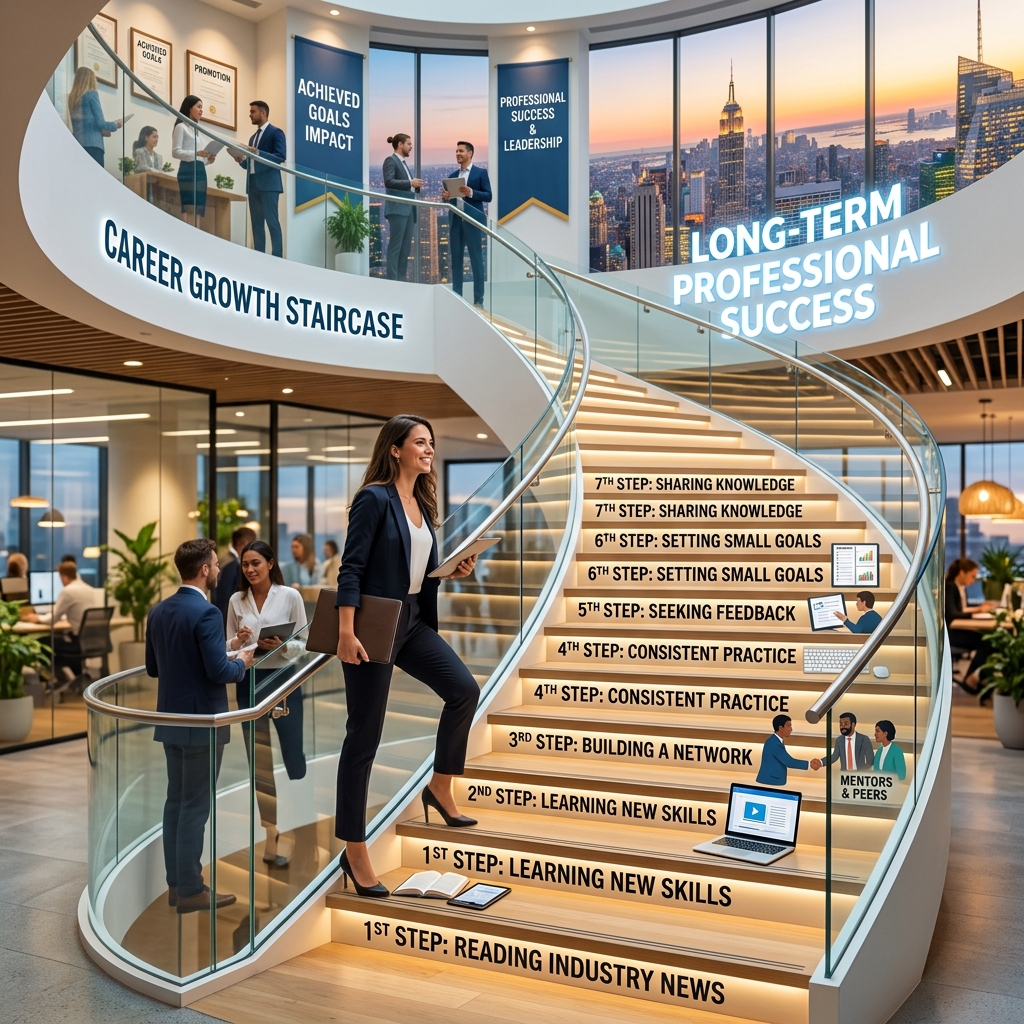
What they don’t see are the habits behind those outcomes.
The books read.
The skills learned.
The conversations had.
The risks taken.
The lessons applied.
Growth usually looks boring while it’s happening.
But the results eventually become impossible to ignore.
Final Thoughts: Growth Is Usually A Choice
Not everyone starts from the same place.
Not everyone gets the same opportunities.
And yes, luck can play a role.
But over the long run, the people who keep growing often share similar habits.
They stay curious.
They seek feedback.
They build relationships.
They embrace learning.
And they take action before everything feels perfect.
The good news?
None of those things requires extraordinary talent.
They simply require consistency.
So if you’ve been feeling stuck lately, don’t ask:
“Why am I not where they are?”
Instead ask:
“What small habit can I improve today?”
Because growth rarely comes from one big breakthrough.
More often, it comes from hundreds of small decisions that quietly compound over time.
And those decisions are available to all of us.

