

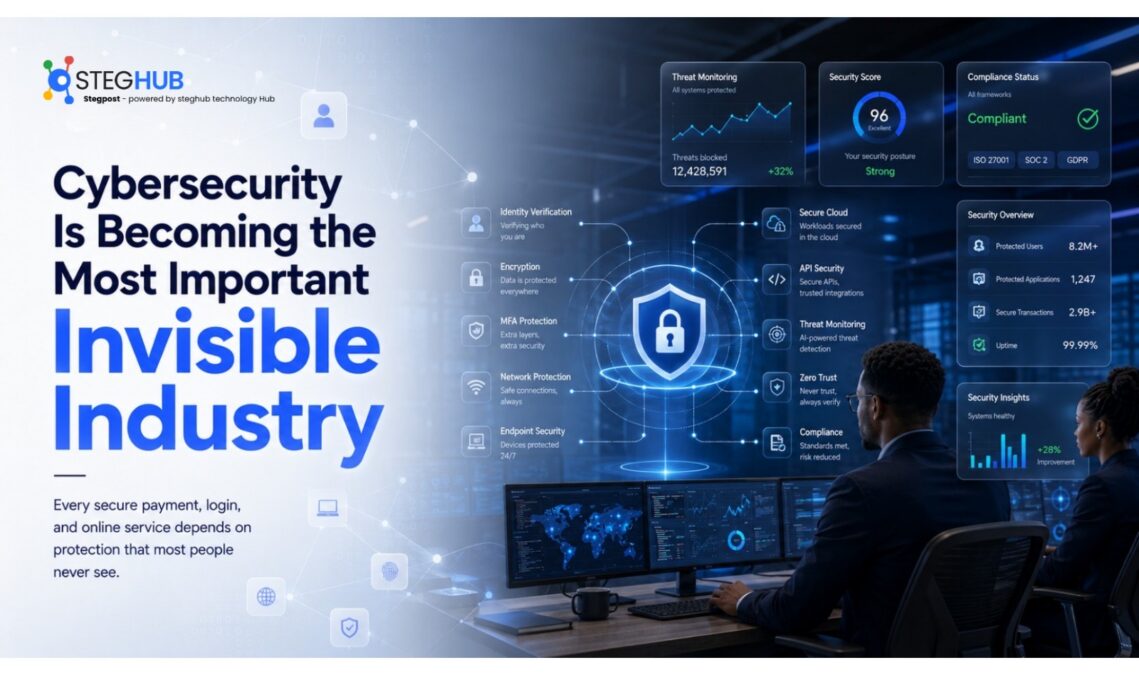
When you transfer money through a banking app, you probably think about the amount you’re sending.
When you book a flight online, you focus on the destination.
When a hospital accesses a patient’s digital record, the priority is the treatment, not the technology behind it.
In each of these moments, something incredibly important is happening quietly in the background:
Someone is working to keep that information secure.
Most people never see it.
There are no dramatic animations when a cyberattack is blocked.
No notification saying,
“Good news! A hacker was stopped 3,472 times today.”
Cybersecurity is one of the few industries whose greatest successes are often completely invisible.
As the world becomes more connected, this invisible work is becoming more important than ever before.
The Digital World Has Become Real Infrastructure
A few decades ago, losing access to a computer might have been an inconvenience.
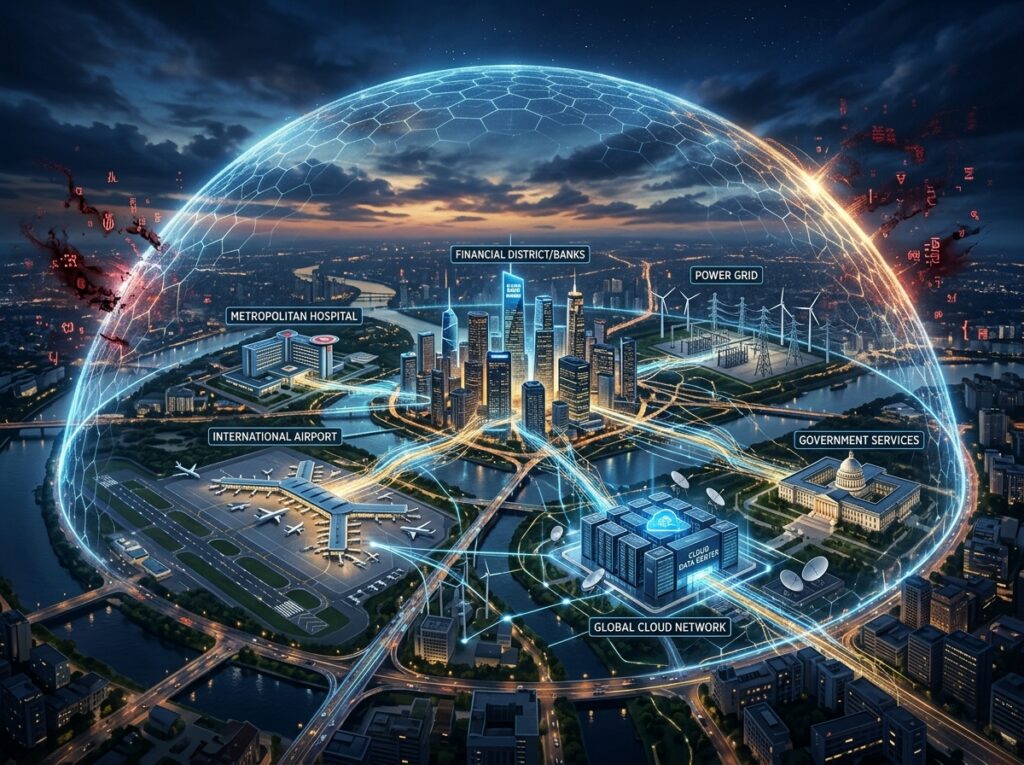
Today, digital systems control things that affect real human lives.
- Banks process salaries and payments.
- Hospitals store medical records and run critical equipment.
- Airports manage flight operations.
- Power companies monitor electricity networks.
- Governments deliver public services online.
- Businesses depend on cloud platforms for daily operations.
If these systems fail, the consequences are not just technical.
They can become financial, operational, and even life-threatening.
That is why cybersecurity is no longer simply an “IT department issue.”
It has become part of the critical infrastructure of modern society.
Hackers Don’t Always Wear Hoodies in Dark Rooms
Movies have given us a very dramatic image of cybercriminals.
A mysterious person is typing furiously in a dark room while green code scrolls across multiple monitors.
Reality is usually much less theatrical.
Many attacks are surprisingly ordinary.
- A fake email pretending to be from a bank.
- A malicious link disguised as an invoice.
- A weak password that was easy to guess.
- An employee was tricked into revealing sensitive information.
- An outdated system that was never patched.
In other words, cybersecurity is often less about Hollywood-style hacking and more about protecting everyday digital habits.
Sometimes the biggest vulnerability in a company is not its software.
It’s a human being having a busy day and clicking the wrong link.
Why Cybersecurity Is Called a “Cat-and-Mouse Game”
Imagine building a strong lock for your front door.
For a while, it works perfectly.
Then someone invents a new tool designed to pick that lock.
You improve the lock again.
They develop a new technique.
This cycle never really ends.
Cybersecurity works the same way.
Security professionals are constantly:
- Identifying new threats
- Patching vulnerabilities
- Monitoring suspicious activity
- Improving authentication systems
- Training employees
- Testing defenses before attackers do
At the same time, cybercriminals are constantly looking for new ways around those defenses.
It’s an ongoing race where standing still is not an option.
The Rise of Ransomware Changed Everything
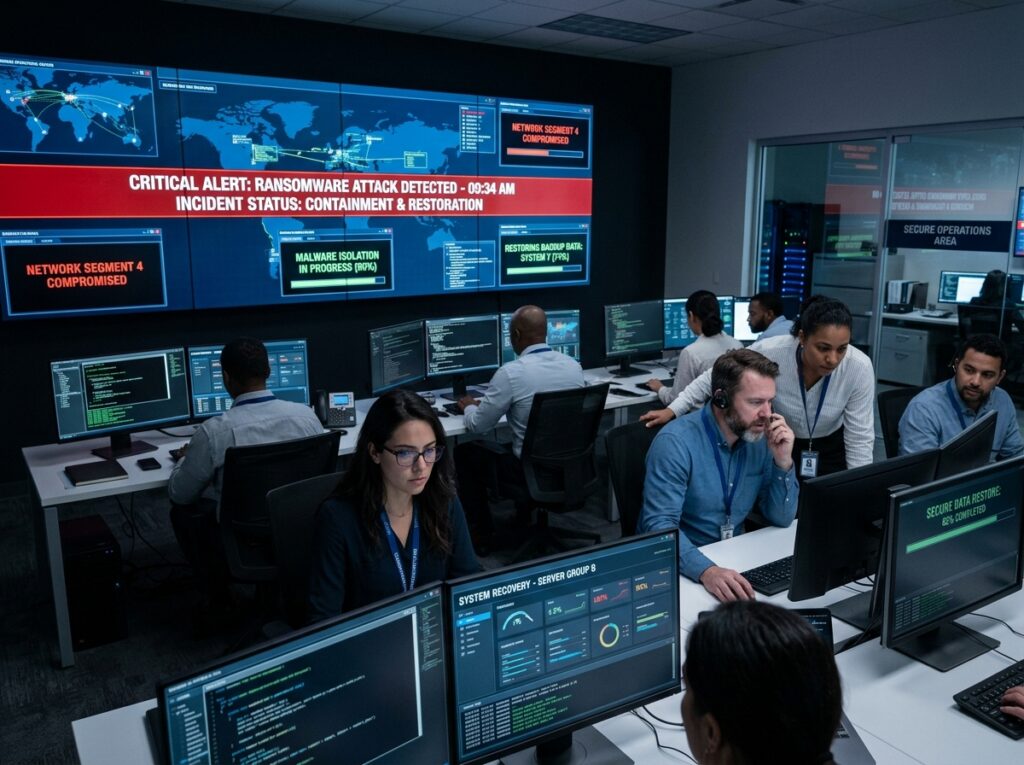
One of the biggest reasons cybersecurity has become such a major industry is the growth of ransomware.
Ransomware is a type of attack where criminals lock or encrypt a company’s data and demand payment to restore access.
Imagine arriving at work and discovering that every file, customer record, invoice, and database has suddenly become unreadable.
For many organizations, that could bring operations to a complete halt.
Hospitals have faced disruptions.
Schools have been affected.
Manufacturing companies have had production lines interrupted.
Local governments have struggled to deliver services after major attacks.
These incidents have made executives realize something important:
Cybersecurity is not just about protecting computers. It’s about protecting the ability to operate at all.
AI Is Making the Challenge Even Bigger
Artificial intelligence is creating incredible opportunities, but it is also changing the cybersecurity landscape.
Attackers can now use AI to:
- Create more convincing phishing emails
- Automate certain types of attacks
- Generate realistic fake messages
- Analyze large amounts of stolen data more quickly
Fortunately, defenders are using AI too.
Security systems can detect unusual behavior, identify suspicious login attempts, recognize malware patterns, and respond to threats much faster than humans alone could manage.
The future of cybersecurity will likely involve AI fighting AI, with human experts guiding the strategy and making critical decisions.
The Industry Nobody Notices Until Something Goes Wrong
Think about electricity.
You rarely think about the power grid when the lights are working.
But the moment the power goes out, it becomes the most important thing in the room.
Cybersecurity is very similar.
When your banking app works, you don’t think about encryption.
When your cloud files open normally, you don’t think about access controls.
When your company avoids a major breach, you may never know how many threats were blocked behind the scenes.
This is what makes cybersecurity such an unusual profession.
Success often looks like nothing happening at all.
No breach.
No outage.
No stolen data.
No headlines.
And that quiet success is incredibly valuable.
The Career Opportunity Is Bigger Than Many People Realize
Because cybersecurity sounds highly technical, many people assume it is only for elite hackers or advanced programmers.
In reality, the field includes many different roles:
- Security analysts
- Cloud security specialists
- Compliance and risk professionals
- Incident responders
- Security awareness trainers
- Identity and access management specialists
- Governance and policy experts
- Threat intelligence analysts
- Security auditors
Some roles require deep technical expertise.
Others require strong analytical thinking, communication skills, attention to detail, or an understanding of business processes and regulations.
As organizations face increasing digital threats, the demand for cybersecurity talent continues to grow across various sectors, including finance, healthcare, education, government, retail, and cloud technology.

The Bigger Picture: Trust Is the Real Product
At its core, cybersecurity is not really about firewalls, passwords, or encryption algorithms.
Those are tools.
The real product is trust.
We trust banks to protect our money.
We trust hospitals to protect our medical information.
We trust cloud platforms to protect our documents.
We trust online stores to protect our payment details.
Without that trust, the digital economy would struggle to function.
People would hesitate to bank online, shop online, store files in the cloud, or use digital government services.
Cybersecurity is the invisible foundation that allows modern digital trust to exist.
Final Thoughts: The Most Important Industry You Rarely See
The next time you log into your bank account, join a video call, upload a document to the cloud, or receive a secure verification code, remember that an enormous amount of invisible work is happening behind the scenes.
Security teams are monitoring networks.
Cloud systems are checking permissions.
Encryption protects data in transit.
Threat detection systems are analyzing suspicious activity.
Incident response teams are preparing for problems that may never happen.
As our world becomes more digital, cybersecurity is quietly becoming one of the most important industries on Earth.
Not because it creates the flashiest apps.
Not because it gets the most attention.
But it protects the systems that modern life increasingly depends on.
The safest hospitals, banks, businesses, and governments are not the ones that never face threats.
They’re the ones with skilled people working every day to make sure those threats remain invisible to everyone else.
And that is why cybersecurity is becoming the most important invisible industry of the digital age.

