


Have you ever been counting down to something exciting?
A concert ticket sale.
A football match.
A scholarship application.
A flash sale with unbelievable discounts.
Or maybe the registration for a highly anticipated event.
The clock finally hits the exact time.
You rush to the website.
You click.
And…
Nothing.
The page keeps loading.
It refreshes endlessly.
An error message appears.
Or worse, the website completely crashes.
Almost immediately, social media fills up with comments.
“Their developers didn’t test the website.”
“How can such a big company have such a terrible website?”
“This is embarrassing.”
It’s easy to assume someone made a huge mistake.
Sometimes they did.
But more often than not, there’s something much bigger happening behind the scenes.
Let’s take a look at why websites sometimes fail at the exact moment everyone needs them most.
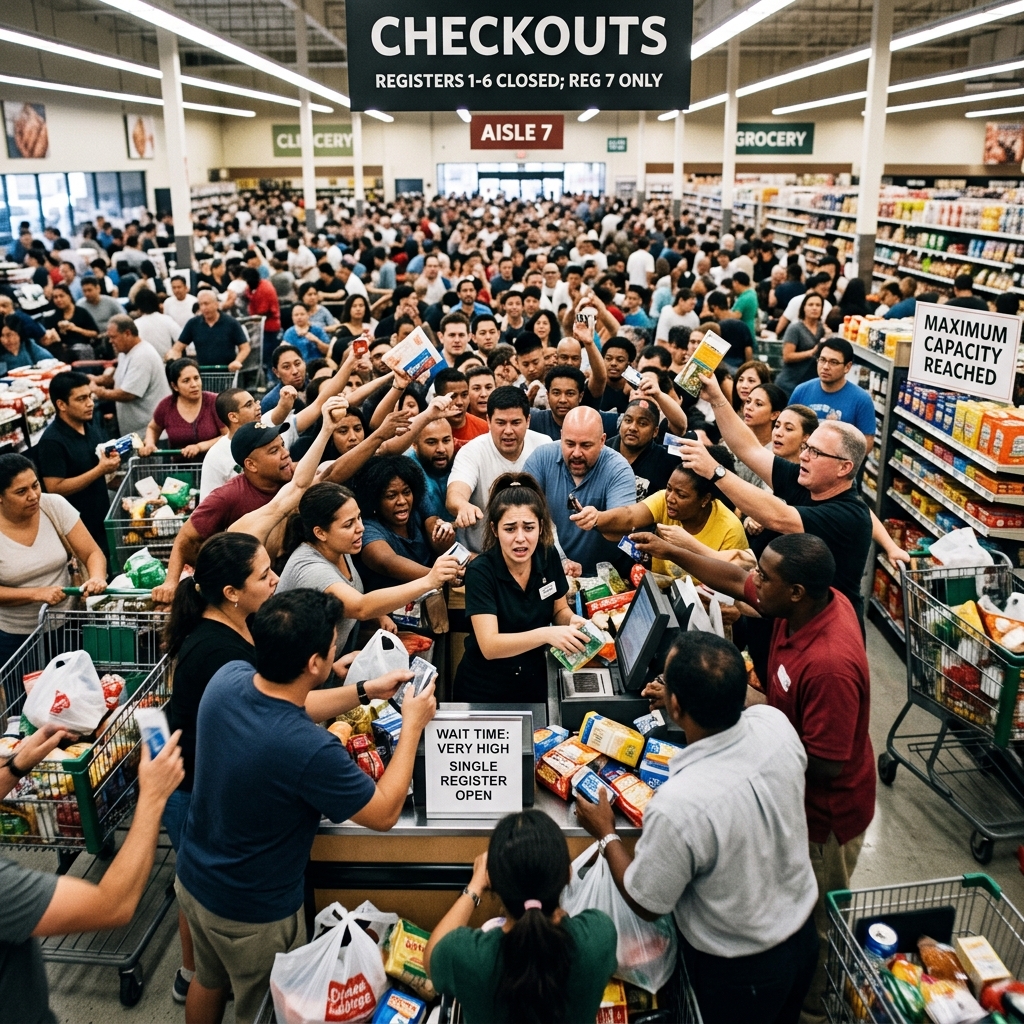
Imagine One Cashier Serving an Entire Stadium
Picture a supermarket with one cashier.
On a normal Tuesday afternoon, everything runs smoothly.
Customers arrive one after another.
The queue moves quickly.
Nobody complains.
Now imagine announcing that every item in the store is free for the next ten minutes.
Within seconds, thousands of people rush through the entrance.
Suddenly, that one cashier has to serve everyone at once.
It doesn’t matter how experienced they are.
There are simply too many people trying to do the same thing at the same time.
Websites face a very similar challenge.
Every time you open a website, you’re sending a request asking its servers to respond.
When millions of people send those requests at exactly the same moment, the servers can become overwhelmed.
It’s not that the website forgot how to work.
It’s simply trying to answer far more people than it was originally handling.
Every Click Is a Conversation
Most of us think visiting a website is instant.
Click.
Page opens.
Done.
Behind the scenes, however, every click starts a conversation.
Your device asks,
“Can I see the homepage?”
The server replies,
“Sure, here it is.”
Then your browser asks for the images.
The fonts.
The buttons.
The videos.
The login information.
Every single part of the page requires another request.
Now imagine one million people starting those conversations simultaneously.
The server isn’t having one conversation anymore.
It’s trying to respond to millions at once.
Even powerful computers have limits.
It’s Like Everyone Calling the Same Phone Number
Think about calling customer service.
If only a few people are calling, someone answers quickly.
But imagine ten million people dialing the exact same number within one minute.
Some calls get through.
Some are placed on hold.
Others simply fail.
The phone system hasn’t broken.
It’s just reached its capacity.
Servers work in much the same way.
They can only process so many requests at a time before queues begin forming.
When those queues become too large, the website starts slowing down or stops responding altogether.
Big Companies Prepare for This… But They Can’t Predict Everything
You might wonder,
“Surely companies like Ticketmaster, Amazon, or government agencies know this will happen?”
They do.
In fact, many spend months preparing for major launches.
They add more servers.
Test their systems.
Monitor traffic.
Create backup plans.
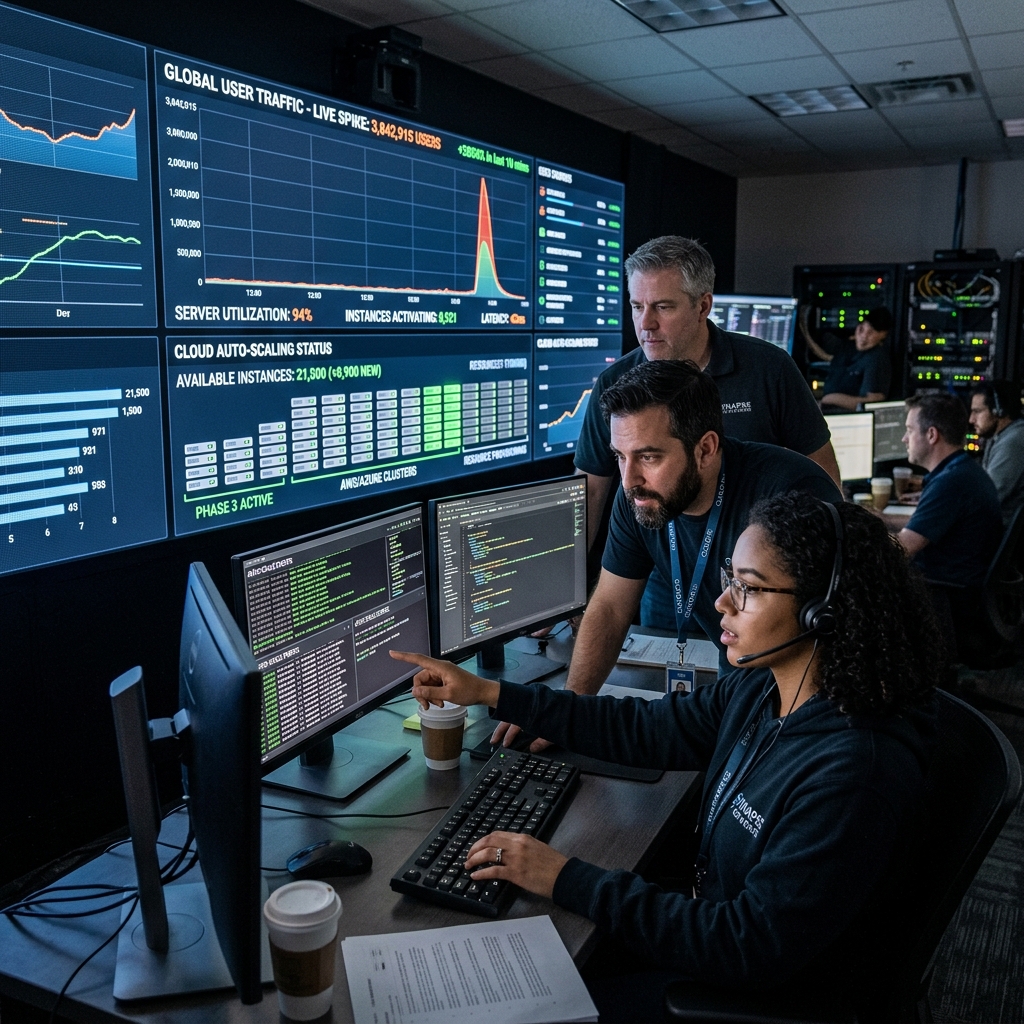
Some even use cloud technology that automatically adds more computing power when visitor numbers increase.
But here’s the challenge.
Nobody can predict human behaviour perfectly.
Will one million people visit?
Five million?
Ten million?
What if a celebrity unexpectedly shares the website?
What if the event goes viral?
Traffic can increase far beyond even the most optimistic predictions.
Sometimes the demand isn’t just high.
It’s historic.
This Is Where the Cloud Becomes a Superpower
Years ago, companies had to buy physical servers.
If demand doubled, they had to purchase more hardware.
That took time.
Today, many websites run on cloud platforms.
Think of the cloud as a flexible office building.
On a normal day, you rent ten rooms.
If thousands of extra people arrive, you can temporarily rent another hundred rooms.
Once things return to normal, you simply give those extra rooms back.
That’s why cloud computing has become such an important part of modern technology.
It allows businesses to grow—and shrink—their computing power much more quickly than before.
Even then, though, there are limits.
No system has unlimited capacity.
Sometimes the Website Isn’t Actually Broken
Here’s something many people don’t realize.
Occasionally, websites slow down on purpose.
That might sound strange, but it’s often done to protect everyone.
Imagine trying to enter a stadium.
Instead of letting fifty thousand people push through one tiny gate at once, security asks everyone to form a queue.
It’s safer.
More organized.
Many websites do the same thing.
You may have seen messages like:
“You’re in a waiting room.”
“Estimated wait time: 8 minutes.”
It can be frustrating.
But it’s often much better than allowing the entire website to collapse.
A controlled queue keeps the service available for everyone.
The Next Time It Happens…
The next time a website crashes during ticket sales, exam registration, scholarship applications, or a product launch, take a moment before blaming the developers.
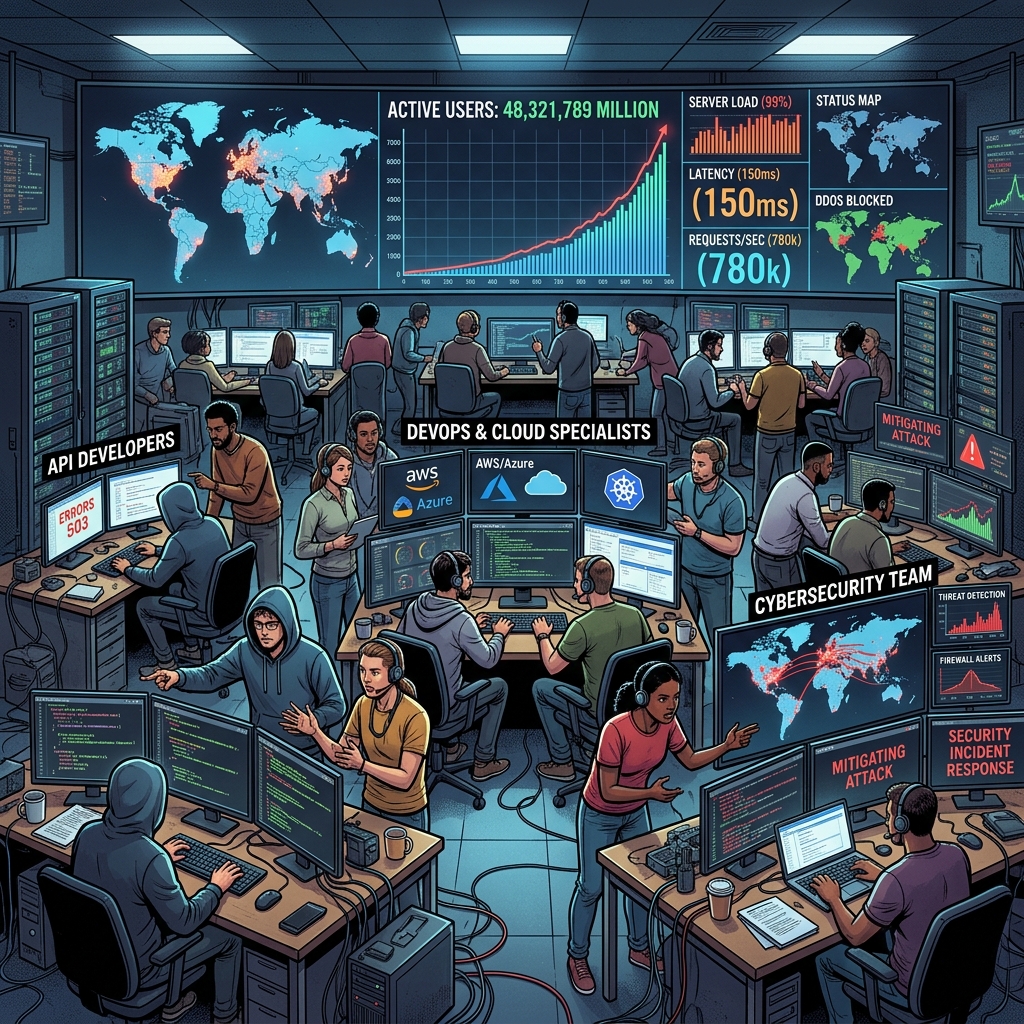
Behind that frozen loading screen is a team of engineers watching dashboards in real time.
Cloud systems scaling up.
Security teams checking for attacks.
Developers investigating bottlenecks.
Support teams updating customers.
Hundreds of people may be working together to solve a problem most users only see as a spinning loading icon.
Technology is rarely as simple as it looks.
Final Thoughts: Sometimes Success Is the Reason a Website Fails
Ironically, one of the biggest reasons websites crash…
…is because they’re too successful.
Too many people want the same thing at the same time.
The very popularity that makes an event exciting can also create enormous technical challenges.
That’s why companies continue investing in better cloud infrastructure, faster servers, smarter software, and stronger systems.
Not because technology is perfect.
But because every major event teaches engineers something new.
So the next time you find yourself staring at a loading screen while thousands of other people complain online, remember this:
Somewhere behind the scenes, an entire team is working tirelessly to get things back online.
And sometimes, that little spinning circle on your screen isn’t a sign that technology has failed.
It’s a reminder of just how many people wanted exactly what you wanted at the same moment.

