

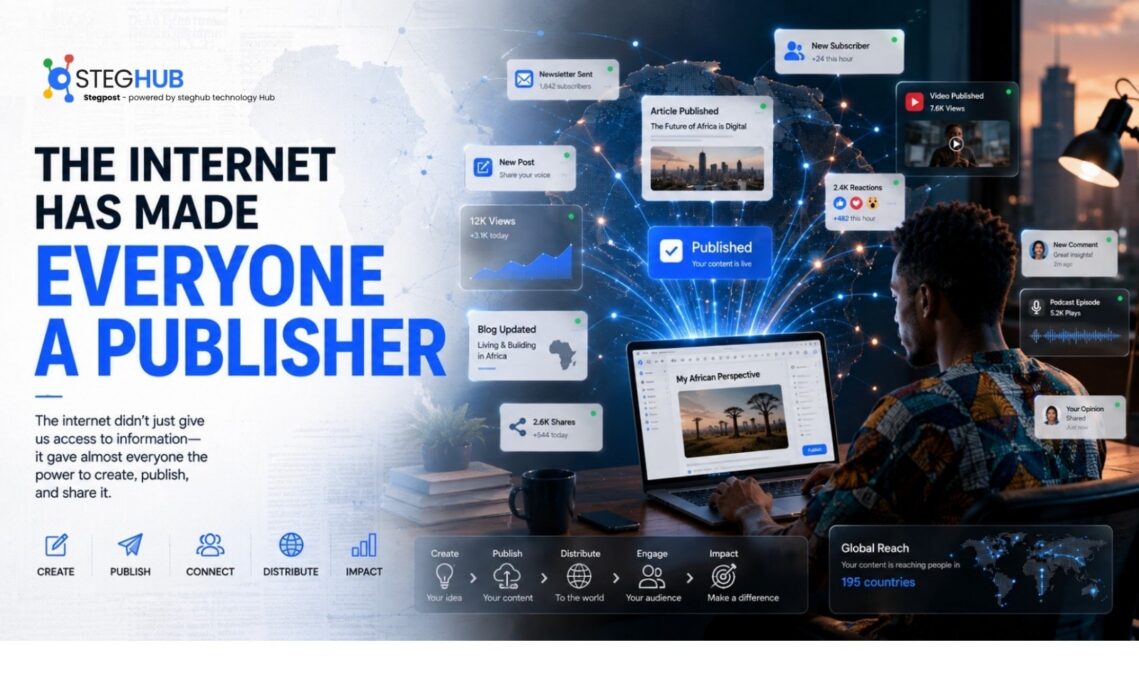
A few years ago, if you wanted to reach millions of people, you needed access to a media company.
You needed a television station, a newspaper, a radio network, or a publishing house.
There were gatekeepers.
Editors decided which stories were published.
Producers decided what went on air.
Media companies owned the distribution channels, and individuals needed those channels to reach a large audience.
Today, someone can sit in their bedroom with a smartphone, a laptop, and an internet connection, and build an audience larger than some traditional media outlets.
One person can run a newsletter read by hundreds of thousands of people.
Another can create a YouTube channel that attracts millions of viewers.
A podcaster can build a global audience without ever stepping into a radio station.
A technology creator can become the person thousands of people turn to for industry news, analysis, and education.
The interesting part is that these creators are no longer simply using media platforms.
Increasingly, they are becoming media companies themselves.
And that is quietly changing who gets to shape conversations, distribute information, build audiences, and make money online.
The Old Model: You Needed Someone to Give You a Platform
For most of modern media history, distribution was expensive.
Printing newspapers required printing presses.
Running a television station required enormous infrastructure.
Radio required equipment, licenses, and broadcast networks.
Even publishing a book often meant convincing a publishing company to invest in you.
The difficult part wasn’t always creating something worth sharing.
The difficult part was getting it in front of people.
Media companies controlled that distribution.
If you were a writer, you would need a newspaper.
If you were a journalist, you would need a publication.
If you were a musician, you needed access to distribution.
If you wanted to appear on television, someone needed to invite you.
The media company was the bridge between the creator and the audience.
But the internet started removing pieces of that bridge.
First came websites.
Then blogs.
Then social media.
Then YouTube.
Then podcasts.
Then newsletters.
Then platforms designed specifically for independent creators.
Suddenly, publishing was no longer limited to companies with expensive infrastructure.
Anyone could press Publish.
But Publishing Was Only the Beginning
The internet didn’t just make it easier to publish.
It made it possible to build a direct relationship with an audience.
That is the real shift.
Imagine two different situations.
In the first, you write a newspaper article.
The newspaper owns the website.
The newspaper controls distribution.
The newspaper has an audience.
You are contributing to someone else’s media machine.
In the second, you publish under your own name.
People subscribe directly to you.
They follow your work.
They join your newsletter.
They listen to your podcast.
They recognize your style.
They come back because they want to hear what you have to say.
The creator becomes the destination.
That changes the relationship completely.
Instead of simply being someone who creates content, the individual begins to build an audience, a distribution channel, a reputation, and eventually, a business.
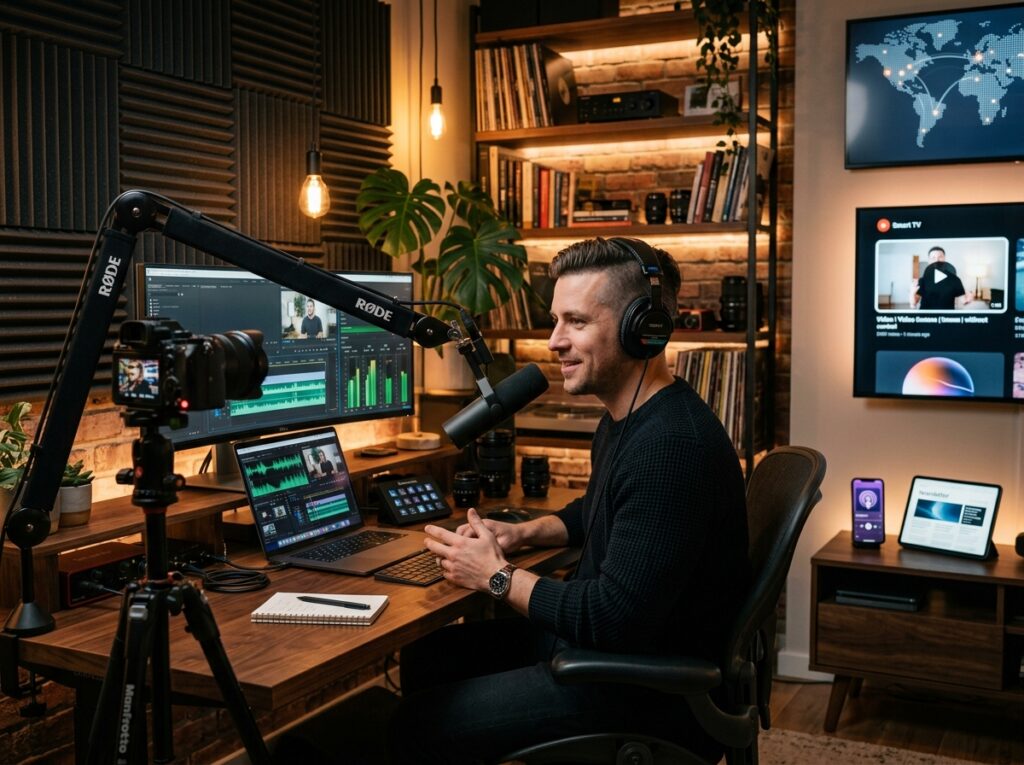
One Person Can Now Run an Entire Media Operation
Think about what a modern creator can do from a laptop.
Research a story.
Write an article.
Record a video.
Edit a podcast.
Design graphics.
Publish a newsletter.
Schedule social media posts.
Analyze audience data.
Respond to comments.
Sell a product.
Manage subscriptions.
Communicate with a global audience.
Not long ago, many of these tasks were handled by separate departments.
Writers.
Editors.
Designers.
Producers.
Marketing teams.
Distribution teams.
Sales teams.
Today, one person can do a surprising amount of it.
Not always perfectly.
Not always alone.
But enough to build something significant.
Technology has effectively compressed an entire media operation into a collection of software tools.
The creator may still need a team eventually.
But the point is that they no longer need one before they can begin.
The Creator Is the Brand, the Publisher, and Sometimes the Product
This is where the creator economy becomes particularly interesting.
A traditional media company can survive changes in individual personalities.
A newspaper may have different writers over decades.
A television network can replace one presenter with another.
But for many independent creators, the relationship is personal.
People aren’t only subscribing to the topic.
They are subscribing to the person.
Their perspective.
Their personality.
Their sense of humor.
Their way of explaining things.
Their opinions.
Their expertise.
Two people can discuss the exact same technology news.
One may attract a huge audience.
The other may not.
The difference isn’t necessarily the information.
It’s the interpretation.
This is why creators can become powerful media brands.
They don’t simply report information.
They become a familiar lens through which their audience understands it.
Trust Is Becoming a Distribution Channel
Imagine you’re interested in technology.
You have two options.
The first is a large website publishing twenty articles a day.
The second is one independent creator who publishes once a week.
The large website may provide more information.
But perhaps you have followed the creator for years.
You understand their perspective.
You know what topics they care about.
You have seen them admit when they were wrong.
You trust their analysis.
So when they publish something, you pay attention.
That trust becomes a form of distribution.
The creator doesn’t need to convince you from the beginning every time.
They have already built a relationship with the audience.
This is incredibly valuable.
And it explains why companies increasingly want to work with creators.
A creator may have something businesses cannot easily buy:
A direct relationship with a specific group of people.
The Audience Is More Valuable Than the Platform
But there is an important problem.
Creators may build their audience on platforms they don’t control.
A YouTube creator depends on YouTube.
A TikTok creator depends on TikTok.
A LinkedIn creator depends on LinkedIn.
An Instagram creator depends on Instagram.
The platform can change its algorithm.
Reduce reach.
Change monetization rules.
Suspend an account.
Or simply fall out of popularity.
A creator can spend years building an audience and suddenly discover that the distribution system has changed.
This is why many creators are beginning to think more like media companies.
They don’t want to depend on one platform.
They publish videos.
They run newsletters.
They host podcasts.
They build websites.
They create communities.
They develop direct mailing lists.
The social platform becomes the place where people discover them.
But the creator increasingly wants a direct route to the audience.
In other words:
The smartest creators are not only building followers. They are building distribution infrastructure.
The Creator Stack Is Replacing the Traditional Media Office
A modern creator may use an entire ecosystem of technology.
Writing tools.
Video editing software.
AI assistants.
Analytics platforms.
Email systems.
Payment tools.
Community platforms.
Cloud storage.
Automation software.
Design applications.
Content management systems.
The creator’s business can begin to resemble a miniature technology company.
There is a content pipeline.
Ideas are collected.
Research is organized.
Content is produced.
It is edited.
Published.
Distributed.
Measured.
Repurposed.
Improved.
The audience provides feedback.
The data informs the next piece of content.
The process repeats.
This is remarkably similar to how modern digital businesses operate.
The difference is that the central product may be the creator’s knowledge, perspective, or ability to communicate.
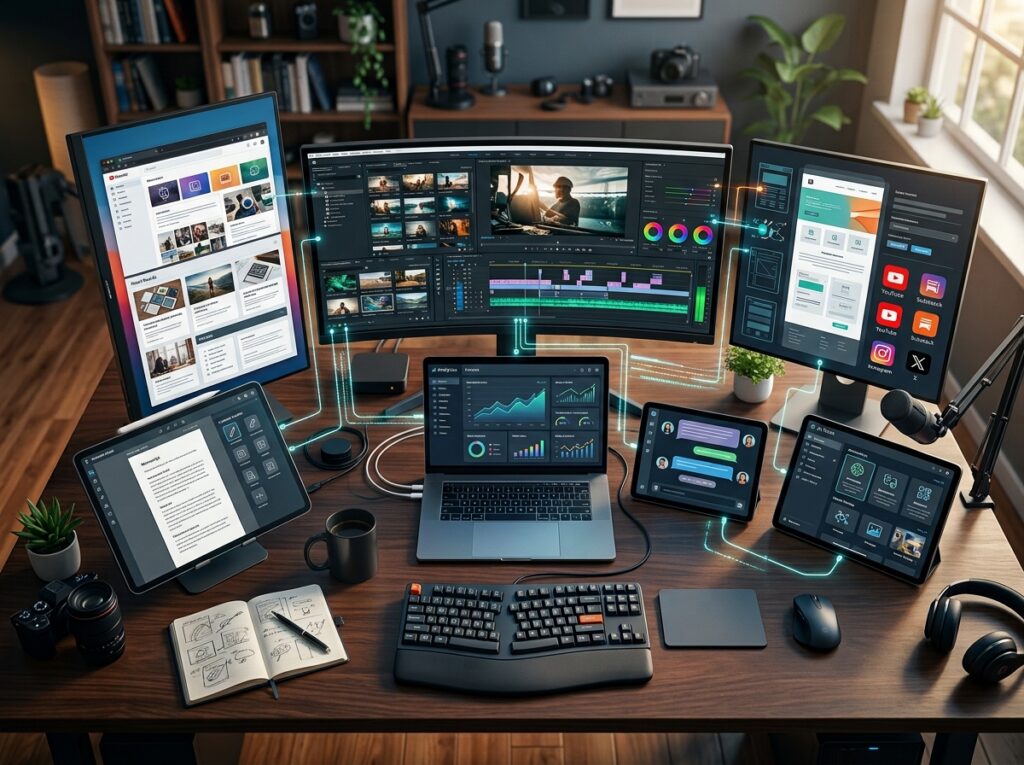
AI Could Turn Creators Into Even Larger Media Operations
Artificial intelligence is adding another layer to this transformation.
A creator can use AI to help organize research.
Generate transcripts.
Create first drafts.
Translate content.
Repurpose a long podcast into shorter posts.
Analyze audience questions.
Create visual assets.
Automate repetitive parts of production.
Again, this doesn’t mean AI automatically replaces creativity.
But it can reduce the amount of time required for certain tasks.
That matters.
Imagine a creator who spends ten hours each week editing short clips from a long interview.
If technology reduces that to two hours, those eight hours can be spent elsewhere.
Research.
Interviews.
Community building.
Product development.
Or simply producing better work.
The individual creator becomes more capable.
And as the tools improve, the gap between what one person can produce and what once required an entire media team may continue to shrink.
But There Is a Downside to Everyone Becoming a Media Company
More creators mean more content.
More newsletters.
More podcasts.
More videos.
More opinions.
More hot takes.
More people are competing for attention.
The same technology that allows one person to become a media company also allows millions of people to do the same.
That creates a new problem.
Distribution may no longer be the biggest challenge. Attention might be.
Anyone can publish.
Getting someone to care is harder.
And when creators depend on attention to sustain their business, there can be pressure to constantly produce.
Post again.
Stay relevant.
Follow the trend.
Respond quickly.
Don’t disappear.
Keep the audience engaged.
The creator becomes a media company—but also becomes the writer, presenter, editor, marketing department, and sometimes the entire production team.
That can be exhausting.
When the Person Is the Company, Where Does Work End?
This creates another challenge that traditional companies don’t always face.
If you own a company, you can leave the office.
But what happens when you are the brand?
Your personality attracts the audience.
Your life creates stories.
Your opinions create engagement.
Your face is part of the business.
The line between professional and personal can become blurry.
Should you share that experience?
Should you keep it private?
Should you talk about what happened?
Will disappearing for two weeks hurt the business?
For creators, personal boundaries can become a business decision.
And that’s something technology has made possible in a very new way.
The creator economy doesn’t just create new businesses.
It creates businesses built around individuals.
The Future May Belong to Small, Trusted Media Brands
Traditional media is not disappearing.
Large organizations still have resources that independent creators often don’t.
Teams.
Investigative capacity.
Editors.
Legal departments.
Global reporting networks.
Access to major events and sources.
But something has changed permanently.
The audience no longer has to rely on a small number of large organizations to decide who gets to speak.
A cybersecurity researcher can become a trusted voice.
A developer can explain complex technology to millions of people.
A financial analyst can build an independent audience.
A science communicator can reach people directly.
A small team can create a publication that competes with companies many times its size.
The future of media may therefore become more fragmented.
Not one massive conversation controlled by a few companies.
But thousands of smaller conversations led by people and communities with specific interests.
The Most Successful Creators May Think Like Companies, Without Sounding Like One
This may be the balancing act.
As creators grow, they need systems.
Processes.
Revenue.
Teams.
Technology.
They need to think strategically.
But audiences are often attracted to creators because they don’t feel like traditional corporations.
They feel accessible.
Human.
Specific.
Personal.
The challenge is growing without losing the reason people cared in the first place.
A creator can become a media company.
But if every interaction becomes polished corporate communication, the audience may lose the connection that made the creator interesting.
The most successful creator businesses may be the ones that build professional infrastructure behind the scenes while preserving a human voice in front of the audience.
Final Thoughts: The Media Company Is Becoming Smaller
For decades, becoming a media company required enormous resources.
Buildings.
Equipment.
Distribution networks.
Large teams.
Advertising departments.
Expensive infrastructure.
Today, the infrastructure is increasingly available as software.
A smartphone can be a camera.
A laptop can be an editing suite.
A newsletter platform can be a publishing system.
A social network can provide global distribution.
A payment tool can handle subscriptions.
AI can support parts of the production process.
The barriers haven’t disappeared completely.
But they have moved.
The biggest challenge is no longer simply:
“How do I publish something?”
It is:
“How do I become worth returning to?”
Because when anyone can become a publisher, the creators who build lasting media businesses may not be the ones producing the most content.
They may be the ones who build something much harder to copy:
A relationship with an audience that chooses to come back, even when there are millions of other voices competing for their attention.

