

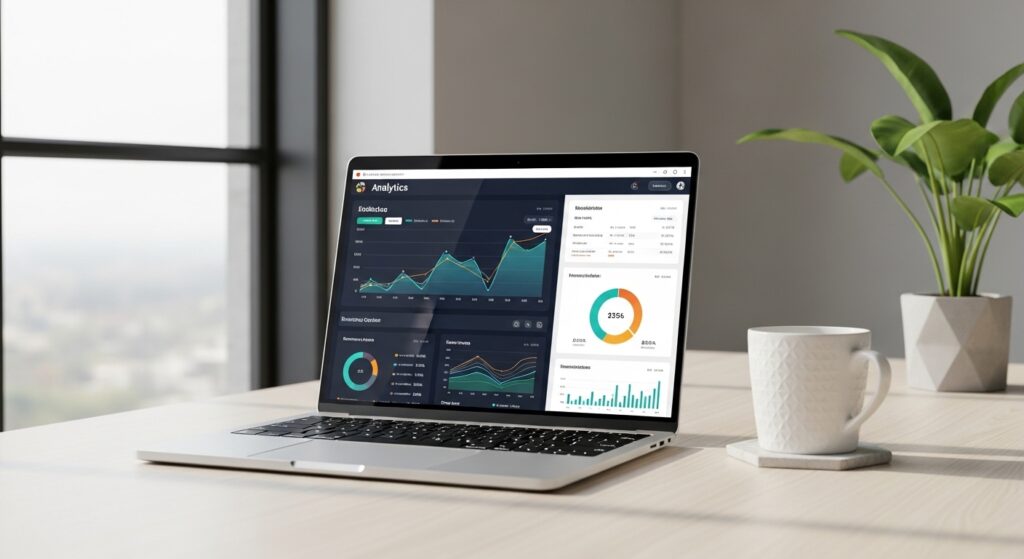
Something is reassuring about a well-designed dashboard.
Clean charts. Clear percentages. Trend lines moving up or down. It feels organized. It feels under control.
You open it during meetings. Everyone nods. The data is there. It looks impressive.
But here’s the uncomfortable truth: a dashboard by itself changes nothing.
You can track every metric in real time and remain stuck.
The dashboard informs you. It does not transform you.
When Data Becomes Decoration
Imagine your dashboard shows that customer churn increased by 12% this quarter.
You discuss it in a meeting. You acknowledge it’s concerning. You agree to “monitor it closely.”
Then operations continue the same way.
No onboarding changes.
No pricing adjustments.
No customer interviews.
The chart updates next week. The number remains high.
This happens more often than people admit.
Data becomes something teams observe instead of something they act on.
Tracking metrics without changing behavior is like stepping on a scale every morning but refusing to adjust your habits. You’re informed — but unchanged.
Insight Is Only Powerful When It Triggers Action
Let’s make it practical.
Your dashboard shows that website traffic increased by 25% after launching paid ads. That sounds great.
But revenue stayed the same.
That’s a signal.
Now you investigate and realize that most visitors are dropping off during checkout because the form is too long.
You shorten it. You test it for a week. Conversions improve.
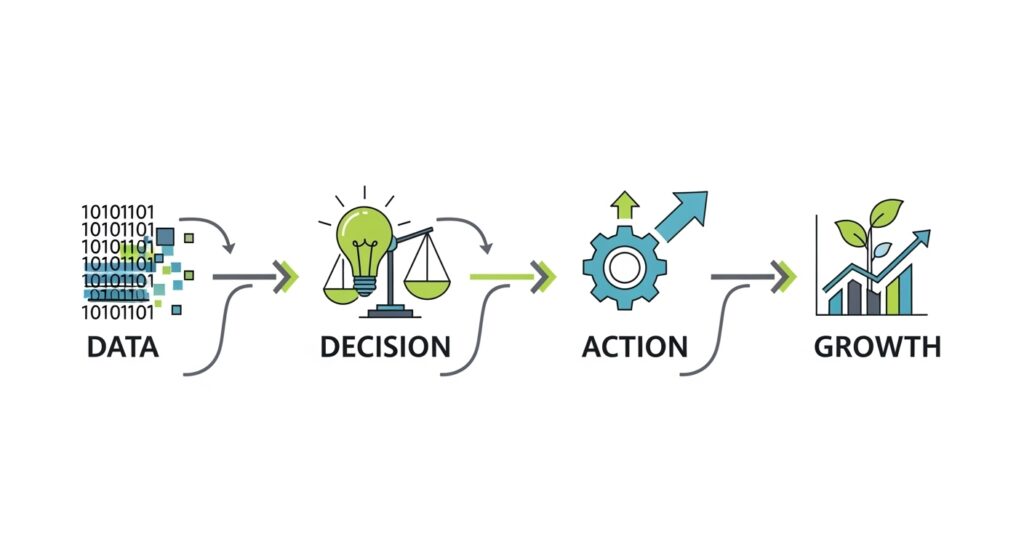
The dashboard surfaced the issue. The decision created the growth.
Without that second step, the chart would have just been another graph.

The Habit That Changes Everything
If you want dashboards to matter, add one rule to your review meetings:
Never close a data discussion without deciding on one action.
Even a small action.
If engagement drops, test new messaging.
If churn increases, call five customers.
If conversion dips, review the user journey.
Data should create movement.
Otherwise, it’s just visual reassurance.
Final Thoughts
Dashboards are powerful tools. They help you see patterns faster. They reduce guesswork.
But they are not a strategy.
The businesses that grow are not the ones with the prettiest charts. They are the ones willing to respond to what those charts reveal.
Data does not fix businesses.
Disciplined decision-making does.
And the next time you review a dashboard, ask yourself one simple question:
What are we changing because of this?
That’s where real progress begins.