


A few years ago, the advice seemed simple.
Learn a skill.
Build a few projects.
Apply for jobs.
Get hired.
Today, things feel a little different.
You spend months learning. You complete courses. You build projects. You polish your CV. Then you open a job description for an “entry-level” role and somehow it asks for three years of experience, five tools you’ve never used, and a portfolio that looks like it belongs to a senior professional.
If you’ve ever looked at a job posting and thought, “How is this even entry-level?” you’re not imagining things.
A lot of people feel the same way.
The Definition of “Entry-Level” Has Changed
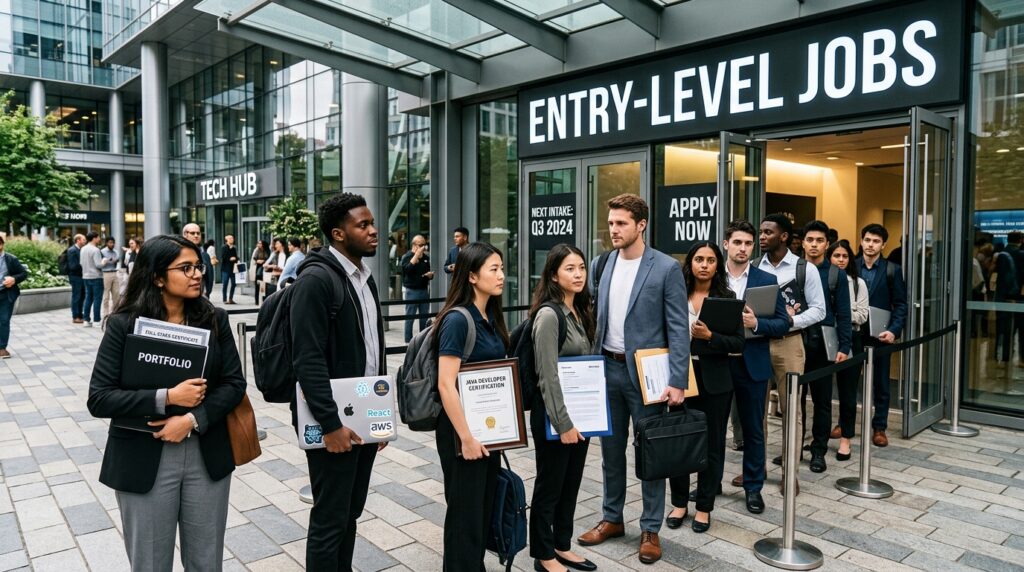
One of the biggest frustrations for job seekers is that entry-level roles don’t always feel entry-level anymore.
Companies have access to larger talent pools than ever before.
Remote work means applicants can come from different cities, countries, and even continents.
As a result, competition has increased.
That doesn’t mean opportunities have disappeared.
It simply means the starting line has moved.
The Internet Made Learning Easier And Competition Bigger
Think about it.
Ten years ago, learning software development, data analysis, or digital marketing often required expensive training or formal education.
Today, thousands of tutorials, courses, and bootcamps are available online.
That’s amazing.
But it also means employers receive applications from people who have access to the same resources.
The challenge isn’t just learning anymore.
It’s standing out.
The Mistake Many Beginners Make
A lot of people focus only on learning.
And learning is important.
But employers are often looking for proof.
For example:
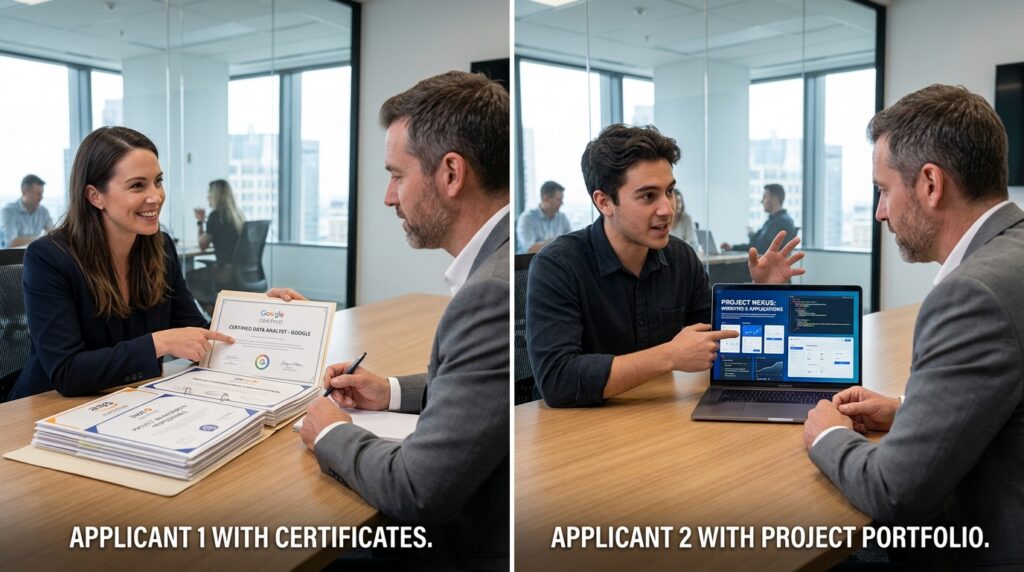
Imagine two candidates applying for the same role.
One says they know data analysis.
The other shows a dashboard they built using real-world data.
Who gets remembered?
Projects create conversations.
Certificates often just create checkboxes.
What Employers Really Notice
You don’t need twenty certifications.
You don’t need ten programming languages.
You don’t need to know everything.
What employers often notice is:
- Problem-solving ability
- Curiosity
- Communication
- Practical projects
- Consistency
Those things are surprisingly difficult to fake.
Final Thoughts: The Door Isn’t Closed
Yes, entering tech is more competitive.
But it’s also more accessible than ever before.
The people who succeed aren’t always the most experienced.
They’re often the people who continue to learn, build, and show up long after others have given up.
The goal isn’t to be perfect.
The goal is to become difficult to ignore.


