

Twenty years ago, learning a tech skill wasn’t exactly easy.
You had to buy books.
Pay for expensive training.
Attend physical classes.
Or know someone willing to teach you.
Today?
You can learn software engineering, cloud computing, cybersecurity, product management, data analytics, DevOps, AI, UI/UX design, and almost any other tech skill without spending a dime.
There are thousands of YouTube videos.
Free courses.
Communities.
Podcasts.
Documentation.
Blogs.
Newsletters.
Tutorials.
The information is everywhere.
So here’s the million-dollar question:
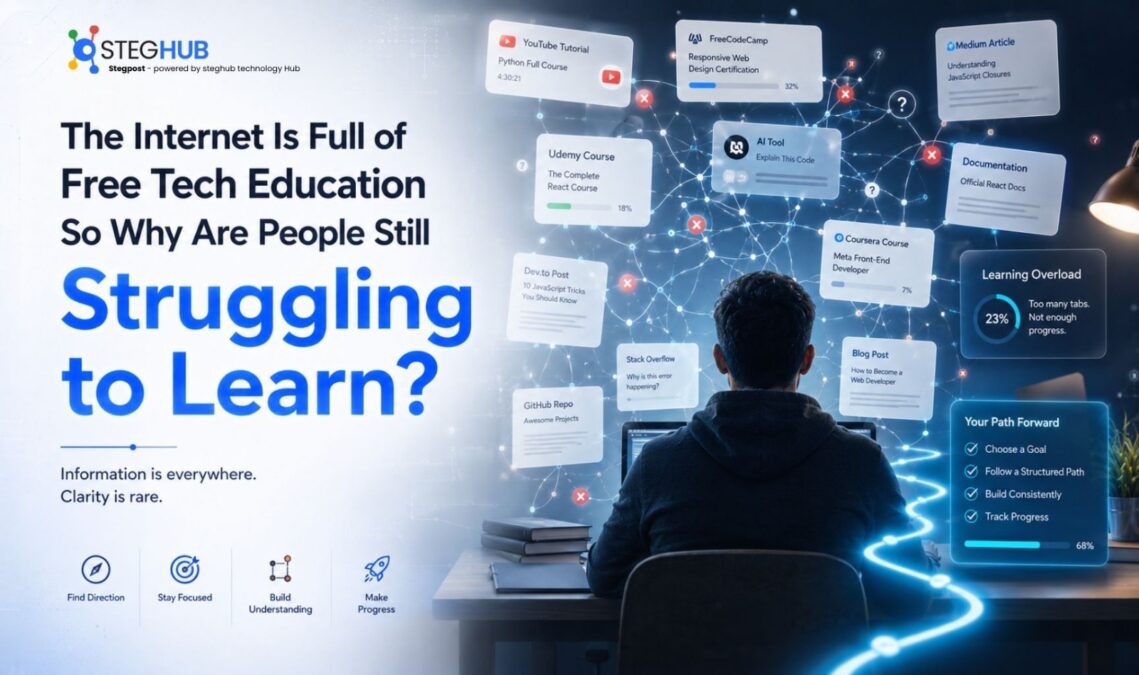
If learning resources are more accessible than ever, why are so many people still struggling to learn?
It’s a question worth exploring because the answer has very little to do with intelligence.
And almost everything to do with how we learn.
The Problem Isn’t Lack of Information Anymore
Let’s imagine you want to learn cloud computing.
You open YouTube.
Search for “Cloud Computing for Beginners.”
Instantly, you’re greeted with hundreds of videos.
Some are two hours long.
Some are ten hours long.
Some promise you’ll become job-ready in thirty days.
Others claim they’re the ultimate guide.
Before you’ve watched a single lesson, you’re already overwhelmed.
And that’s the irony.
Years ago, the challenge was finding information.
Today, the challenge is choosing which information to trust.
Sometimes having too many options becomes its own problem.
Kind of like walking into a restaurant with a 50-page menu.
Instead of feeling excited, you start feeling confused.
We Spend More Time Collecting Resources Than Using Them
Let’s be honest for a second.
Most of us have done this.
You find a course.
Save it.
Find another one.
Bookmark it.
Someone recommends a YouTube channel.
Save that too.
You discover a helpful article.
Add it to your reading list.
Before long, you’ve built a digital library large enough to teach an entire university.
The only problem?
You haven’t actually started learning.
It’s a strange habit.
We often mistake preparation for progress.
Collecting resources feels productive.
But learning only happens when we engage with them.

The Tutorial Trap Is Real
Here’s another challenge many aspiring tech professionals face.
They become professional learners.
Not professional doers.
They watch tutorial after tutorial.
Course after course.
Video after video.
Everything makes sense while they’re watching.
Then someone asks them to build something on their own.
Suddenly, everything feels different.
It’s similar to watching cooking videos every day.
You might understand the recipes.
You might know the ingredients.
But until you enter the kitchen and start cooking, you’re still learning from the sidelines.
Technology works the same way.
At some point, learning has to become doing.
Many People Are Learning Without a Roadmap
Imagine deciding to travel across a country without knowing where you’re going.
No destination.
No route.
No plan.
You’d probably spend a lot of time driving in circles.
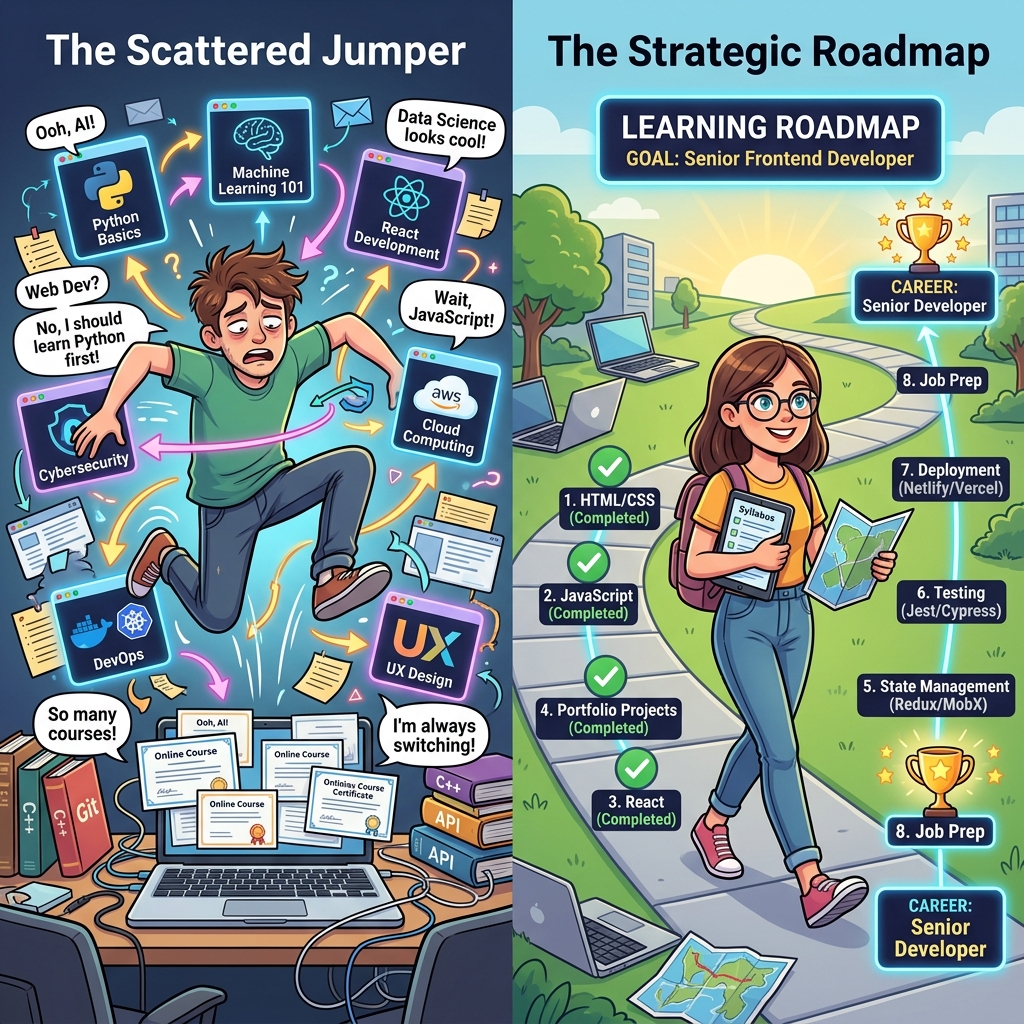
Yet that’s exactly how many people approach learning tech.
One week, they’re studying cybersecurity.
Next week, they’re exploring data analytics.
Then AI catches their attention.
Then someone posts about cloud computing.
Then they hear that software engineering pays well.
Three months later, they’re exhausted.
Not because they’re lazy.
Because they’re trying to learn everything at once.
A roadmap doesn’t have to be perfect.
But it helps.
Because knowing where you’re going makes it easier to ignore distractions along the way.
Motivation Isn’t the Real Problem
A lot of people think they lack motivation.
I don’t think that’s usually true.
Most learners start highly motivated.
The problem is that motivation fades.
Life happens.
Work gets busy.
School gets demanding.
Responsibilities show up.
And suddenly, that daily learning habit disappears.
The people who make progress aren’t necessarily more motivated than everyone else.
They’re often more consistent.
Even when they don’t feel like learning.
Even when progress feels slow.
Even when nobody is cheering them on.
Consistency tends to outperform motivation in the long run.
Comparison Is Quietly Slowing People Down
Social media doesn’t help either.
You open LinkedIn.
Someone just got hired.
Someone earned a certification.
Someone landed a six-figure role.
Someone completed another project.
Suddenly, your own progress feels small.
And that’s dangerous.
Because learning isn’t a race.
The person celebrating a new job today may have been learning for two years before sharing that success story.
The person posting a certification may have failed several exams before passing.
Social media often shows the highlight reel.
Rarely is the struggle behind it.
And when learners constantly compare themselves to others, they often underestimate how far they’ve already come.
The Missing Ingredient Is Usually Accountability
This is one of the biggest reasons people struggle.
When learning is completely self-paced, nobody notices when you stop.
Nobody follows up.
Nobody asks questions.
Nobody checks your progress.
It’s easy to say:
“I’ll continue tomorrow.”
Then tomorrow becomes next week.
Then next week becomes next month.
That’s why communities matter.
Study groups matter.
Mentors matter.
Learning partners matter.
Accountability creates momentum.
And momentum keeps people moving when motivation disappears.
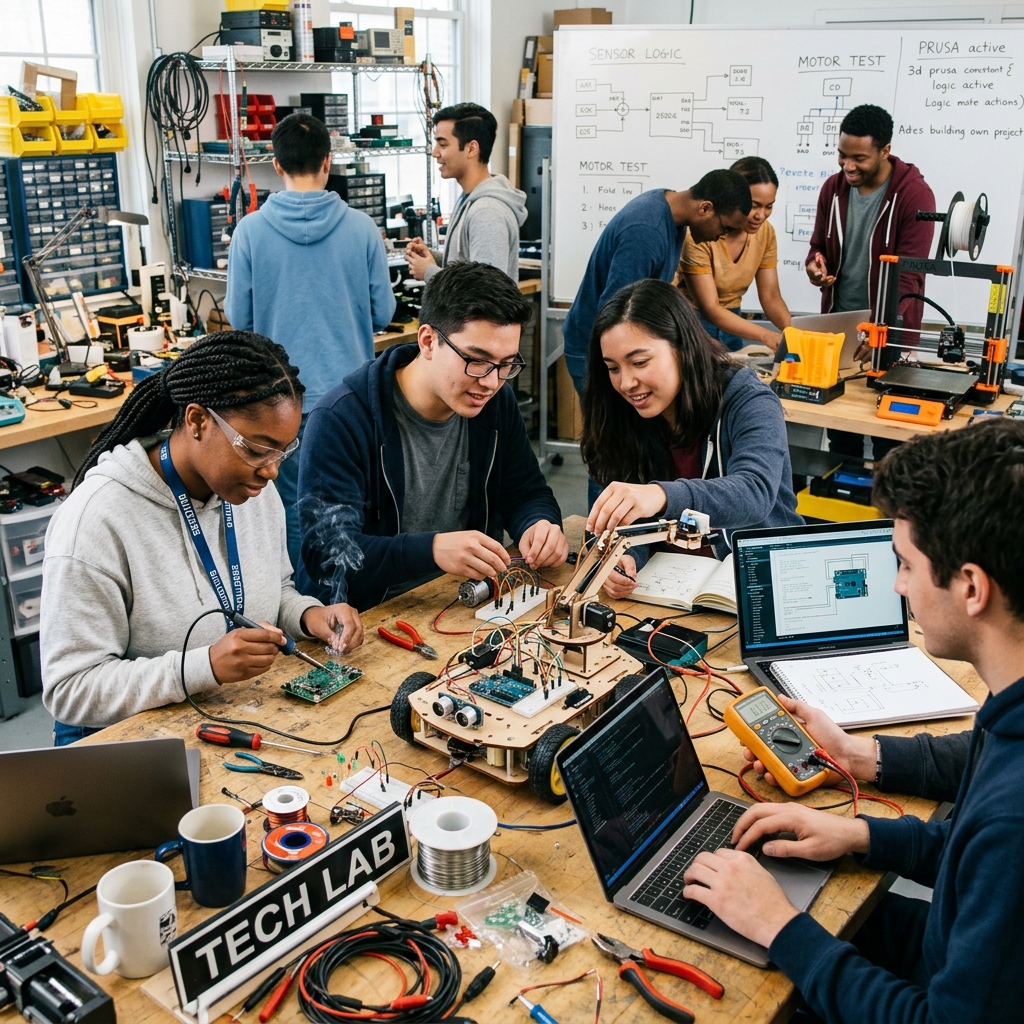
The People Who Succeed Usually Build Something
After watching enough successful tech journeys, you start noticing a pattern.
The people who learn the fastest often build things.
Developers build applications.
Designers create interfaces.
Data analysts create dashboards.
Cloud learners deploy projects.
Product managers work on case studies.
They don’t wait until they know everything.
Because they understand a simple truth:
Projects expose knowledge gaps faster than tutorials ever will.
And that’s a good thing.
Because every gap you discover is an opportunity to improve.
Final Thoughts: Information Was Never the Problem
The internet has solved the information problem.
Almost anything you want to learn is available online.
Often for free.
The real challenge now is navigating the noise.
Choosing a direction.
Staying consistent.
Building projects.
Seeking accountability.
And continuing even when progress feels slow.
Because learning tech has never been easier.
But it has also never required more discipline.
So if you’re feeling stuck right now, don’t ask:
“Do I have enough resources?”
You probably do.
Instead ask:
“Am I using the resources I already have?”
Because sometimes the difference between someone who succeeds and someone who struggles isn’t access to information.
It’s what they do with it.
And that changes everything.

