

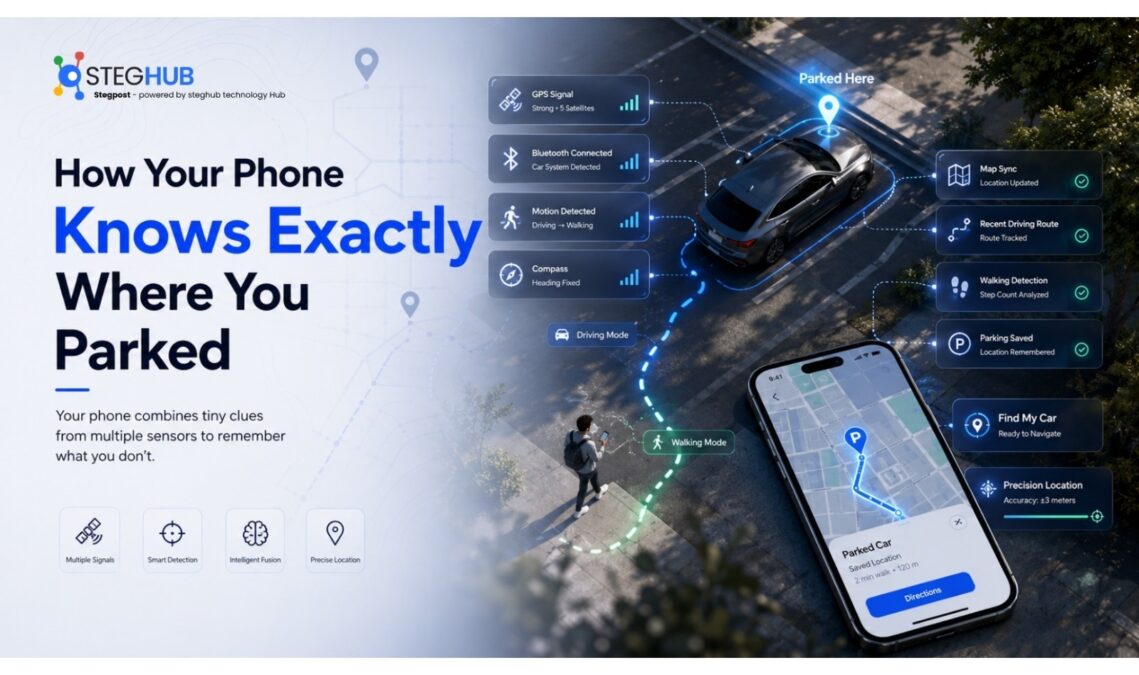
You’re at a busy shopping mall.
After spending two hours walking from one store to another, it’s finally time to head home.
You step outside.
Look around.
Then it hits you.
“Where did I park?”
For a moment, every row of cars looks the same.
You start walking.
Maybe it’s this direction.
No…
Perhaps the next row.
Still nothing.
Just as you’re about to give up, you pull out your phone.
Almost instantly, it says,
“You parked here.”
You stare at the screen.
“Wait… how did it know that?”
You never pressed a button.
You didn’t tell your phone where you parked.
So how did it figure it out?
Did it somehow watch you?
The answer is far less mysterious and far more impressive than most people realize.
Let’s take a look behind the scenes.
Your Phone Is Constantly Collecting Tiny Clues
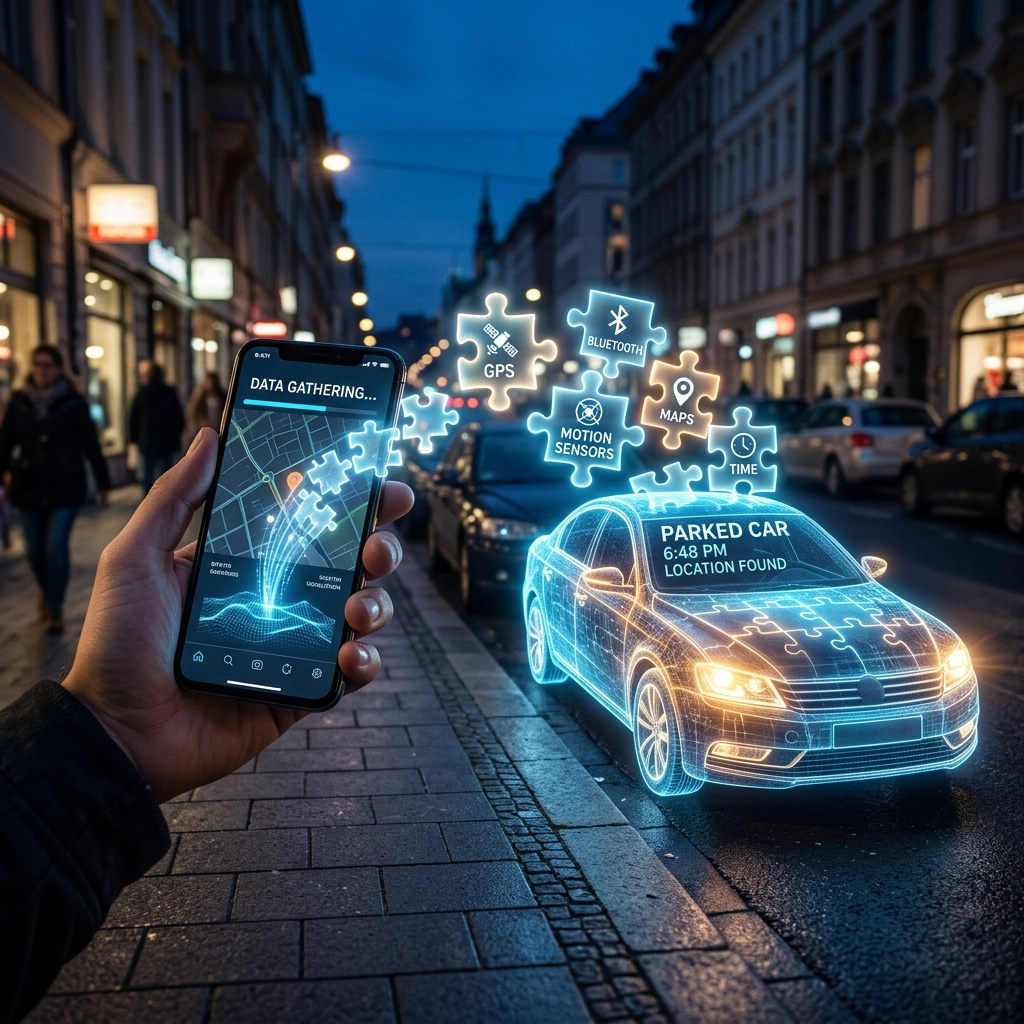
Imagine you’re solving a puzzle.
One piece by itself doesn’t tell you much.
But as more pieces come together, the picture starts making sense.
Your phone works in a very similar way.
It doesn’t rely on one magical technology.
Instead, it gathers lots of tiny clues throughout your journey.
Where were you traveling?
How fast were you moving?
When you suddenly stopped.
Whether your phone disconnected from your car’s Bluetooth.
How long have you stayed in one place?
None of these clues means much on their own.
Together, they tell a surprisingly accurate story.
GPS Is Only Part of the Story
Most people immediately think,
“It must be GPS.”
They’re partly right.
GPS helps your phone understand where you are.
But GPS alone isn’t always accurate enough to pinpoint the exact parking spot, especially inside parking garages or crowded city centers.
That’s why your phone combines GPS with other information.
Nearby Wi-Fi networks.
Mobile towers.
Motion sensors.
Even the direction you’re walking.
Think of GPS as one witness in an investigation.
Helpful.
But much more reliable when other witnesses confirm the same story.
Your Car Leaves a Clue Too
Here’s something many people don’t realize.
If your phone connects to your car through Bluetooth or systems like Apple CarPlay or Android Auto, that’s another important clue.
Imagine driving home while your phone is connected to your car.
Then, suddenly…
The Bluetooth connection disappears.
Your phone notices.
It knows you were moving moments ago.
Now you’re standing still.
The connection to your car has ended.
That’s often a strong sign you’ve parked and walked away.
It doesn’t need you to tell it.
It simply recognizes a familiar pattern.
Your Phone Knows the Difference Between Driving and Walking
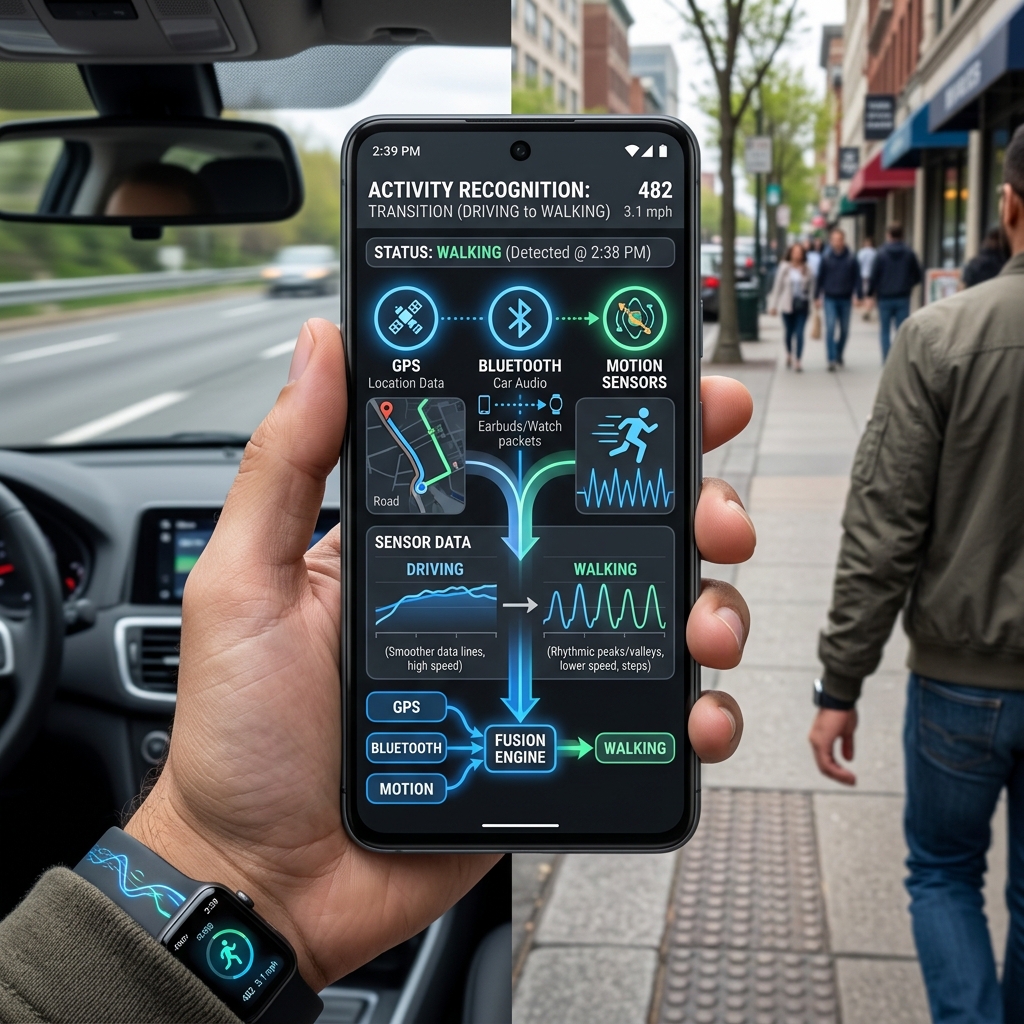
Your phone is surprisingly good at recognizing movement.
Not because it’s watching you.
But because of tiny sensors inside the device.
Accelerometers.
Gyroscopes.
Motion sensors.
These sensors can detect whether you’re driving, cycling, walking, or simply standing still.
Imagine someone watching footprints in the sand.
They don’t need to see the person.
The footprints tell the story.
Your phone works the same way.
It notices that you were traveling at road speed.
Then suddenly slowed down.
Stopped.
Opened a car door.
And started walking.
Piece by piece, the puzzle becomes clearer.
Machine Learning Connects the Dots
Here’s where things become really interesting.
Your phone doesn’t simply collect information.
It also learns from patterns.
If every weekday you drive to the same office around 8 a.m., your phone starts recognizing that routine.
If every Saturday you visit the same supermarket, it notices that too.
This doesn’t mean someone is sitting behind a computer studying your habits.
Instead, intelligent software recognizes repeated patterns so it can make useful predictions.
It’s similar to how a close friend knows which coffee shop you’ll probably suggest before you even say it.
The more familiar the routine becomes, the easier it is to anticipate what comes next.
Sometimes Your Phone Gets It Wrong
Of course, this technology isn’t perfect.
Maybe your phone battery died.
Maybe GPS signals were weak.
Perhaps you parked underground.
Or maybe someone else was driving your car.
In those situations, your phone might guess incorrectly or not suggest at all.
That’s because it’s working with probabilities, not certainty.
It gathers clues.
Makes the best prediction it can.
And occasionally gets it wrong.
Just like humans do.
It’s All Designed to Make Life Easier
The goal isn’t simply to remember where you parked.
It’s to remove small frustrations from your day.
The same technologies help your phone:
Remember frequently visited places.
Suggest when to leave for meetings.
Warn you about traffic.
Recommend faster routes.
Estimate arrival times.
They’re all built around one simple idea:
Helping you spend less time figuring things out and more time getting where you want to go.
Final Thoughts: Your Phone Isn’t Reading Your Mind
When your phone remembers where you parked, it can feel almost magical.
But behind that simple notification is an incredible amount of technology working together.
GPS.
Bluetooth.
Motion sensors.
Location services.
Machine learning.
Each one contributes a small piece of information.
On its own, none of it is remarkable.
Together, they create an experience that feels almost effortless.
That’s the beauty of modern technology.
The smartest systems aren’t always the ones doing the most complicated things.
They’re the ones solving everyday problems so quietly that we hardly notice them.
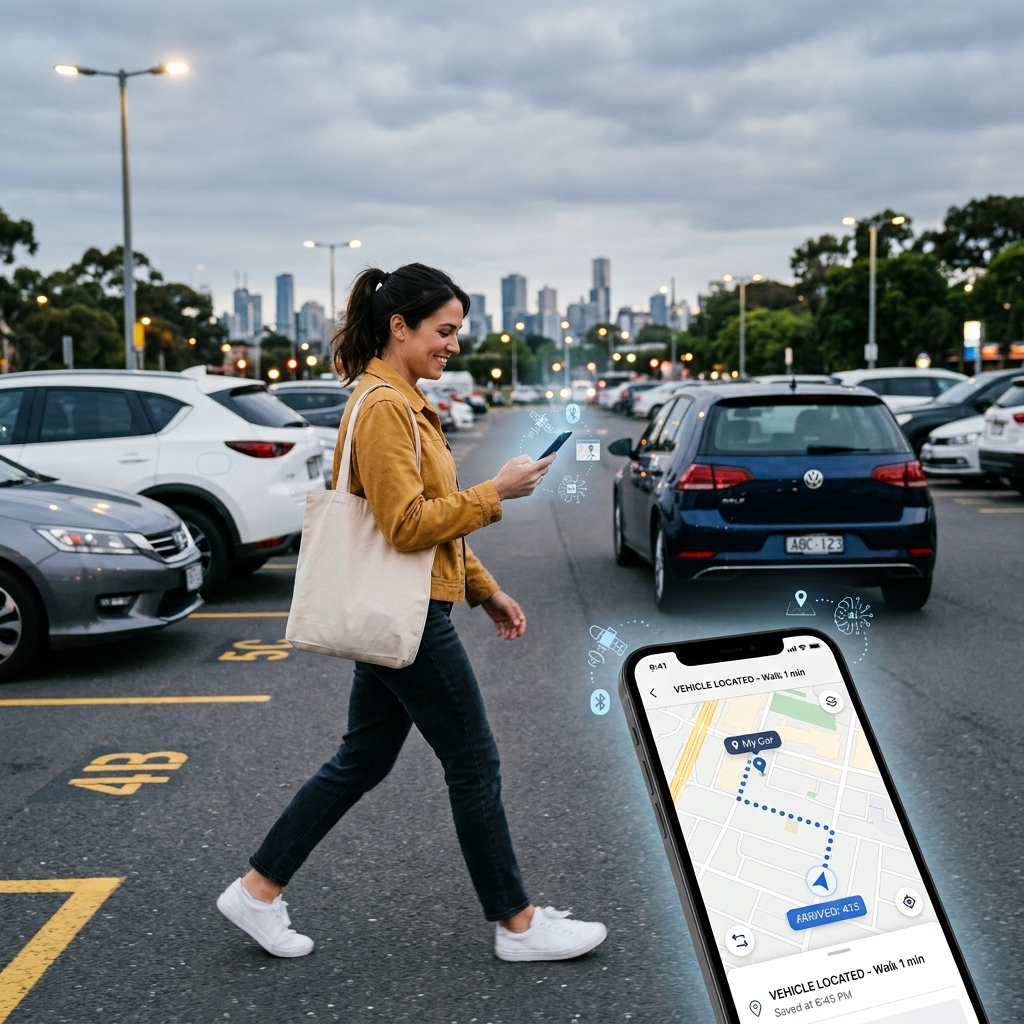
So the next time your phone says,
“You parked here.”
You’ll know it wasn’t guessing.
It wasn’t watching you.
It was simply putting together hundreds of tiny clues…
…to solve one very ordinary problem extraordinarily.

