

You visit a website for the first time.
Before you’ve even had a chance to look around, a pop-up appears.
“Get 10% off your first order.”
“Enter your email.”
You close it.
A few seconds later, another one appears.
“Subscribe to our newsletter.”
“Join our community.”
“Be the first to know about new updates.”
It almost feels like every company on the internet wants the same thing.
Not your phone number.
Not your home address.
Not even your payment details.
Just your email address.
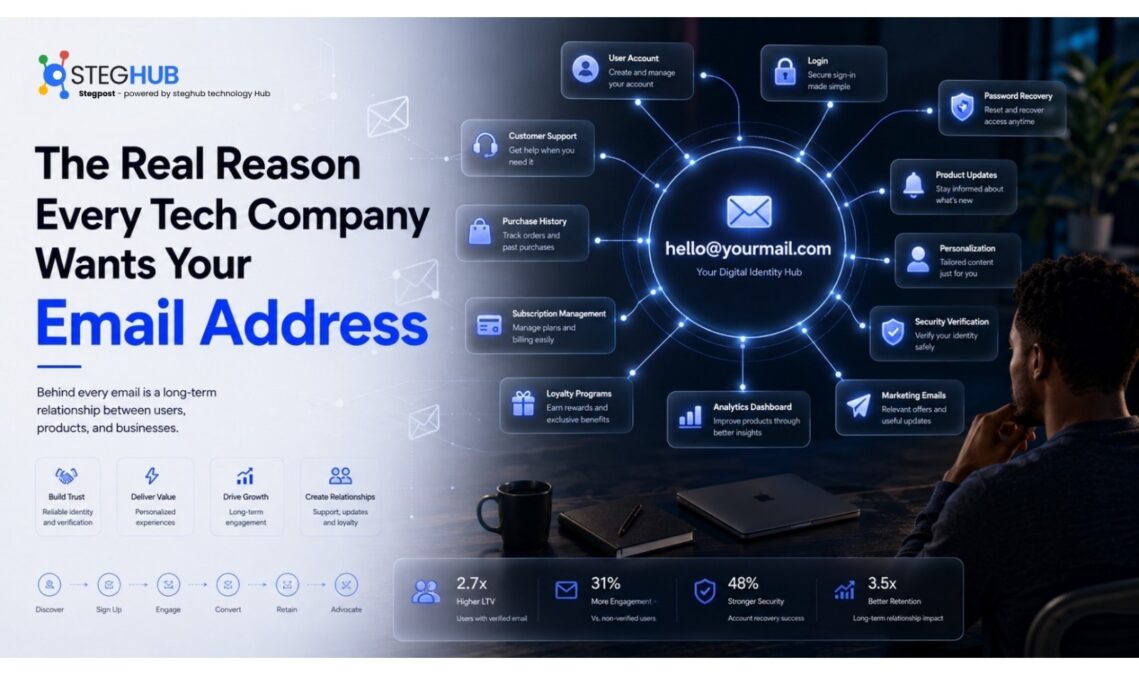
Why is something as simple as an email address so valuable?
The answer has very little to do with sending newsletters.
And almost everything to do with building relationships.
Imagine Opening a Shop on a Busy Street
Picture opening a beautiful clothing store in the busiest part of your city.
Every day, thousands of people walk past your shop.
Some come inside.
Some browse for a few minutes.
Others leave without buying anything.
Now imagine every visitor disappears forever the moment they walk out the door.
You have no way of reaching them again.
There is no way to tell them about the new arrivals.
There’s no way to let them know you’re having a sale next weekend.
Every day, you have to start from scratch.
Now imagine something different.
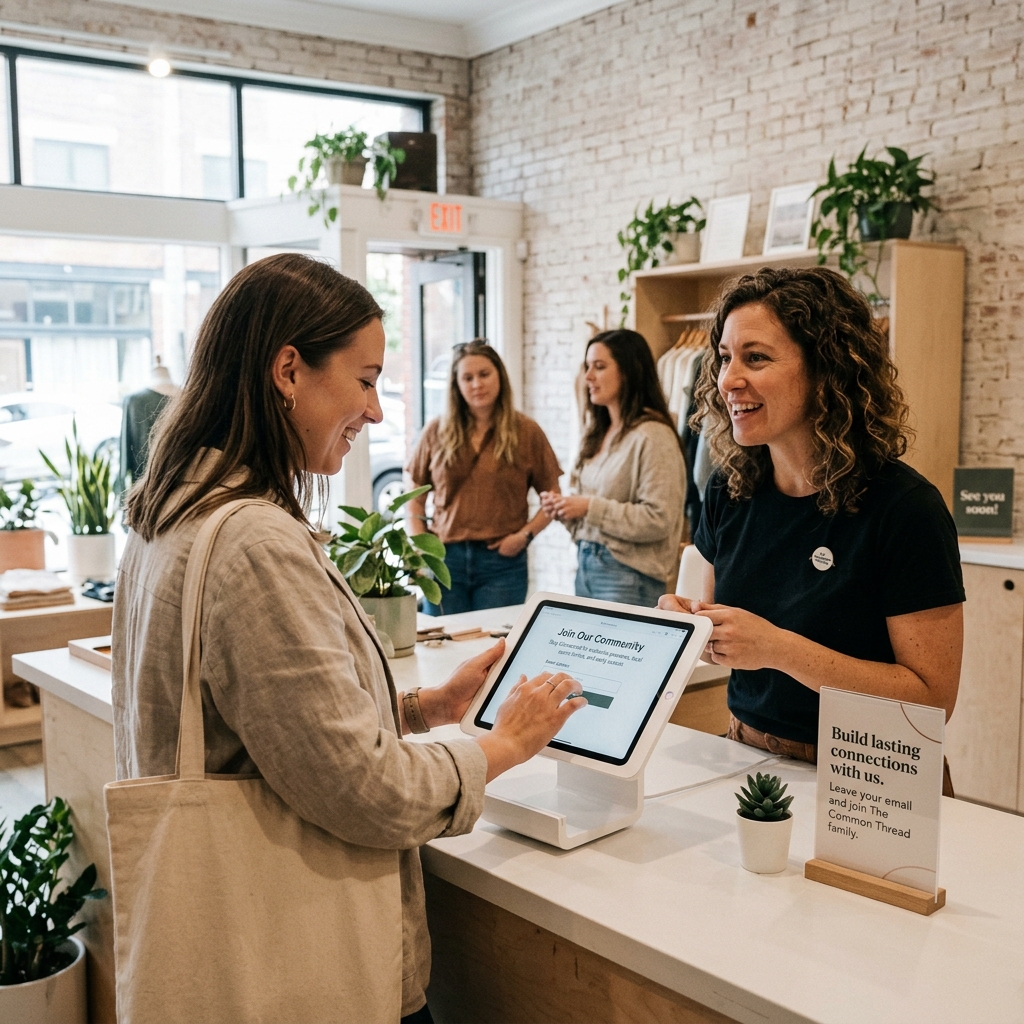
Before they leave, each visitor writes down their email address and says,
“Let me know when you have something I’ll like.”
Suddenly, your relationship doesn’t end when they walk out.
That’s exactly how businesses think about email.
Social Media Isn’t Really Yours
Many businesses spend years building huge followings on social media.
Thousands.
Sometimes millions.
But here’s something many people don’t realize.
Those followers don’t truly belong to the business.
They belong to the platform.
Imagine building your entire business inside a shopping mall.
Everything is going well.
Then one day, the mall changes the rules.
Your shop is moved to a quieter corner.
Fewer people walk past.
Sales begin to drop.
You didn’t lose your products.
You lost your visibility.
That’s what can happen on social media.
A small change to an algorithm can dramatically reduce how many people see your posts.
An account could be suspended.
A platform could decline in popularity.
Or people could simply stop using it.
Businesses have very little control over those changes.
An Email Inbox Is More Personal
Think about how you use social media.
You scroll quickly.
One post replaces another.
A few seconds later, you’ve already forgotten what you saw.
Email works differently.
People usually open their inbox with an intention.
They’re checking messages.
Looking for updates.
Responding to important information.
When a business sends a thoughtful email, it arrives in a space people visit every day.
It’s not competing with endless scrolling in quite the same way.
That’s one reason email marketing continues to deliver strong results, even after decades of new social platforms.
It’s Not Just About Selling
Many people assume businesses collect email addresses simply to send promotions.
Sometimes they do.
But that’s only part of the story.
Companies also use email to:
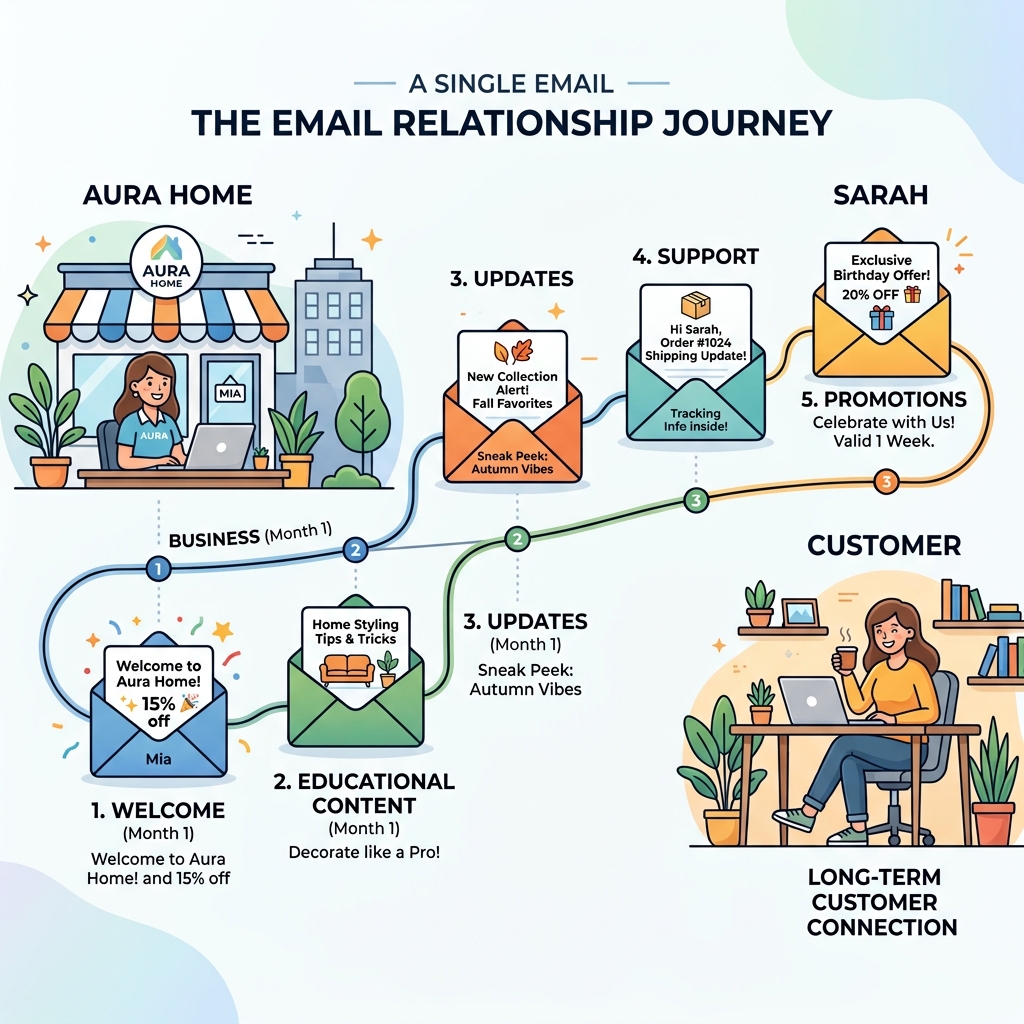
Welcome new customers.
Share helpful resources.
Announce product updates.
Send receipts and account information.
Offer customer support.
Deliver online courses.
Provide security alerts.
Ask for feedback.
Build trust over time.
The best emails aren’t always trying to sell something.
Sometimes they’re simply keeping the relationship alive.
One Visitor Is Good. A Returning Visitor Is Better.
Imagine two coffee shops.
The first depends entirely on people walking past.
The second has a list of loyal customers who receive updates whenever there’s a new drink, a special event, or a weekend discount.
Which shop is more likely to stay busy?
Probably the second one.
Technology companies think the same way.
Getting someone to visit your website once is valuable.
Getting them to come back again and again is even more valuable.
An email address gives businesses a way to continue that conversation.
Not by chasing customers across the internet…
…but by inviting them back when they have something genuinely worth sharing.
Trust Is More Valuable Than an Email Address
Of course, collecting an email address is only the beginning.
If every message is irrelevant…
If every email feels like spam…
People unsubscribe.
Or worse, they stop trusting the brand altogether.
That’s why the best companies don’t measure success by how many email addresses they collect.
They measure it by how many people continue opening, reading, and engaging with their emails over time.
An email list isn’t valuable because it’s large.
It’s valuable because it’s built on trust.
That’s Why Companies Offer Something in Return
Have you noticed how many websites offer something before asking for your email?
A discount.
A free guide.
A webinar.
An ebook.
Exclusive content.
Early access.
That’s not an accident.
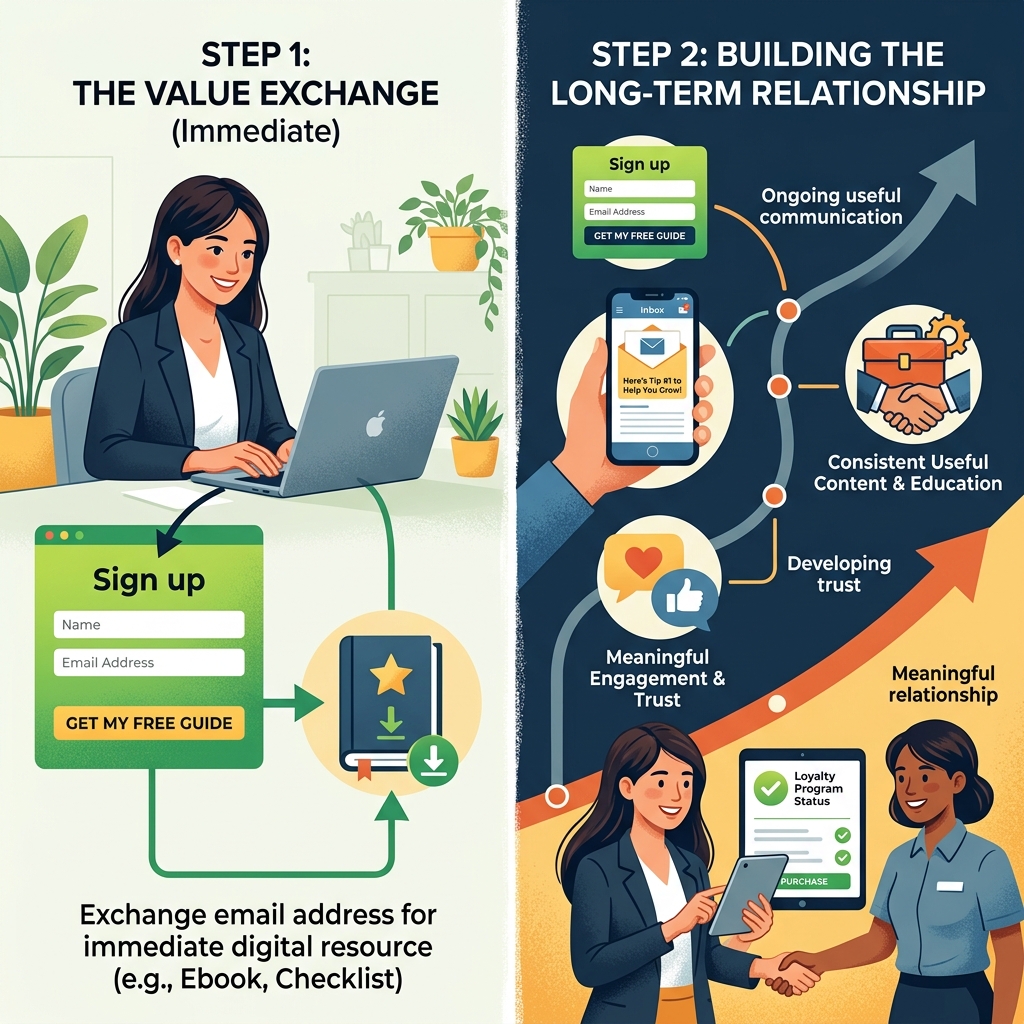
It’s an exchange.
The company provides something useful.
In return, you decide whether the relationship is worth continuing.
The best businesses understand that people don’t give away their email address because they were pressured.
They do it because they expect ongoing value.
Final Thoughts: It’s Not Really About the Email
The next time a website asks for your email address, remember this:
They’re not just asking for another line of text in a database.
They’re asking for permission to stay connected.
In a digital world where social media algorithms change, advertising costs rise, and online attention is harder to earn than ever, an email address represents something incredibly valuable.
A direct line of communication.
An opportunity to build trust.
A chance to create a relationship that lasts longer than a single website visit.
The smartest technology companies understand something simple:
Products may attract people.
Advertisements may bring them through the door.
But lasting relationships are what keep them coming back.
And sometimes…
Those relationships begin with just one small box that says,
“Enter your email address.”

