

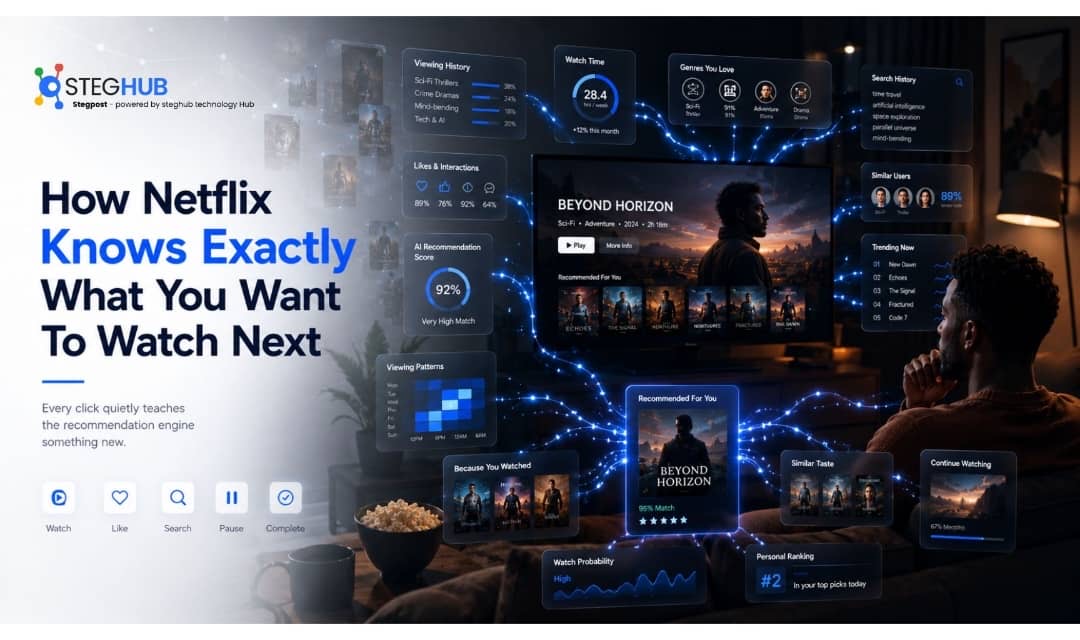
Have you ever opened Netflix just to watch one episode…
…and before you’ve even finished, another movie catches your attention?
Or maybe you’ve watched a documentary about space, and suddenly your homepage is filled with science documentaries, futuristic movies, and shows about astronauts.
It almost feels like Netflix knows you personally.
Sometimes, it recommends a movie that’s so perfect you wonder,
“How did they know I’d like this?”
Other times, it completely misses the mark.
Either way, one question remains:
How does Netflix know what to recommend?
Did someone sit behind a computer and hand-pick those suggestions?
Not quite.
The answer is far more fascinating, and it has changed the way almost every digital platform works today.
It’s Like Walking Into Your Favorite Restaurant
Imagine visiting the same restaurant every Friday.
The first time you go, the waiter knows nothing about you.
You look through the menu.
Ask questions.
Take your time deciding.
But after a few months, something changes.
The waiter smiles and says,
“The grilled chicken again?”
They remember your favourite drink.
They know you like spicy food.
They even recommend new dishes based on what you’ve enjoyed before.
It doesn’t mean they’re reading your mind.
They’re simply paying attention to your habits.
Netflix works in much the same way.
The more you use it, the more it learns about your viewing preferences.

Netflix Is Watching… But Not the Way You Think
Whenever people hear that apps “track” them, they often imagine someone sitting in an office watching everything they do.
That’s not what’s happening.
Instead, Netflix pays attention to patterns.
For example:
Did you finish the movie?
Did you stop halfway through?
Did you watch three action movies in one weekend?
Do you usually watch comedies on Friday nights?
Do you enjoy documentaries more than reality shows?
Each action becomes a tiny clue.
One clue doesn’t say much.
But thousands of them begin painting a picture of your viewing habits.
The goal isn’t to know who you are.
It’s to understand what kinds of stories you enjoy
It’s Not Just About What You Watch
Here’s something many people don’t realize.
Netflix isn’t only learning from the movies you finish.
It also notices what you almost watched.
Imagine scrolling through twenty movie posters.
You pause on one for a few seconds.
Read the description.
Then move on.
That small interaction tells Netflix something.
Maybe that genre caught your attention.
Maybe that actor interested you.
Maybe the title wasn’t convincing enough.
Even when you don’t press Play, your behaviour helps improve future recommendations.
It’s a little like window shopping.
You may not buy anything today, but the shops you stop to look at reveal what interests you.
You’re Also Similar to Millions of Other People
Now here’s where things get really interesting.
Imagine you and another person have never met.
You live in different countries.
Work different jobs.
Have different hobbies.
But over the past year, you’ve both watched almost the same movies.
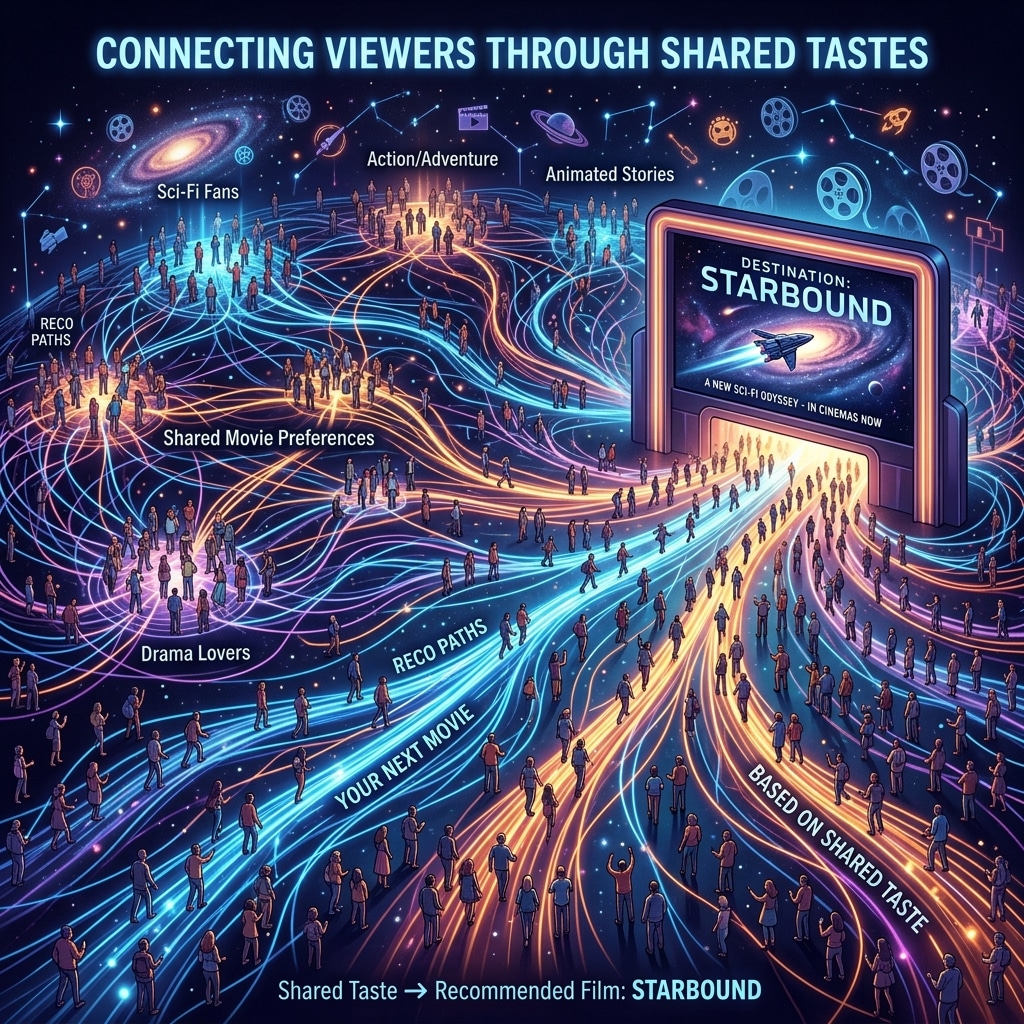
Netflix notices patterns like this.
If people with viewing habits similar to yours suddenly start enjoying a new series, Netflix might recommend it to you, too.
Not because you’ve watched it before.
But because people with tastes like yours loved it.
Think of it as getting book recommendations from thousands of friends who happen to enjoy the same stories you do.
Why Two People See Completely Different Homepages
Have you ever compared your Netflix homepage with someone else’s?
Even in the same house, they can look completely different.
One person sees crime documentaries.
Another sees romantic comedies.
Someone else sees anime.
Another sees children’s cartoons.
It’s the same platform.
But it’s presenting a completely different experience.
That’s because Netflix isn’t really showing its favourite content.
It’s trying to show your favourite content.
Your homepage is constantly changing based on your habits.
In a way, every Netflix account becomes its own personalized streaming service.
It’s Not Just Netflix Anymore
Once you understand this, you’ll start noticing it everywhere.
Spotify recommends music.
YouTube suggests videos.
TikTok builds a “For You” page.
Online stores recommend products.
News apps highlight stories you’re likely to read.
Even social media feeds are arranged using similar ideas.
Recommendation systems have quietly become one of the most influential technologies on the internet.
Every day, they help decide what billions of people watch, listen to, read, and even buy.
Can Recommendation Systems Get It Wrong?
Absolutely.
Sometimes you’ve already watched something elsewhere.
Sometimes you accidentally click on a movie you have no interest in.
Maybe your younger sibling borrowed your account.
Suddenly, your homepage is full of cartoons.
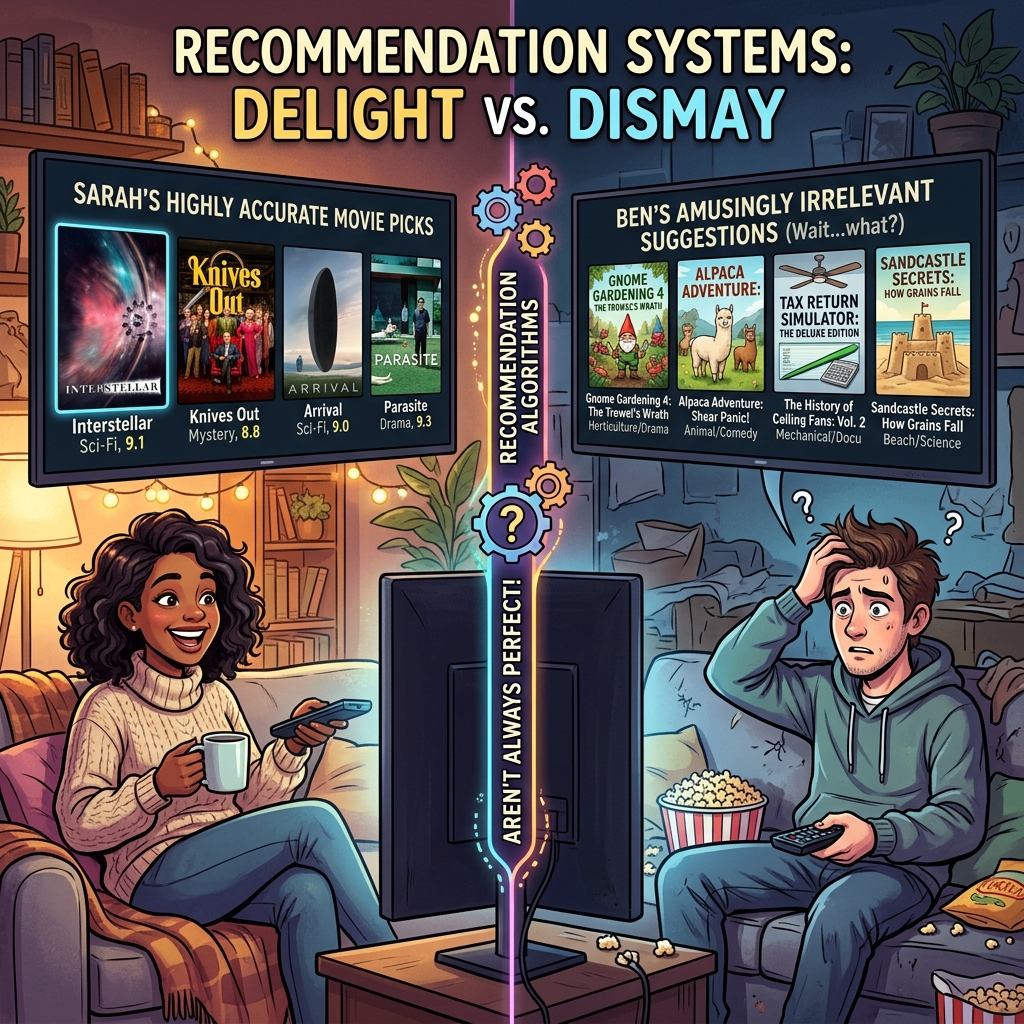
We’ve all laughed about recommendations that made absolutely no sense.
That’s because recommendation systems are making educated guesses.
They’re incredibly smart.
But they’re not perfect.
Just like a friend recommending a movie, sometimes they get it exactly right.
Other times…
Not so much.
The Bigger Picture
Recommendation systems don’t just save us time.
They also solve a much bigger problem.
Imagine opening Netflix and seeing every single movie ever added.
Thousands upon thousands of titles.
Where would you even begin?
Too many choices can actually make it harder to choose.
Psychologists call this choice overload.
Recommendation systems reduce that overwhelming list into something much more manageable.
Instead of asking you to search through everything, they try to narrow the options to what you’re most likely to enjoy.
Whether they always succeed is another story.
But that’s the goal.
Final Thoughts: The Internet Is Becoming More Personal Every Day
Netflix doesn’t know your favourite movie because it can read your mind.
It knows because, over time, you’ve left behind small clues through the choices you make.
One movie.
One series.
One documentary.
One late-night binge session.
Individually, those choices don’t mean much.
Together, they tell a story.
As technology continues to evolve, personalization is becoming part of almost everything we do online.
The apps we use are learning not about every detail of our lives—but about our habits, preferences, and interests.
The next time Netflix recommends a movie that feels like it was picked just for you, remember this:
It wasn’t magic.
It wasn’t luck.
It was thousands of tiny decisions, quietly helping technology understand what you might enjoy next.

