

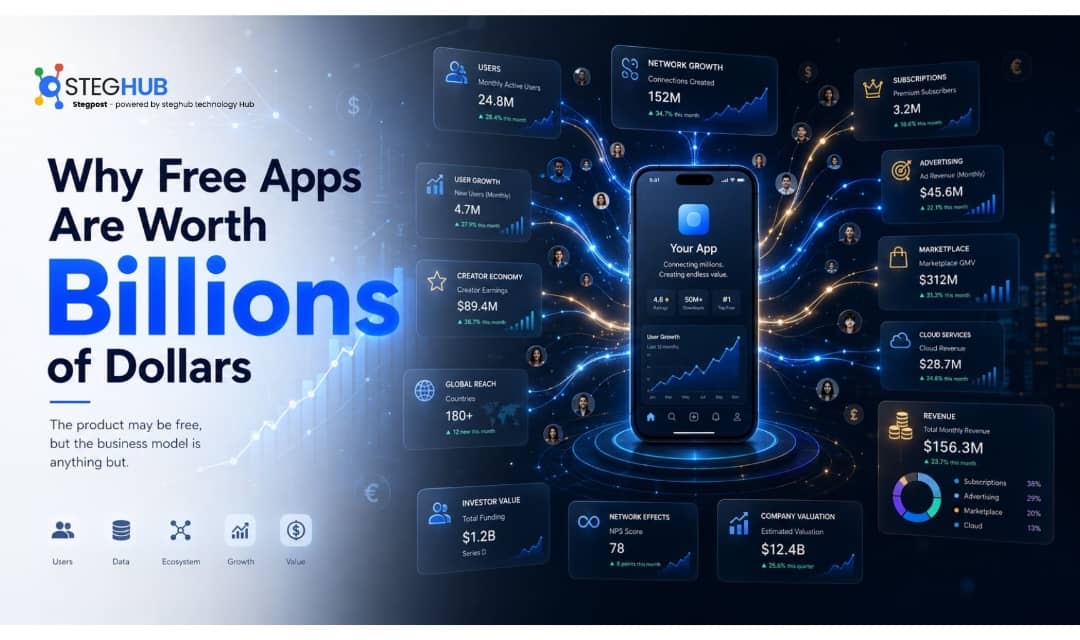
Take a moment and think about the apps you use every single day.
WhatsApp.
Instagram.
Facebook.
TikTok.
Google Maps.
YouTube.
Gmail.
Most of them have one thing in common.
You didn’t pay to download them.
You don’t pay a monthly subscription.
In many cases, you’ve used them for years without spending a single cent.
Yet somehow, the companies behind these apps are worth billion sometimes even trillions of dollars.
That raises an interesting question
If the apps are free… where does all the money come from?
It’s one of the biggest mysteries in the digital world, and the answer goes far beyond simply saying, “They make money from ads.”
Let’s take a look behind the scenes
Imagine Opening a Shopping Mall
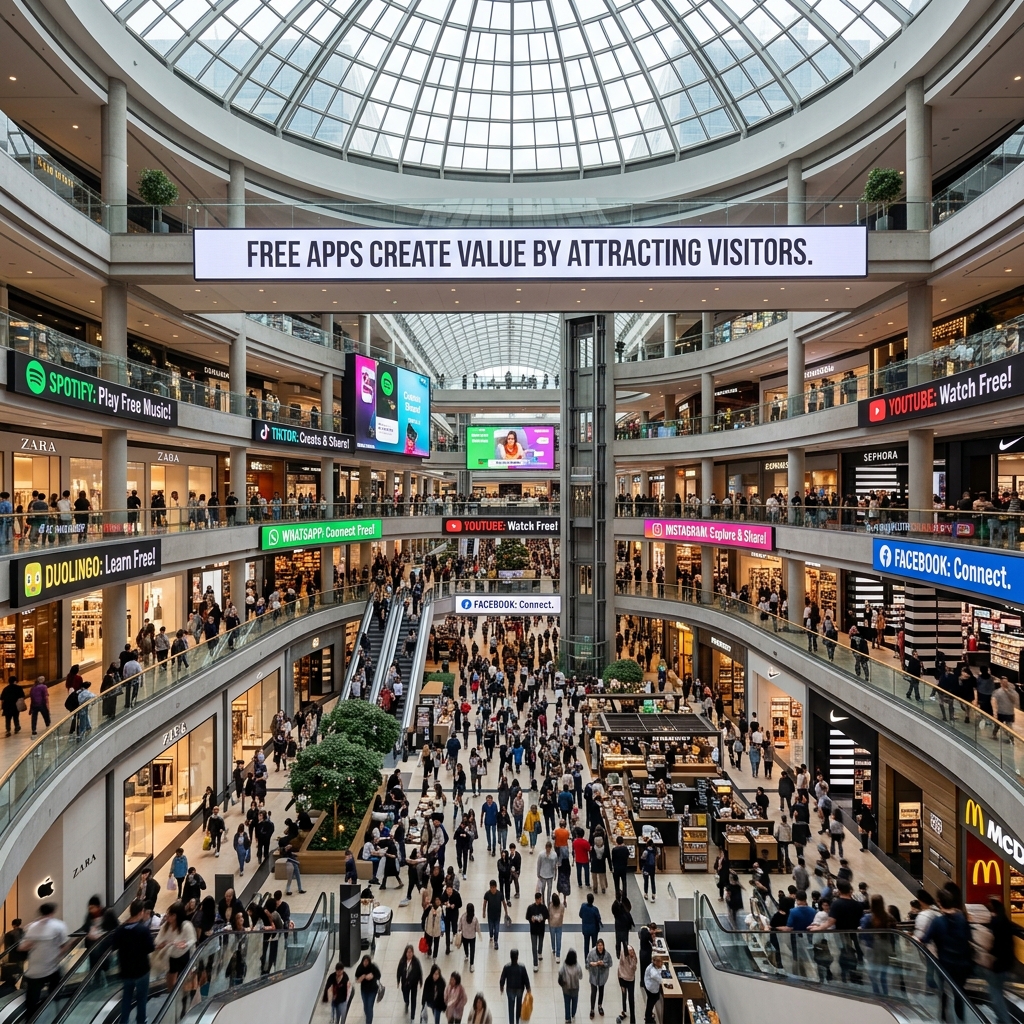
Imagine you build the biggest shopping mall in your city.
Entry is completely free.
Anyone can walk in.
There’s no gate fee.
No membership card.
No ticket.
At first glance, that might sound like a terrible business idea.
But think about what happens once thousands of people start visiting every day.
Restaurants want a space inside the mall.
Clothing stores want customers to see their products.
Coffee shops pay rent.
Billboards advertise new brands.
The more visitors your mall attracts, the more valuable every shop inside becomes.
Social media platforms work in a very similar way.
Their biggest goal isn’t charging people to enter.
It’s attracting as many people as possible.
Because once millions or billions of people are spending time there, businesses are willing to pay to reach them.
Your Attention Has Become a Currency
Most of us think money is the only thing companies compete for.
But in today’s digital world, there’s another valuable resource.
Your attention.
Every minute you spend watching videos…
Scrolling through posts…
Reading comments…
Or searching online…
Creates opportunities for businesses to place advertisements in front of you.
That’s why you’ll often hear people say,
“If you’re not paying for the product, you might be the product.”
That phrase sounds dramatic.
But it’s not entirely accurate.
You’re not the product.
Your attention is.
Advertisers aren’t buying you.
They’re paying for the chance to introduce their products or services while you’re already engaged with an app.
The longer people stay, the more opportunities those platforms have to connect businesses with potential customers.
Ads Aren’t Just Random Anymore
Think back to television.
Everyone watching the same program saw the exact same commercial.
Whether you were interested in the product or not.
Today’s digital advertising works very differently.
Imagine you’ve been searching for running shoes.
You’ve watched a few fitness videos.
Read some exercise blogs.
The next time you open a social media app, you might see an advert for sportswear instead of kitchen appliances.
That’s because many platforms try to show advertisements that are more relevant to your interests.
The idea is simple.
A useful advert is more valuable than a completely random one.
Businesses are often willing to pay more for that opportunity.
Free Doesn’t Mean Cheap
Sometimes people assume that because an app is free, it must be inexpensive to run.
The reality couldn’t be more different.
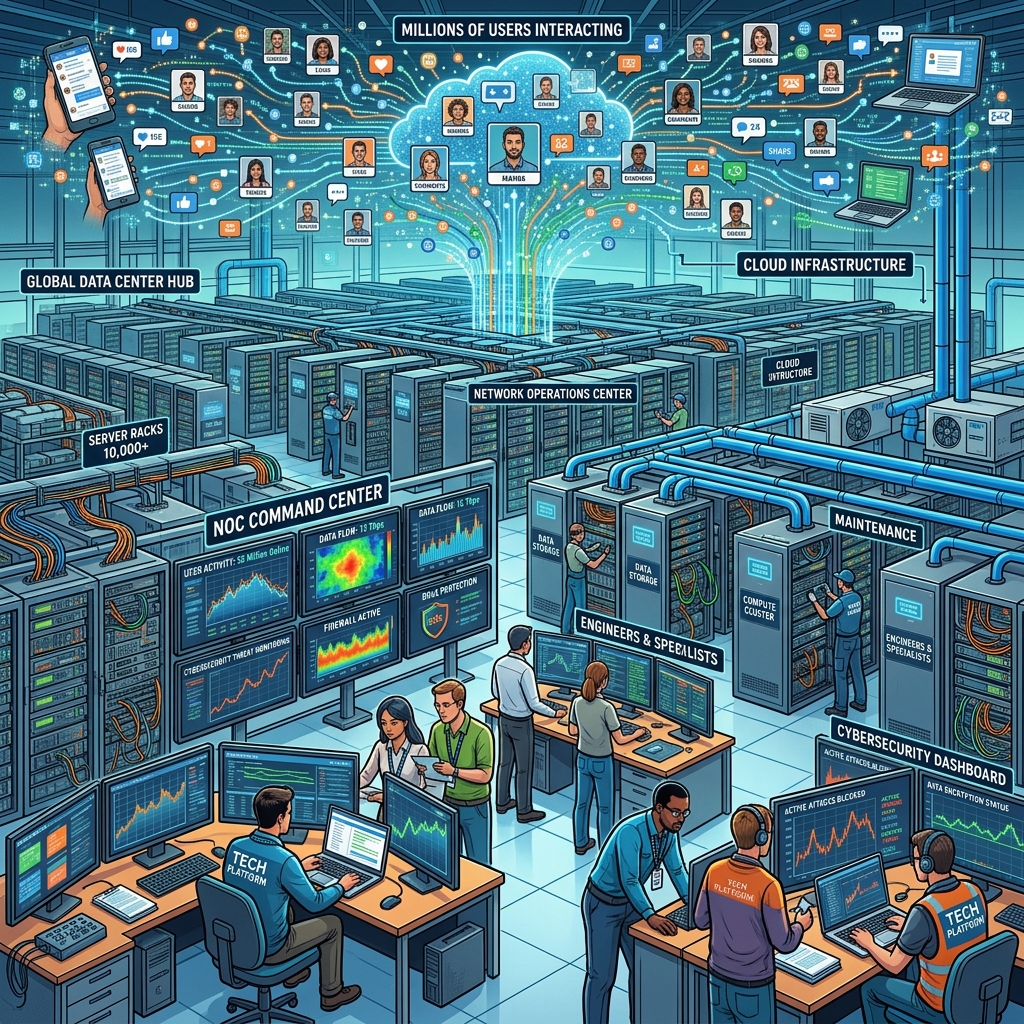
Think about everything happening every second on a platform like YouTube.
Millions of videos are being uploaded.
Billions of videos are being watched.
Comments are being posted.
Creators earning revenue.
Content is being moderated.
Security threats are being blocked.
Servers storing enormous amounts of data.
All of that requires huge teams of engineers, designers, cybersecurity experts, product managers, customer support teams, and massive cloud infrastructure.
Free for users doesn’t mean free for the company.
In fact, some of the world’s most expensive technology platforms are completely free to access.
Some Free Apps Make Money in Other Ways
Advertising is the biggest source of income for many platforms.
But it’s far from the only one.
Some apps offer premium subscriptions with extra features.
Others earn commissions when people make purchases.
Some businesses charge companies instead of individual users.
Others license their technology to other organizations.
Think about a gaming app.
You might download it for free.
But later, you choose to buy extra lives, special characters, or exclusive items.
That’s another business model.
The app stays free for everyone else, while a smaller group of users chooses to pay for additional experiences.
Different companies use different strategies.
The goal is always the same:
Create enough value that the business can continue growing.
Why Companies Want More Users Than More Payments
Imagine two businesses.
One has 5,000 paying customers.
The other has 500 million free users.
Which one has more opportunities?
The answer isn’t always obvious.
A platform with hundreds of millions of users becomes attractive to advertisers, creators, developers, investors, and business partners.
Its size becomes part of its value.
That’s why many technology companies focus first on growing their user base before thinking about making large profits.
In the digital world, scale creates opportunities that smaller platforms simply can’t access.
Free Apps Changed the Internet Forever
Years ago, buying software was straightforward.
You walked into a store.
Bought a CD.
Installed the software.
That was the end of the transaction.
Today’s internet works differently.
Many of the services we rely on every day are constantly improving.
New features arrive.
Security updates are released.
Bugs get fixed.
Servers stay online twenty-four hours a day.
That ongoing work needs ongoing revenue.
The free app model made it possible for billions of people to access powerful technology without paying up front.
In return, companies built new ways of funding those services.
Final Thoughts: Free Is Never the Whole Story
The next time someone says,
“This app is completely free.”
You’ll know there’s usually much more happening behind the scenes.
Free apps aren’t successful because they give everything away.
They’re successful because they’ve found creative ways to create value for different groups of people at the same time.
Users get useful services.
Businesses reach potential customers.
Creators find audiences.
Developers build innovative products.
Everyone plays a different role in the same digital ecosystem.
The app may not ask for your credit card before you download it.
But that doesn’t mean it isn’t running one of the most sophisticated business models ever created.
So the next time you open your favourite free app, take a second to appreciate what you’re really looking at.
It’s not just another app on your phone.
It’s an entire digital economy, quietly operating every time you tap the screen.

