

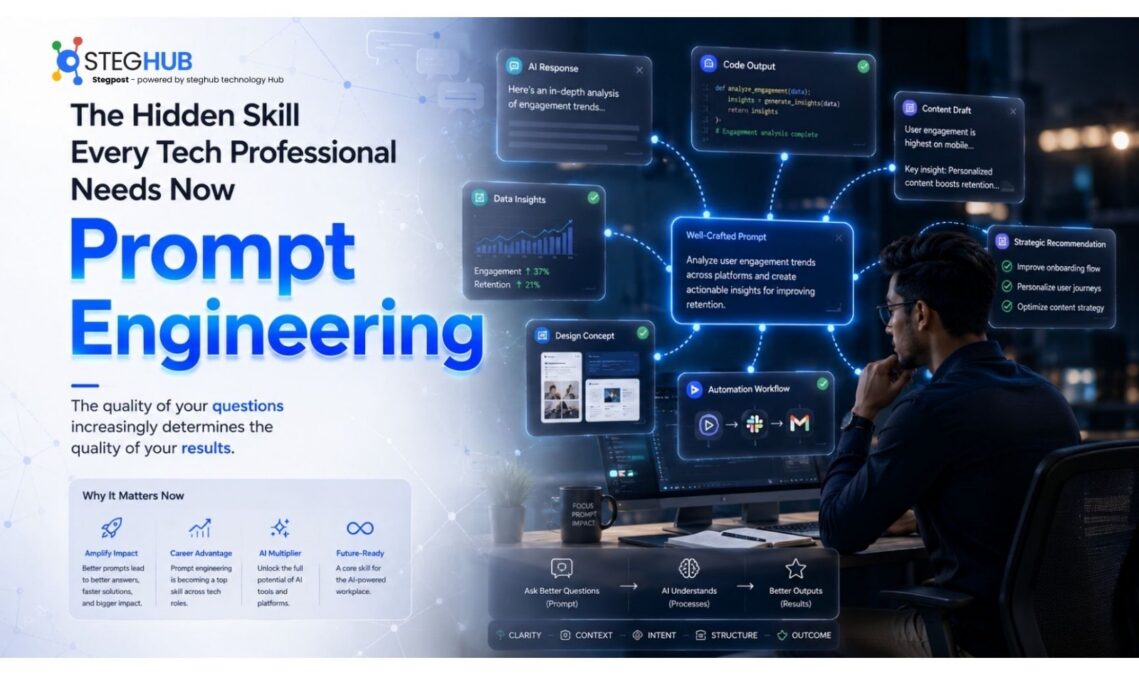
A few years ago, if someone told you that knowing how to talk to a machine would become a valuable career skill, you probably would have laughed.
Today?
People are using AI to write content, generate code, create marketing campaigns, analyze data, build websites, design presentations, and even brainstorm business ideas.
The surprising part isn’t that AI can do these things.
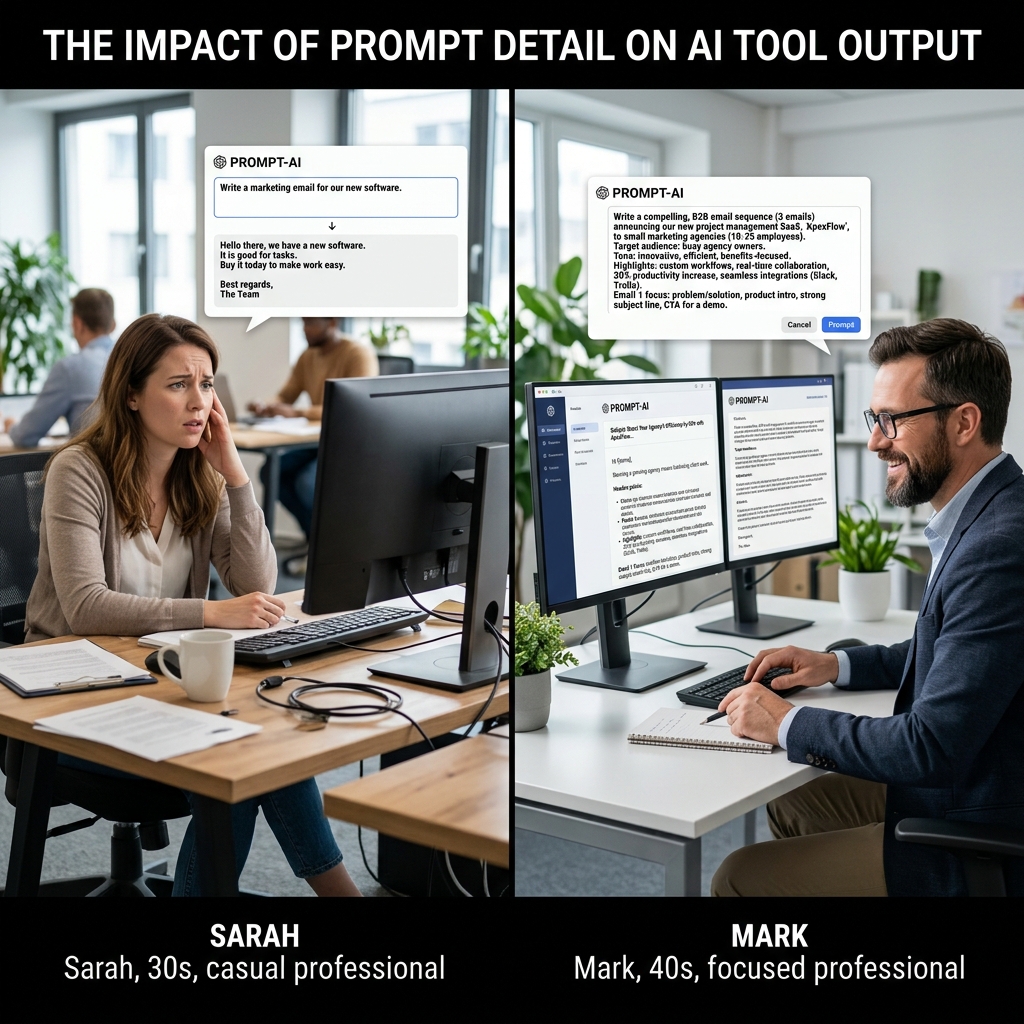
The surprising part is that two people can use the exact same AI tool and get completely different results.
One gets something useful.
The other gets something they immediately delete.
What’s the difference?
Usually, it’s the prompt.
And that’s why prompt engineering is quickly becoming one of the most underrated skills in tech.
The Tool Isn’t Always The Problem
Let’s start with a scenario most people can relate to.
Imagine two people using the same GPS app.
The first person types:
“Take me somewhere nice.”
The second person types:
“Find a quiet Italian restaurant within 10 minutes of my location that’s open right now.”
Who gets the better result?
Probably the second person.
Not because their GPS is smarter.
Because their instructions are clearer.
AI works in a very similar way.
The quality of your output is often influenced by the quality of your input.
And that’s where prompt engineering comes in.
So, What Exactly Is Prompt Engineering?
Before the fancy name scares anyone away, let’s simplify it.
Prompt engineering is simply the ability to communicate effectively with AI tools to get useful results.
That’s it.
You’re not programming.
You’re not writing complicated code.
You’re learning how to give better instructions.
Think of it like briefing a colleague.
If you walk up to someone and say:
“Make this better.”
They’re probably going to have questions.
Better how?
Faster?
Cheaper?
More professional?
More creative?
The same thing happens with AI.
The more context you provide, the better the result tends to be.
Why This Skill Matters More Than People Realize
A lot of people think AI will replace professionals.
What’s actually happening is often more interesting.
AI is helping skilled professionals work faster.
Think about a content writer.
Instead of staring at a blank page for an hour, they can use AI to generate ideas.
A software developer can use AI to troubleshoot code.
A marketer can brainstorm campaign concepts.
A data analyst can explore trends and patterns.
The professionals getting the most value aren’t necessarily the ones with the best AI tools.
They’re the ones asking better questions.
And that distinction matters.
The Difference Between a Bad Prompt and a Good One
Let’s use a real example.
Bad prompt:
“Write me a blog post about cloud computing.”
You’ll probably get something generic.
Now try this:
“Write a beginner-friendly blog post about cloud computing using relatable examples, simple language, practical business scenarios, and a conversational tone for non-technical readers.”
Notice the difference?
The second prompt gives direction.
It provides context.
It sets expectations.
It’s the difference between asking someone for help and giving them a clear brief.
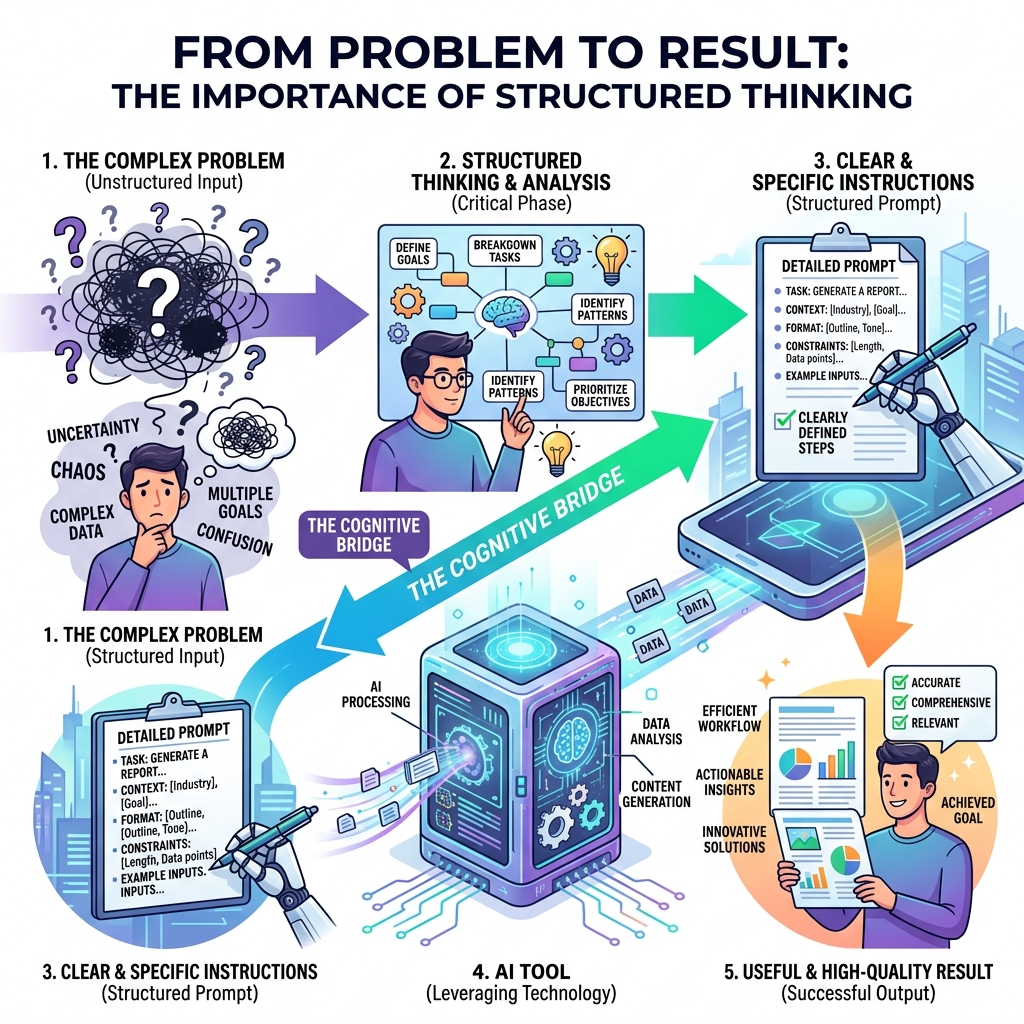
Prompt Engineering Is Really About Thinking Clearly
This is the part many people miss.
Prompt engineering isn’t just about AI.
It’s about communication.
To write a good prompt, you need to know:
- What you’re trying to achieve
- What information matters
- What outcome do you want
- What details should be included
- What details should be avoided
In other words, good prompting forces you to think clearly.
And clear thinking is valuable far beyond AI tools.
Every Tech Role Can Benefit From It
One misconception is that prompt engineering is only useful for developers.
Not true.
Let’s look at a few examples.
A product manager can use AI to create user stories.
A designer can generate creative concepts.
A software engineer can debug faster.
A marketer can create content ideas.
A recruiter can draft job descriptions.
A data analyst can identify trends and summarize findings.
The applications keep expanding.
The more AI becomes part of everyday workflows, the more valuable prompting becomes.
The People Who Learn This Early Have an Advantage
Remember when knowing how to use spreadsheets gave people a competitive edge?
Or when social media marketing was still new?
Prompt engineering feels similar.
Right now, many people are still experimenting.
Some are ignoring it completely.
Others are learning how to use it effectively.
Fast-forward a few years.
Which group do you think will have an advantage?
Probably the people who learned how to work alongside the technology rather than compete against it.
Here’s a Mistake Many Beginners Make
They treat AI like Google.
They ask one question.
Get one answer.
Then stop.
The people getting exceptional results rarely do that.
They refine.
They clarify.
They follow up.
They provide more context.
Think about hiring a consultant.
You wouldn’t expect one sentence to solve all your problems.
You’d have a conversation.
The best AI users do the same thing.
They collaborate with the tool.
They don’t just use it once.
AI Won’t Replace Curiosity
This might be the most important lesson in this article.
AI can generate information.
But curiosity still belongs to humans.
The people who ask thoughtful questions.
Challenge assumptions.
Explore ideas.
Experiment with different approaches.
Those are the people who tend to get the most value from AI.
Because AI responds to curiosity.
It amplifies it.
And that’s why prompt engineering is less about technology and more about learning how to think.

Final Thoughts: The Skill Behind the Skill
Many people focus on the tools.
ChatGPT.
Claude.
Gemini.
Copilot.
And while those tools are impressive, they’re constantly evolving.
The bigger opportunity lies in learning how to use them effectively.
That’s where prompt engineering comes in.
It’s not about memorizing commands.
It’s not about becoming an AI expert overnight.
It’s about learning how to communicate clearly, think critically, and guide technology toward useful outcomes.
And in a world where AI is becoming part of almost every profession, that might just be one of the most valuable skills you can develop.
Because the future may belong to people who know how to use AI.
But it will likely belong even more to people who know how to ask the right questions.

