

A restaurant used to be a restaurant.
You walked in, looked at the menu, ordered your food, paid, and left.
Today, that same restaurant might have an app for ordering, a website for reservations, a digital payment system, a customer database, an inventory platform, a delivery integration, an employee scheduling tool, and an algorithm deciding which customers should receive the next promotion.
The restaurant still sells food.
But increasingly, it also operates a technology system.
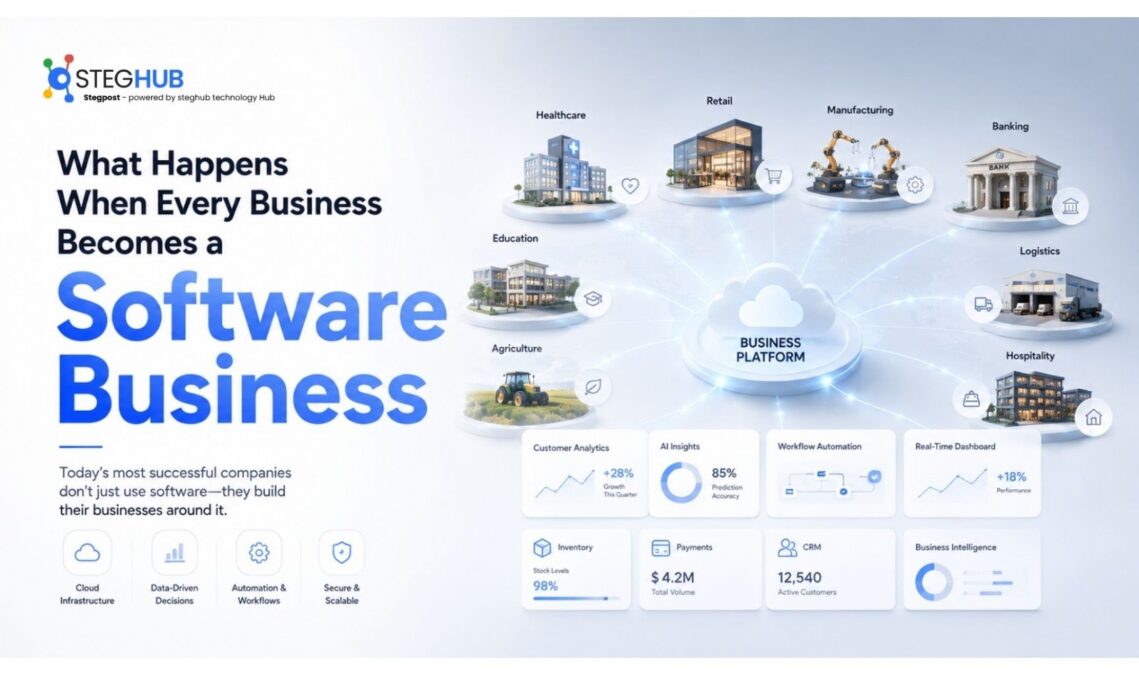
The same thing is happening everywhere.
A bank is no longer just a place that stores and moves money. It is a collection of digital services running on software.
A hospital isn’t only doctors, nurses, and medical equipment. It also depends on electronic records, scheduling systems, digital imaging, connected devices, cybersecurity, and data infrastructure.
A logistics company doesn’t simply move packages. It uses software to track vehicles, optimize routes, predict delivery times, manage warehouses, and communicate with customers.
Even a traditional manufacturer may now depend on sensors, cloud platforms, automation, analytics, and software-controlled machinery.
Something has changed.
Software is no longer simply something businesses use.
For many businesses, software is becoming part of what the business actually is.
And that shift is changing how companies compete, hire, operate, and survive.
Software Used to Be the Department. Now It’s the Business.
There was a time when a company could have a relatively simple relationship with technology.
The accounting team used computers.
The HR department had software for payroll.
The marketing team used email.
The IT department maintained the company’s systems.
Most of the actual business happened somewhere else.
Technology supported the business.
Today, that boundary is disappearing.
Consider a modern online retailer.
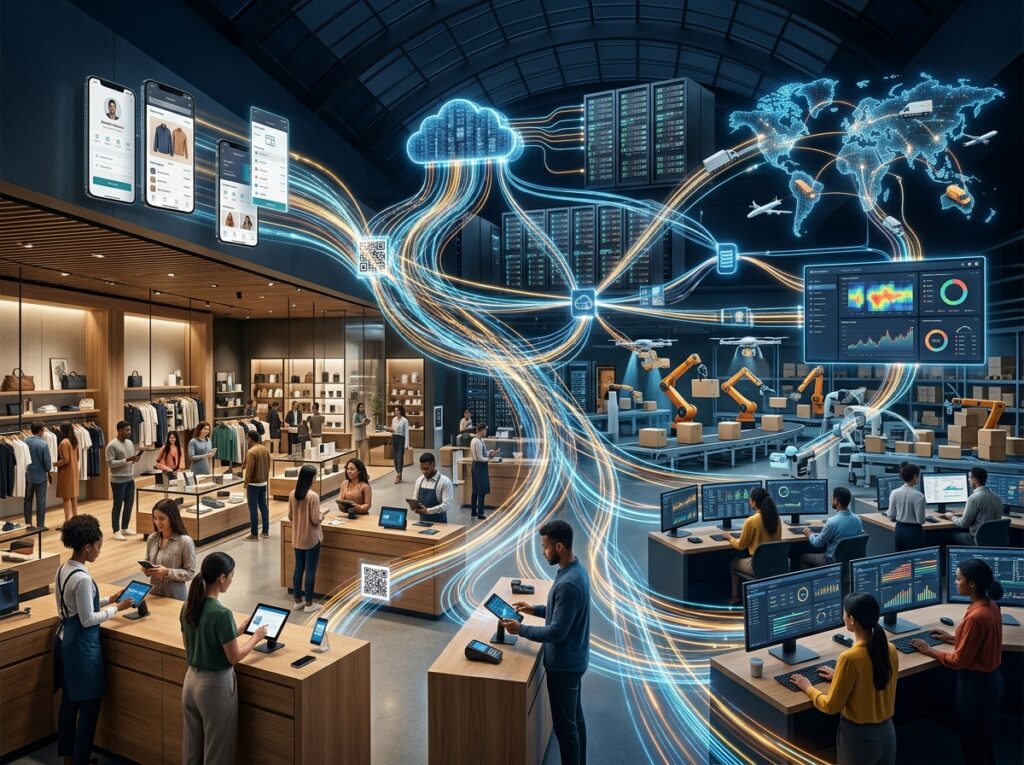
Its physical products may be sitting in a warehouse, but almost everything surrounding those products is software-driven.
A customer discovers the product through a digital platform.
Software determines what appears in the customer’s search results.
A payment system processes the transaction.
An inventory system checks availability.
A warehouse system tells employees what to pick.
A logistics platform tracks the delivery.
A notification system updates the customer.
Analytics systems measure what happened.
The product may be physical.
But the experience surrounding it is digital.
And increasingly, the quality of the software becomes part of the quality of the business.
Think About the Last Time You Chose a Business Because of Its Technology
Imagine two companies selling the same product.
The prices are similar.
The quality is similar.
But one company has a frustrating website.
You can’t find what you’re looking for.
The checkout keeps failing.
You don’t know when your order will arrive.
Customer support takes two days to respond.
The other company has a smooth experience.
You find the product immediately.
Payment takes seconds.
You receive an instant confirmation.
You can track your delivery.
You get an answer from customer support almost immediately.
Which company are you more likely to use?
The difference may not be the product.
It may be the technology surrounding the product.
This is one of the biggest changes software has created in business.
Technology has become part of the customer experience.
And once customers begin comparing digital experiences, companies are no longer competing only on products and prices.
They’re competing on speed, convenience, reliability, personalization, and ease of use.
The Software Is Becoming Part of the Product
This becomes even more obvious when we look at industries that traditionally had little to do with software.
Take cars.
A car used to be primarily a mechanical machine.
Engine.
Transmission.
Brakes.
Steering.
Today, software controls an enormous number of functions inside modern vehicles.
Navigation.
Entertainment.
Driver assistance.
Vehicle diagnostics.
Connectivity.
Over-the-air updates.
Some vehicles can even receive new features through software updates after the customer has already purchased the car.
The physical vehicle hasn’t disappeared.
But software has become part of the product.
The same thing is happening with appliances, medical devices, industrial equipment, cameras, watches, and even agricultural machinery.
The question is no longer simply:
“What does this machine do?”
It’s increasingly:
“What can its software make this machine do?”
A Factory Can Now Think in Data
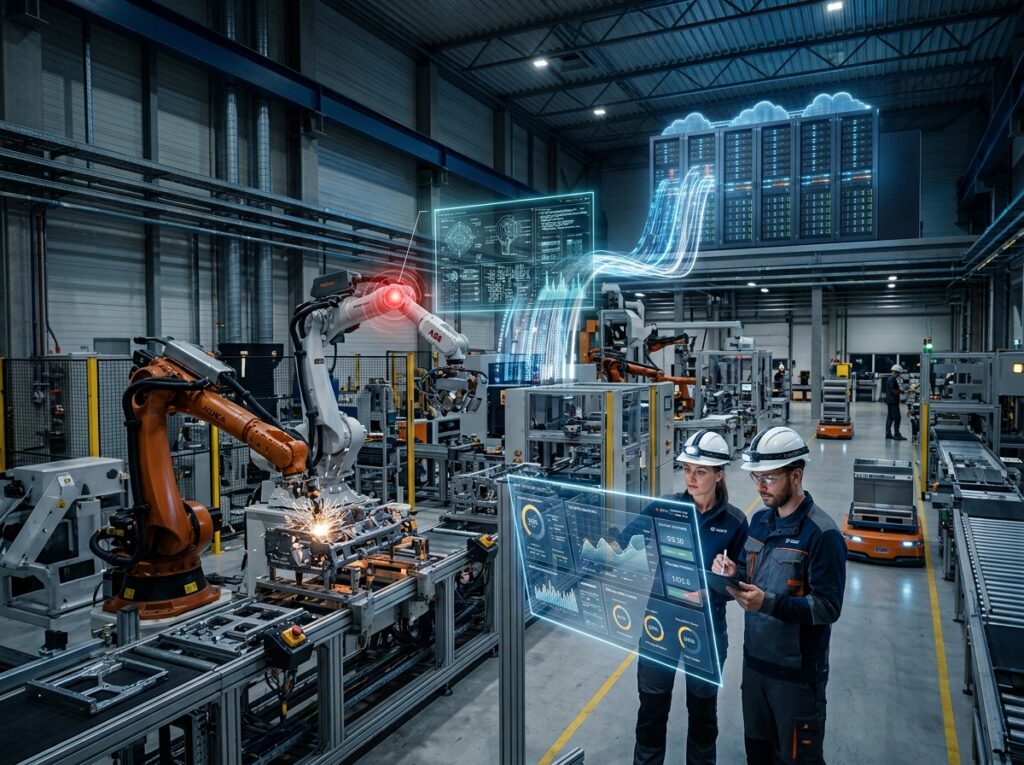
Walk into a modern manufacturing facility and you may still see machines doing physical work.
But behind those machines is another layer.
Sensors collect information.
Systems monitor performance.
Software tracks production.
Algorithms identify unusual patterns.
Data helps predict when equipment may need maintenance.
Managers can see production information without physically standing beside the machine.
Imagine a machine that normally operates within a particular range.
Over time, its sensors begin showing a subtle change.
A human might not notice it immediately.
But software can detect the pattern.
The system could warn the maintenance team before the machine breaks down.
That changes the economics of the business.
Instead of waiting for something to fail, the company can potentially act earlier.
This is one reason data and software have become so important to industries that don’t traditionally think of themselves as technology companies.
The Company With the Best Software Can Sometimes Move Faster
Software has another advantage.
It can change quickly.
A physical building takes time to modify.
A delivery truck cannot instantly become twice as efficient.
A manufacturing machine cannot always be redesigned overnight.
Software is different.
A company can release an update.
Change a process.
Launch a new feature.
Automate a repetitive task.
Connect another service.
Analyze new data.
Improve a recommendation system.
In some businesses, this creates a powerful competitive advantage.
Two companies may have similar resources.
But one can experiment and improve its digital systems much faster.
Over time, that difference compounds.
A better checkout creates more completed purchases.
More completed purchases generate more data.
More data improves the company’s understanding of customers.
Better understanding improves the product experience.
A better experience attracts more customers.
The cycle continues.
Software doesn’t simply automate individual tasks.
It can create feedback loops that make a business increasingly better at operating.
But Becoming a Software Business Comes With a Price
There is a less exciting side to this transformation.
When your business depends heavily on software, software problems become business problems.
A website goes down?
Customers can’t buy.
A payment system fails?
Transactions stop.
A database becomes unavailable?
Employees may not be able to work.
An API breaks?
Several connected services might stop functioning.
A cybersecurity incident occurs?
Customer trust can disappear overnight.
This creates a new reality for businesses.
Technology can make operations faster and more efficient.
But it can also make companies more dependent on systems that many business leaders don’t fully understand.
The more connected a company becomes, the more important reliability becomes.
This is why infrastructure, cybersecurity, cloud computing, monitoring, backups, and disaster recovery are no longer concerns reserved for “the IT department.”
They are business continuity concerns.
The Hidden Workforce Behind the Digital Business
Another consequence doesn’t get discussed enough.
If every business is becoming more dependent on software, then businesses need people who can build, maintain, secure, analyze, and improve that software.
That’s why roles such as:
- Software Engineers
- DevOps Engineers
- Cloud Engineers
- Data Analysts
- Cybersecurity Professionals
- Product Managers
- QA Engineers
- Data Engineers
- Agile and Project Management Professionals
are increasingly connected to business operations.
A company may advertise itself as a bank, retailer, logistics company, healthcare provider, manufacturer, or education company.
But behind the scenes, it may operate a surprisingly large technology organization.
This changes the way people should think about technology careers.
You don’t necessarily need to work for a company that calls itself a “tech company” to work in technology.
A hospital needs technology professionals.
A bank needs them.
A logistics company needs them.
A manufacturer needs them.
A university needs them.
A retail company needs them.
The industries are different.
The underlying need is increasingly similar.
This Doesn’t Mean Everyone Needs to Become a Programmer
There’s an important distinction here.
When we say every business is becoming a software business, we’re not saying every employee needs to become a software engineer.
A doctor doesn’t need to become a developer.
A warehouse manager doesn’t need to learn Kubernetes.
A restaurant owner doesn’t need to become a data engineer.
But increasingly, people across organizations need to understand how technology affects the work they do.
A marketing manager needs to understand customer data.
A business leader needs to understand cybersecurity risk.
A project manager needs to understand how digital products are developed.
An HR team needs to understand the technology skills the company actually needs.
A finance team needs to understand how digital payment systems affect operations.
The future workplace may not require everyone to code.
But it will increasingly require people to be comfortable working with technology.
Small Companies Are Getting a New Advantage
There is another fascinating consequence of this shift.
Software doesn’t always care how big your company is.
A small business can use cloud infrastructure that would have been difficult to afford years ago.
It can use sophisticated payment systems without building its own financial infrastructure.
It can use analytics platforms.
Customer relationship management tools.
Automation platforms.
AI services.
Communication systems.
Online advertising.
Cloud storage.
Digital collaboration tools.
A company with ten employees can now access technology that once required an entire IT department.
This doesn’t eliminate the advantage of large companies.
But it lowers some of the barriers to building sophisticated businesses.
A small team with the right technology can sometimes move remarkably quickly.
And that creates more competition.
The Business Leader’s New Question
For a long time, business leaders could ask:
“How can technology support our business?”
That question is becoming outdated.
A more useful question might be:
“What could our business become if technology were built into the way we operate from the beginning?”
That’s a very different way of thinking.
Instead of adding software after a business process has already been designed, companies can design the process around what technology makes possible.
Instead of asking how to digitize an old process, they can ask whether the old process needs to exist at all.
Instead of using data simply to create reports, they can use it to make decisions.
Instead of treating automation as a way to eliminate repetitive work, they can use it to redesign how teams spend their time.
The goal isn’t to add technology everywhere.
The goal is to understand where technology can fundamentally improve the business.
And This Is Where AI Changes the Conversation
Artificial intelligence is accelerating this transformation.
Businesses are beginning to use AI for customer service, document processing, fraud detection, forecasting, software development, marketing, research, data analysis, and internal operations.
But AI doesn’t exist in isolation.
To become useful inside a business, it often needs access to the company’s existing systems.
Customer information.
Documents.
Databases.
Internal applications.
Business processes.
APIs.
Cloud infrastructure.
The future isn’t simply about businesses “using AI.”
It’s about connecting AI to the systems that already run the business.
That means the companies that benefit most may not necessarily be the ones with the biggest AI model.
They may be the ones who understand how to integrate technology into their operations effectively.

The Risk of Becoming Too Dependent on Technology
But there is a warning here.
The more technology becomes part of a business, the more dangerous it becomes to treat it as invisible.
A company that doesn’t understand its critical systems can become vulnerable.
What happens if a cloud provider goes down?
What happens if an important software vendor changes its pricing?
What happens if an API your company depends on disappears?
What happens if employees don’t understand how to respond to a cyberattack?
What happens if the company has years of valuable customer data but no reliable backup strategy?
These questions aren’t hypothetical technology concerns.
They are business questions.
A company doesn’t need to build everything itself.
But it does need to understand what it depends on.
The Future Business May Look Less Like a Company and More Like a Platform
Perhaps the most interesting change is still ahead.
Businesses are increasingly becoming ecosystems.
A retailer connects customers, payment providers, logistics companies, suppliers, data systems, advertising platforms, and cloud infrastructure.
A bank connects customers, merchants, payment networks, financial institutions, identity systems, fraud detection systems, and regulators.
A healthcare company connects patients, doctors, laboratories, insurance providers, medical systems, and data platforms.
The company sits in the middle of a network.
Software becomes the layer that connects everything.
This means the strongest businesses of the future may not simply be those that own the most physical assets.
They may be the ones that build the best systems for coordinating people, information, services, and technology.
Final Thoughts: When Software Becomes Part of the Business
The interesting thing about this transformation is that most customers don’t care what technology a company uses.
They care whether the experience works.
They want the payment to go through.
They want the package to arrive.
They want the bank app to load.
They want the hospital system to have the right information.
They want the website to respond.
They want the product to work.
And increasingly, software determines whether those things happen.
That doesn’t mean every company needs to become a Silicon Valley-style technology company.
It means something more practical.
Every business needs to understand the role technology plays in creating value.
The restaurant will still need good food.
The hospital will still need good doctors.
The manufacturer will still need good products.
The bank will still need financial expertise.
But the companies that understand how software, data, cloud infrastructure, automation, and people can work together will have a different kind of advantage.
Because the future isn’t necessarily a world where every business sells software.
It’s a world where software becomes part of how almost every business competes.

